Asus ROG Phone 5s Pro hands-on review
Hardware overview and performance
Once again, the main change with the hardware is the chipset. Now employing a more powerful Snapdragon 888+ SoC, the device can take advantage of more raw horsepower. The main Kryo 680 Prime core, (a derivative of ARM's Cortex X1) has been clocked to 3.0 GHz up from 2.8 GHz on the vanilla SD 888. The other clusters remain the same - 3x 2.42 GHz Kryo 680 Gold and 4x 1.8 GHz Kryo 680 Silver cores. There's also a slightly improved Hexagon 780 DSP on board. The same Adreno 660 GPU is responsible for graphically-intensive tasks.
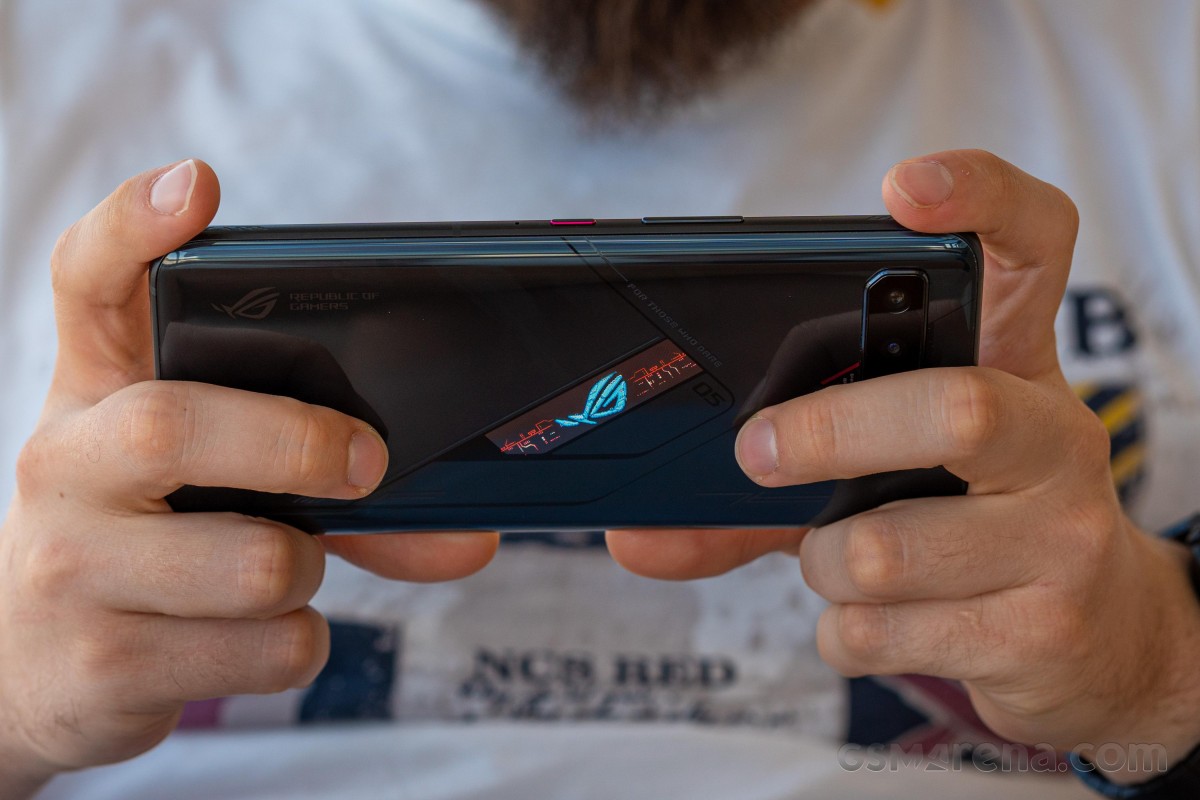
In any case, we expect minimal performance gains from SD888+, and that's what we found in the benchmark tests.
GeekBench 4.4 (multi-core)
Higher is better
-
Samsung Galaxy S21 Ultra 5G (Snapdragon)
14099 -
Asus ROG Phone 5 (X Mode)
13935 -
Asus ROG Phone 5
13917 -
Asus ROG Phone 5s Pro (X Mode)
13866 -
Asus ROG Phone 5s Pro
13770 -
OnePlus 8 Pro (120Hz, 1440p)
13171
GeekBench 4.4 (single-core)
Higher is better
-
Asus ROG Phone 5s Pro (X Mode)
5227 -
Samsung Galaxy S21 Ultra 5G (Snapdragon)
5105 -
Asus ROG Phone 5
5034 -
Asus ROG Phone 5 (X Mode)
5004 -
Asus ROG Phone 5s Pro
4961 -
OnePlus 8 Pro (120Hz, 1440p)
4237
GeekBench 5 (multi-core)
Higher is better
-
Asus ROG Phone 5
3710 -
Asus ROG Phone 5 (X Mode)
3709 -
Asus ROG Phone 5s Pro (X Mode)
3667 -
ZTE nubia Red Magic 6
3586 -
Sony Xperia 5 III
3549 -
Asus ROG Phone 5s Pro
3521 -
Samsung Galaxy S21 Ultra 5G
3518 -
OnePlus 8 Pro (120Hz, 1440p)
3374 -
Samsung Galaxy S21 Ultra 5G (Snapdragon)
3244
GeekBench 5 (single-core)
Higher is better
-
Asus ROG Phone 5s Pro (X Mode)
1175 -
ZTE nubia Red Magic 6
1124 -
Asus ROG Phone 5 (X Mode)
1121 -
Asus ROG Phone 5s Pro
1117 -
Sony Xperia 5 III
1117 -
Asus ROG Phone 5
1110 -
Samsung Galaxy S21 Ultra 5G (Snapdragon)
1109 -
Samsung Galaxy S21 Ultra 5G
1107 -
OnePlus 8 Pro (120Hz, 1440p)
902
And yet, we only see some marginal improvement in the single-core performance over the vanilla Snapdragon 888, while it's even posting lower results in the multi-core scenarios.
We have theories that might explain this odd behavior, but since we only had the chance to run some benchmarks and this is the first phone with Snapdragon 888+ to step into the office, we will keep an open mind until we've had a chance to do more extensive testing.
AnTuTu 8
Higher is better
-
Asus ROG Phone 5s Pro (X Mode)
734067 -
ZTE nubia Red Magic 6
708853 -
Asus ROG Phone 5 (X Mode)
708531 -
Asus ROG Phone 5
708216 -
Samsung Galaxy S21 Ultra 5G (Snapdragon)
657273 -
Samsung Galaxy S21 Ultra 5G
657150 -
Asus ROG Phone 5s Pro
630726 -
OnePlus 8 Pro (120Hz, 1440p)
573276
GFX Car Chase ES 3.1 (offscreen 1080p)
Higher is better
-
Asus ROG Phone 5 (X Mode)
72 -
Asus ROG Phone 5
71 -
Asus ROG Phone 5s Pro (X Mode)
71 -
Asus ROG Phone 5s Pro
70 -
Sony Xperia 5 III
69 -
Samsung Galaxy S21 Ultra 5G (Snapdragon)
66 -
Samsung Galaxy S21 Ultra 5G
64 -
ZTE nubia Red Magic 6
63 -
OnePlus 8 Pro (120Hz, 1440p)
51
GFX Car Chase ES 3.1 (onscreen)
Higher is better
-
Asus ROG Phone 5
59 -
Asus ROG Phone 5 (X Mode)
59 -
Asus ROG Phone 5s Pro
59 -
Asus ROG Phone 5s Pro (X Mode)
58 -
Sony Xperia 5 III
53 -
ZTE nubia Red Magic 6
50 -
Samsung Galaxy S21 Ultra 5G
33 -
Samsung Galaxy S21 Ultra 5G (Snapdragon)
33 -
OnePlus 8 Pro (120Hz, 1440p)
24
GFX Aztek Vulkan High (onscreen)
Higher is better
-
Asus ROG Phone 5
43 -
Asus ROG Phone 5 (X Mode)
43 -
Asus ROG Phone 5s Pro (X Mode)
42 -
Asus ROG Phone 5s Pro
42 -
ZTE nubia Red Magic 6
40 -
Sony Xperia 5 III
29 -
Samsung Galaxy S21 Ultra 5G (Snapdragon)
25 -
Samsung Galaxy S21 Ultra 5G
23 -
OnePlus 8 Pro (120Hz, 1440p)
17
GFX Aztek ES 3.1 High (onscreen)
Higher is better
-
Asus ROG Phone 5
40 -
Asus ROG Phone 5 (X Mode)
40 -
Asus ROG Phone 5s Pro
40 -
Asus ROG Phone 5s Pro (X Mode)
39 -
ZTE nubia Red Magic 6
37 -
Sony Xperia 5 III
37 -
Samsung Galaxy S21 Ultra 5G
24 -
Samsung Galaxy S21 Ultra 5G (Snapdragon)
23 -
OnePlus 8 Pro (120Hz, 1440p)
17
GFX Aztek Vulkan High (offscreen 1440p)
Higher is better
-
Asus ROG Phone 5
32 -
Asus ROG Phone 5 (X Mode)
32 -
Asus ROG Phone 5s Pro (X Mode)
31 -
Asus ROG Phone 5s Pro
31 -
ZTE nubia Red Magic 6
30 -
Sony Xperia 5 III
29 -
Samsung Galaxy S21 Ultra 5G
28 -
Samsung Galaxy S21 Ultra 5G (Snapdragon)
25
GFX Aztek ES 3.1 High (offscreen 1440p)
Higher is better
-
Asus ROG Phone 5
28 -
Asus ROG Phone 5 (X Mode)
28 -
Asus ROG Phone 5s Pro (X Mode)
28 -
Asus ROG Phone 5s Pro
28 -
ZTE nubia Red Magic 6
28 -
Sony Xperia 5 III
27 -
Samsung Galaxy S21 Ultra 5G
26 -
Samsung Galaxy S21 Ultra 5G (Snapdragon)
25
And since the GPU remains unchanged, the combined and the GPU-only tests show no difference whatsoever. Just a couple of deviating results that are within the normal margin of error.
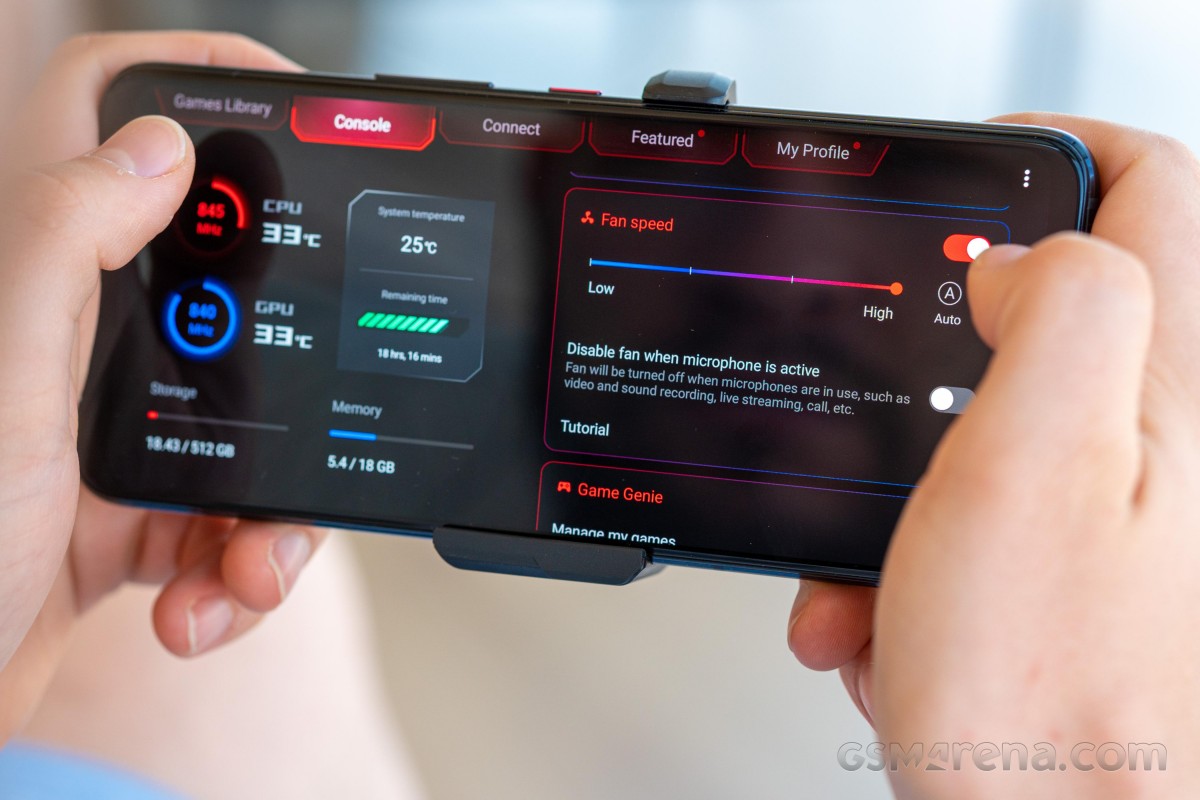
The main appeal of the Ultimate edition from this year's ROG Phone 5 lineup has been taken away by the new Pro model. Now, the 5s Pro sports 18GB of RAM instead of 16GB, while the storage is 512GB. No other memory configurations are available for the Pro. Either way, 18GB of RAM is definitely an overkill but can be considered as future-proofing by some.
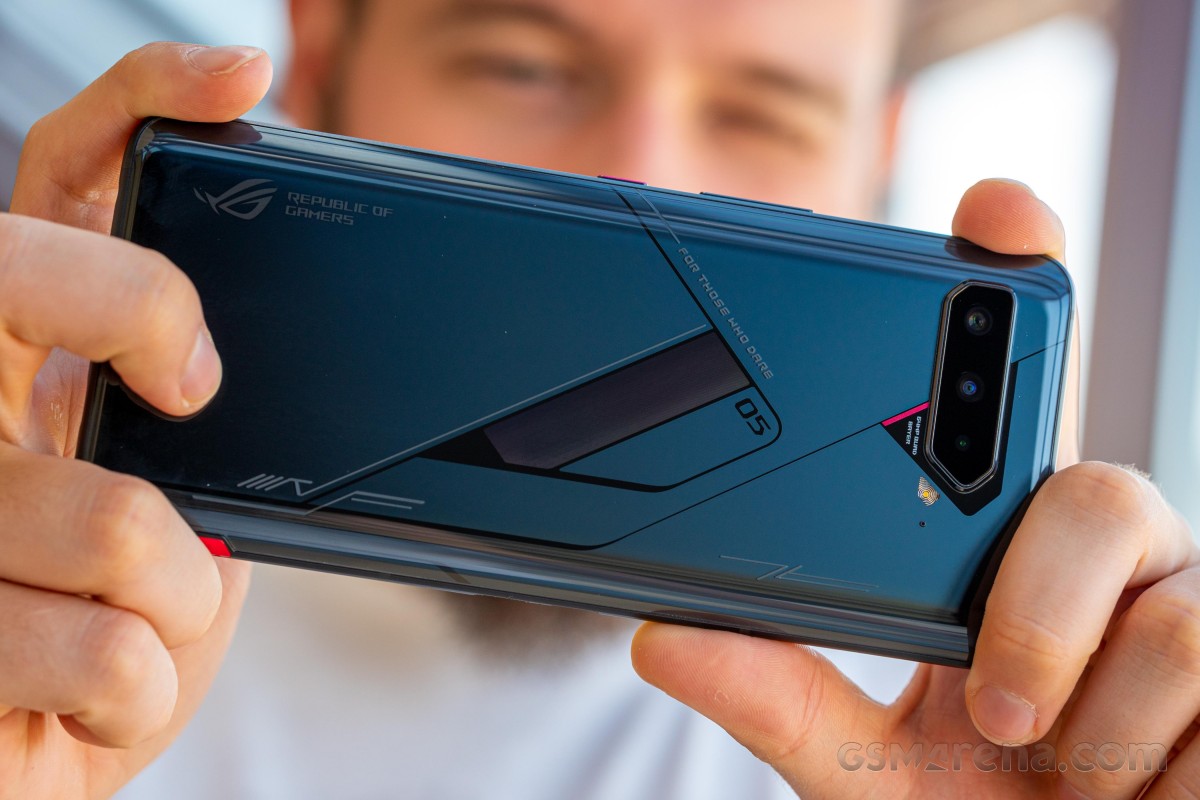
Lastly, the display has been improved in terms of responsiveness, now achieving 24 ms touch latency thanks to its 360Hz touch sampling rate. Previously, it was 300Hz. Other notable features include 144Hz refresh rate, 1ms response time, HDR10+ support and up to 800 nits maximum brightness, which we found to be accurate in our ROG Phone 5 review. With Max Auto, the panel can easily go beyond 800 nits. 1200 nits should also be achievable under the right circumstances, which is usually spot brightness during HDR video playback.
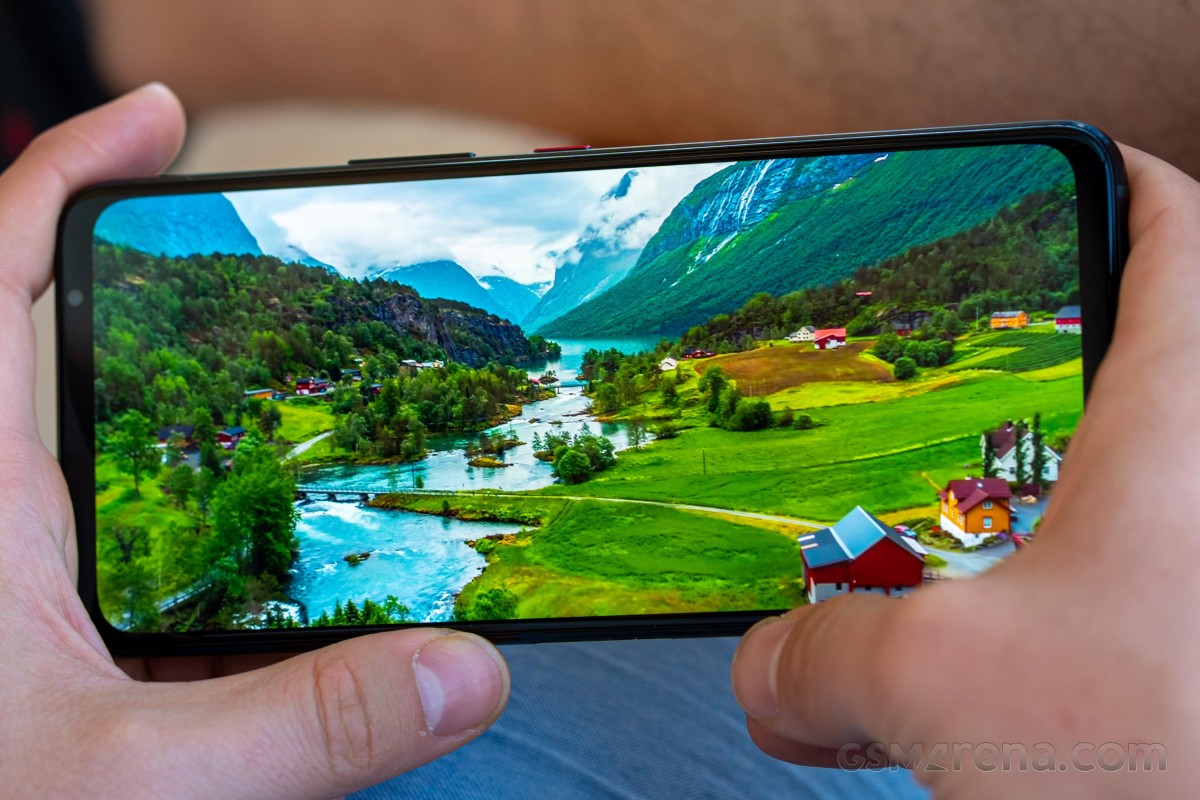
Lastly, the display features a special AS coating for reducing friction when hands are sweaty during intense gaming. That's certainly a nice feature to have.
The cameras, battery and speakers remain untouched. There are also no additional software features that too.
Early verdict
Since we've already reviewed the ROG Phone 5 and its Ultimate Edition and there aren't many changes here, we have a good idea what this new phone is about. It's most definitely worthy of our recommendation.
The 5s Pro, even with its hefty price, succeeds its predecessors at the top spot among gaming phones. It's a premium offering, sure, but it's compatible with the best ecosystem of gaming accessories, and the software is probably the most polished one in town, too. That's as much as we can say before our full review is ready.


Tip us
2.1m 180k
RSS
EV
Merch
Log in I forgot my password Sign up