Blackview BV9200 review
Doke-OS 3.1 with Android 12
Blackview phones run on a proprietary Doke-OS, which in this case is version 3.1 as it's based on Android 12. We prefer to see the latest Android for future-proofing, but since this is a phone launched last year, we can let it slide.

Interestingly enough, Doke-OS feels pretty much like stock Android with very few tweaks all-around. The icons are different, the iconography in the general settings menu has also been revamped, but the overall feel, UI elements and customizations are pretty much stock-ish. The notification shade is a small exception, which looks straight-up borrowed from Samsung's One UI. All quick toggles are moved toward the bottom half of the display for easier reach. Even the toggles' design is reminiscent of Samsung's One UI.
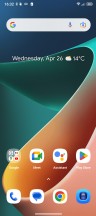
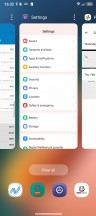
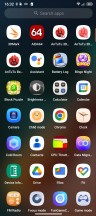
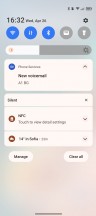
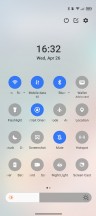
Home screen, recent apps, notification shade, app drawer
We are fond of this approach because Blackview probably has limited resources for software engineering so keeping it as simple as possible is a good strategy.
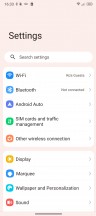
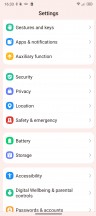
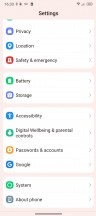
General settings
Navigation is also familiar, except that Doke-OS lets you tweak the back gesture sensitivity from the left and right edge.
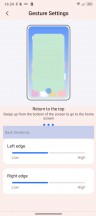
Gesture sensitivity
Wallpapers, themes and icons can be customized, but since this is an LCD panel, there's no AoD function.
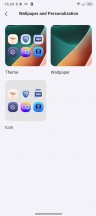
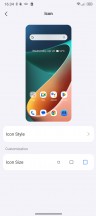

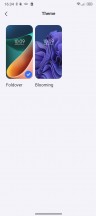
Wallpapers, themes, icons
Outside the usual set of features, the BV9200 also offers a customizable physical side key. You can assign various actions or launch an app with a single, double or long press.
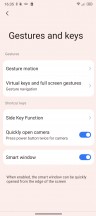
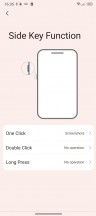

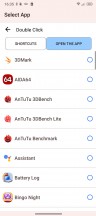
Gestures and side key
The Smart window is also a fairly common functionality. You can pull out a sidebar with apps of your choice to launch on the go.
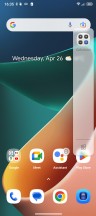

Smart window
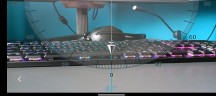
Perhaps the centerpiece features are within the ToolBag app. The tools there aren't particularly new and some of them aren't all that accurate, like the HeightMeasure tool, for example. But you can rely on the Compass, SoundMeter, Pic Hanging, Plumb Bob and Barometer. The Protractor should do the job just fine too.
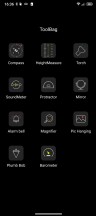
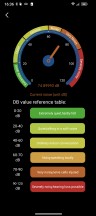
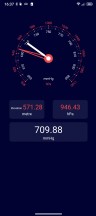
ToolBox
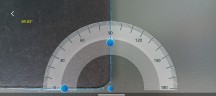

ToolBox
All in all, the software is simple and clean and we like how well it performs despite the rather outdated and underpowered Helio G96 chipset. Even we didn't notice any major hiccups or slow-downs, even at 120 fps.
Performance
The Blackview BV9200 employs the Helio G96 chipset by MediaTek. It is fabricated on the 12nm FinFET manufacturing process from TSMC. The Helio G96 has the usual octa-core CPU with two high-performance Cortex-A76 cores clocked at 2.05GHz and six energy-efficient Corext-A55 cores working at 2.0GHz.
The Helio G96 chip features a dual-core Mali-G57 GPU. Unlike the previous G9x chips, we have a dual-core configuration instead of a quad-core, which is somewhat disappointing.
Finally, the Blackview BV9200 is available in just one configuration with 8GB LPDDR4X RAM and 256GB expandable storage via microSD card.
We ran the usual benchmarks, and the scores are in.
GeekBench 5 (single-core)
Higher is better
-
Realme 9 Pro
694 -
Redmi Note 12 5G
588 -
Motorola Moto G72
546 -
Blackview BV8800
516 -
Blackview BV9200
508 -
Ulefone Power Armor 13
502 -
Ulefone Armor 9
401 -
Ulefone Armor 7
380
GeekBench 5 (multi-core)
Higher is better
-
Realme 9 Pro
2020 -
Redmi Note 12 5G
1998 -
Motorola Moto G72
1842 -
Blackview BV8800
1752 -
Blackview BV9200
1717 -
Ulefone Power Armor 13
1610 -
Ulefone Armor 9
1498 -
Ulefone Armor 7
1476
AnTuTu 9
Higher is better
-
Realme 9 Pro
401894 -
Motorola Moto G72
383317 -
Redmi Note 12 5G
360745 -
Ulefone Power Armor 13
351678 -
Blackview BV9200
288967 -
Blackview BV8800
288964
GFX Car Chase ES 3.1 (offscreen 1080p)
Higher is better
-
Ulefone Power Armor 13
19 -
Realme 9 Pro
19 -
Blackview BV9200
15 -
Motorola Moto G72
15 -
Blackview BV8800
14 -
Ulefone Armor 7
8.5 -
Ulefone Armor 9
7.4
GFX Car Chase ES 3.1 (onscreen)
Higher is better
-
Ulefone Power Armor 13
18 -
Realme 9 Pro
16 -
Motorola Moto G72
13 -
Blackview BV8800
10 -
Blackview BV9200
10 -
Ulefone Armor 9
7.9 -
Ulefone Armor 7
7.5
GFX Manhattan ES 3.1 (offscreen 1080p)
Higher is better
-
Realme 9 Pro
35 -
Ulefone Power Armor 13
32 -
Motorola Moto G72
26 -
Blackview BV8800
24 -
Blackview BV9200
23 -
Ulefone Armor 9
19 -
Ulefone Armor 7
19
GFX Manhattan ES 3.1 (onscreen)
Higher is better
-
Ulefone Power Armor 13
29 -
Realme 9 Pro
29 -
Motorola Moto G72
24 -
Blackview BV8800
20 -
Blackview BV9200
20 -
Ulefone Armor 7
18 -
Ulefone Armor 9
17
As you can see, there are plenty of smartphones that are more powerful than the BV9200 as the Helio G96 is a bit of an outdated SoC but due to the nature of rugged phones in general, we will let that one slide. Mostly because under subjective assessment, the phone runs fine on the said chipset in the context of normal daily usage.


Tip us
2.1m 180k
RSS
EV
Merch
Log in I forgot my password Sign up