Google Pixel 10 Pro review
No camera hardware upgrades (except that one hidden one)
The camera system of the Pixel 10 Pro is carried over from the previous generation almost entirely unchanged. It's the same triple setup with the usual wide and ultrawide cameras and a single 5x zoom telephoto - no 1.0-inch main sensors, no 200MP sensors on the long end, no double teles - it's nothing like what the competition is doing.
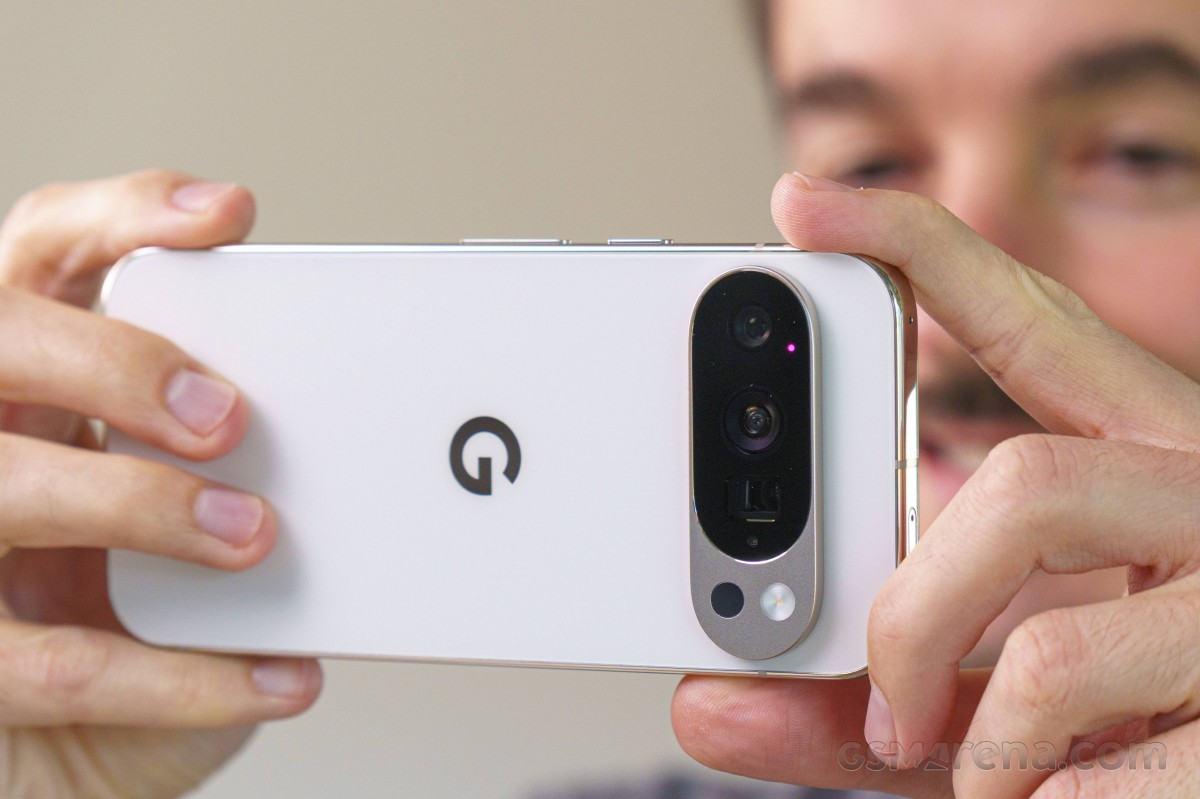
The main camera is based on a 1/1.31" type sensor - essentially the same size as that found on Galaxy Ultras, only in 50MP form instead of the 200MP Samsung implementations. A bright aperture f/1.7 lens with a 24mm equivalent focal length makes the specs look about as unremarkable as possible in the high-end class in 2025.
The ultrawide and the telephoto rely on the same size 1/2.55" sensors with 48MP resolution - they just might be the same exact sensor, but we can't know for a fact as Google isn't too open about what hardware is inside.
The ultrawide lens is very ultra wide, at what Google specifies as 12mm equivalent (or, rather, specifies the field of view at 123 degrees, which corresponds to 12mm). The telephoto lens, on the other hand, is reported as 110mm in the images' EXIF data.
- Wide (main): 50MP (1/1.31", 1.2µm-2.4µm), f/1.68, 24mm, dual pixel PDAF (10cm - ∞), Laser AF, OIS; 4K@60fps/8K@30 (via cloud-based upscaling)
- Ultrawide: 48MP (1/2.55", 0.7µm-1.4µm), f/1.7, 12mm, multi-directional PDAF; 4K@60fps
- Telephoto 5x: 48MP (1/2.55", 0.7µm-1.4µm), f/2.8, 110mm, multi-directional PDAF (30cm - ∞), OIS; 4K@60fps/8K@30 (via cloud-based upscaling)
- Front camera: 42MP (0.7µm-1.4µm), f/2.2, 18mm, dual pixel PDAF; 4K@60fps
One carefully hidden but potentially significant difference we picked up was the minimum focusing distance on the telephoto. Our trial-and-error approach showed it to be around 30cm, down from what was 73-75cm on the Pixel 9 Pro. It's a major improvement, and one that makes the latest Pixel a bit more viable as a cameraphone.
However, getting that 30cm minimum focusing distance requires using manual focus to dial it in. And then the focus peaking turns off after each shot, so while the manual focusing remains locked at minimum, you're not exactly sure what's happening.
The autofocus would never get you there, instead limiting things to around 57cm and that's even with the manual lens selection enabled. The auto lens selection also focuses about there but if you miss the moment it switches to the main camera, you then have to pull back a lot more for it to switch back to the telephoto. It's proper madness.
The previous generation introduced a new selfie camera and it's being reused here - the 42MP sensor is paired with an ultrawide lens (18mm equivalent) for selfies with more people and/or surroundings. Samsung could learn a thing or two from this one (the Galaxy S-series selfies come out at 26mm).
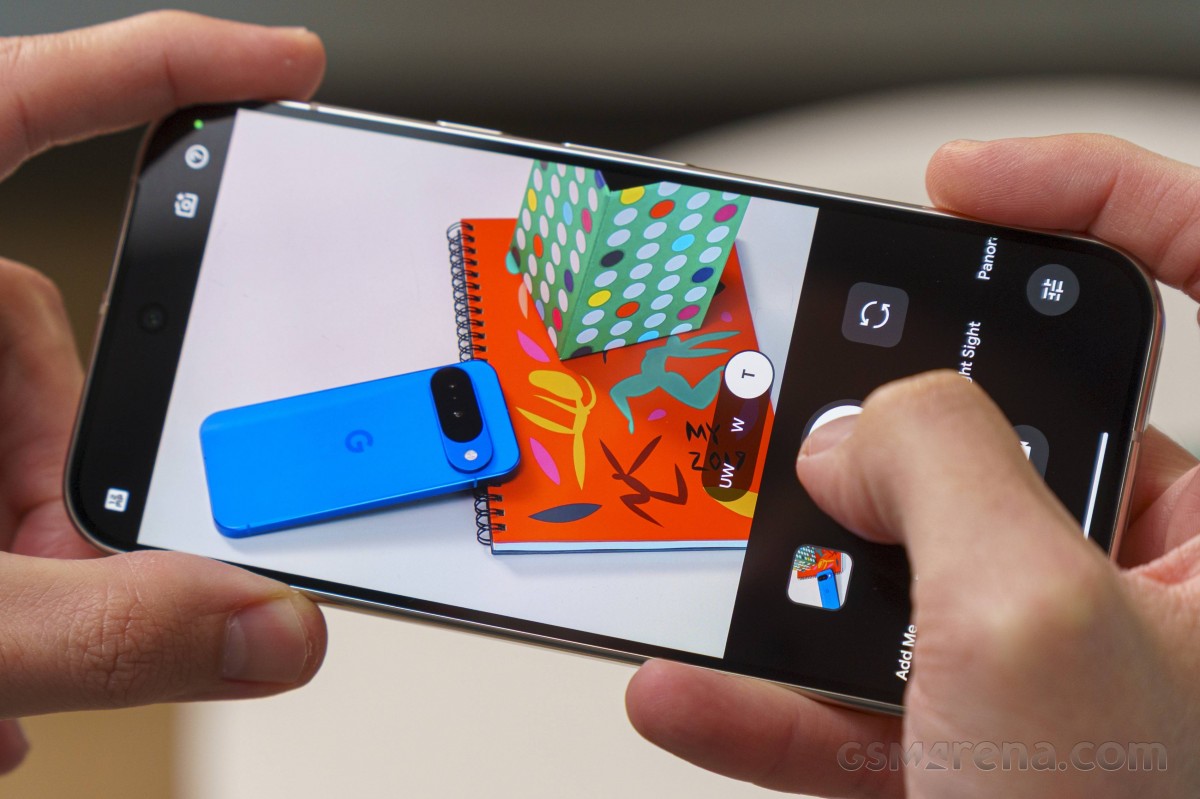
As before, the camera application on the Pixel is one of those aspects of Google phones that is different for the sake of being different and can be anywhere between a challenge and a nuisance to use for newcomers to the Pixel. The mode bar being below the shutter button (which moves it unusually far from the bottom edge of the phone), the separation between photo and video modes, the settings scattered in many different places - getting the app to work for you instead of against you takes time. Sure, eventually you get there, and the app is quite feature-rich after all, it's just needlessly overdesigned.
Daylight photo quality
Main camera
The Pixel 10 Pro's main camera may not be a hardware marvel all in itself, but the photos it produces are properly excellent in that Pixel way that's one of several intangible and unquantifiable virtues of the lineup. There's something about the contrast and colors that gives these shots a level of pop that's recognizable and universally likable.
High-frequency details, such as foliage and even buildings in the distance, are not rendered very naturally, but at least there is no noticeable softness in the shadows, unlike what we saw on the vanilla Pixel 10. Especially indoors, the Pixel 10 Pro's main camera produces noticeably sharper photos.














Daylight samples, main camera (1x)
Photos of people are also quite nice, with particularly lively skin tones, though there's a minor tendency for smoothening out facial detail - not a huge deal, unless you like counting pores. Even in the regular photo mode, the there is some natural background defocusing unlike the vanilla Pixel 10.
The Portrait mode shots are give or take similar, and the border of the human subject can be blurry. There is no way to adjust the strength of the background blur effect, so sometimes it comes through a bit too strong, which may make it a bit fake-looking.




Daylight samples, main camera (1x), Photo mode




Daylight samples, main camera (1x), Portrait mode
The full-res images are okay - there's a touch of extra texture in there, probably, and they may be worth exploring if you want to do your own detail processing after the fact.








Daylight samples, main camera (1x), 50MP
2x zoom shots are a bit softer than we'd expect from a flagship camera, like some current Ultra cameraphones. Viewing them on the phone's screen won't leave you wanting, but closer inspection on a monitor will reveal their coarser detail. They are maybe just a tad sharper than from the vanilla Pixel 10.












Daylight samples, main camera (2x)
People shots at 2x look even sketchier in terms of detail - perhaps the discrepancy between your expectations and the resolved detail in the photos is just more pronounced when you're looking at faces. Still, at fit to screen magnification on a reasonably sized monitor and on your phone, these do look really nice. And there's always the flattering perspective of the 50-ish millimeter focal length.




Daylight samples, main camera (2x), Photo mode




Daylight samples, main camera (2x), Portrait mode
Portrait mode maxes out at 3x where you can get either by pinching to zoom while in Portrait mode or by zooming in to 3x or more in Photo mode and then switching to Portrait mode. We sort of stumbled upon this zoom level, and we're not surprised it's not more immediately accessible - the shots don't look good, really.




Daylight samples, main camera (3x), Portrait mode
Telephoto camera
The telephoto camera of the Pixel 10 Pro takes good photos overall. Global parameters remain likable and maintain that Pixel character. Detail is good, but not as crisp as on the main camera.
This camera has a rather artificial rendition of foliage - worse than the Pixel 10's in fact. Outside of the issue with foliage, though, the 10 Pro 5x optical zoom photos are cleaner from noise and sharper both indoors and outdoors.












Daylight samples, telephoto camera (5x)
Photos of people do look solid at 5x. If you like tighter framing and compressed perspectives, you'll appreciate the results even if sharpness is a notch below ideal.




Daylight samples, telephoto camera (5x), Photo mode
We wouldn't say that the full-res mode brings much of a detail benefit.




Daylight samples, telephoto camera (5x), 48MP
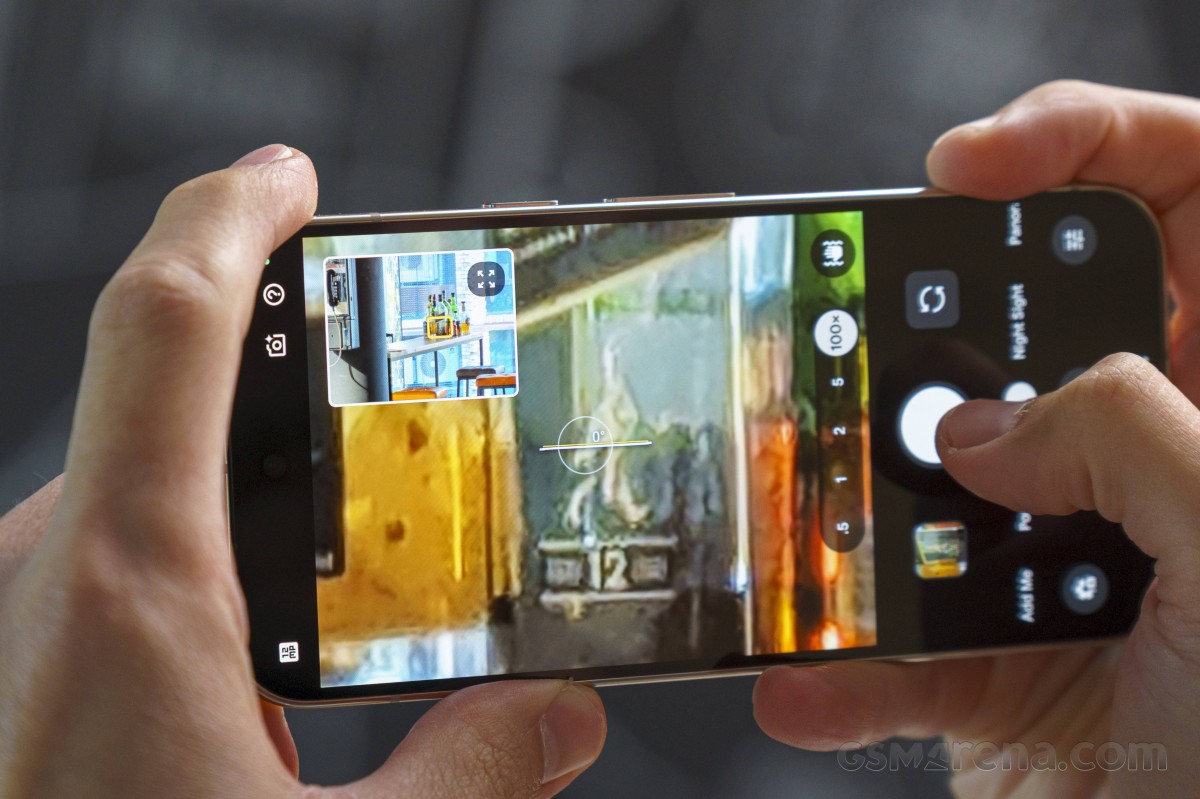
At 10x, things are already looking pretty shabby, but there's still a relatively acceptable semblance of detail. It does make you wonder what Google is on about with the 100x zoom on the Pixel 10 Pro.








Daylight samples, telephoto camera (10x)
We did zoom to 100x for kicks and giggles, and the results are predictably not great. The non-AI-augmented shots resemble real-life objects more closely, whereas the AI generates relatively convincing, albeit made-up, takes on reality. Unless there's text, of course.












Daylight samples, telephoto camera (100x): Original • AI version
The more meaningful new development this time around is that the Pixel's telephoto can actually shoot closeups - if you go through hoops, as already mentioned. It's not the sharpest at its minimum focusing distance, but it's good enough, and miles better than the previous generation.




Closeup samples, telephoto camera (5x)
Ultrawide camera
The ultrawide camera is doing a good job, but we expected a bit better sharpness. Color reproduction and contrast are solid and appear to be aligned with the main camera's processing; however, it can be a little soft in the shadows.
Compared to the vanilla Pixel 10, the ultrawide here has close focusing capability and slightly reduced geometric distortion overall. Besides those two things, however, the daylight photos here are not any better (there is a bigger difference at night as you will see below).












Daylight samples, ultrawide camera (0.6x)
The 48MP versions of these images look more like upscaled versions with not much in terms of extra detail.






Daylight samples, ultrawide camera (0.6x), 48MP
Selfies
Selfies are looking great on the Pixel 10 Pro. The native ultra wide field of view is excellent for capturing more context and the shots are plenty sharp. Skin tones are lively and colors in general are great. Dynamic range is top-class too.




Selfie samples, 0.8x
Zooming in to 1x, sharpness takes a bit of a hit but the rest remains easy to like.




Selfie samples, 1x
Low-light photo quality
Main camera
The Pixel 10 Pro's low-light results from the main camera are good, but not really class-leading. Colors are looking great and dynamic range is good overall, but detail has a bit of an overly digital rendition - it's not bad, but it's not great either. The photos are slightly sharper than what we saw from the vanilla Pixel 10; we really expected more of a difference from the larger sensor here.






Low-light samples, main camera (1x)
The 2x shots are usable, but you'd be better off not looking at them at 1:1.






Low-light samples, main camera (2x)
Telephoto camera
The telephoto camera's results aren't the sharpest around either, but they do still offer reasonable quality, if not quite top-notch. The white balance is mostly accurate, dynamic range is good.






Low-light samples, telephoto camera (5x)
Hitting the 10x button will get you usable night-time photos, though you'll have to manage your expectations. There can be a fair bit of noise, and you can count on some aggressive sharpening and AI-augmented shapes here or there. They're far from the best in the business, that's for sure.






Low-light samples, telephoto camera (10x)
Ultrawide camera
The ultrawide's photos at night are in average territory - all too many high-end phones don't shine in this area, and neither does the Pixel, but it's not really lagging behind either. The photos are cleaner and sharper than the vanilla Pixel 10's.
Just like with the Pixel 10, however, the photos here can be a little off the mark with white balance, in comparison with the main camera, but it's not all the way into committing blunders.
What we particularly like is that the dynamic range is pretty good for this sort of camera.






Low-light samples, ultrawide camera (0.6x)
Video recording
The Pixel 10 Pro records video at up to 4K60 with all of its cameras, with 10-bit color at that. 4K30 goes without saying, but 4K24 is also available on the three rear cameras (but not on the front-facing one).
You can also do 8K30 and 8K24, sort of - the phone captures what it captures and you upload the footage to the cloud for Google to apply a "Video boost" on it (which takes time, a lot of time). Meanwhile, you get to keep a 1080p clip. In the end, all we ever got were files with a wonky 4,032x2,268px resolution.
You can record 10-bit HDR at up to 4K30 'locally', or maybe up to 4K60 with video boost. Video boost is actually available on regular 4K30 as well - what is even real anymore.
There's 'Standard' video stabilization for general shooting which is typically on, but can also be switched off if you prefer. Also available is a 'Locked' tripod-like mode for 2x and 5x zoom when shooting from a fixed spot, as well as an 'Active' mode (1080p only, 1x and 2x).
You can check out the playlist below, which includes multiple video samples.
The main camera's 4K output at 1x is among the better ones in this year's flagship crop. Detail is nice and sharp and it's rendered well. The auto white balance is dependable, and colors have a nice level of pop to them. Quality is nearly identical between 24fps, 30fps and 60fps footage too.
The 2x zoom level isn't very likable from a detail perspective, though it does maintain all the good global properties. 5x zoom footage is a little dreamy - it's detailed alright, but it's got a soft quality to it. It's a similar story at 10x, only softer still.
The ultrawide camera's 4K30 clips are about as good as on every other high-end phone this year - not too bad, nothing groundbreaking.
In the dark, main camera footage is again among the finer examples in recent times, while 2x zoom is best avoided. 5x zoom clips are somewhat soft, but still decently usable. Just like on the vanilla Pixel 10, the footage appears wobbly in a never-ending jiggle, even though the stabilization appears to be doing its job well. The ultrawide video, on the other hand, is similar to what you'd get out of any high-end cameraphone - nice and detailed with great contrast and colors.
Standard stabilization works great on the main and the ultrawide camera if you're standing in one spot, yielding steady footage and smooth pans. The telephoto is ever so slightly jittery, as we mentioned, but very good still. The main camera's clips shot while walking are maybe a bit shakier than we'd like.


Tip us
2.1m 180k
RSS
EV
Merch
Log in I forgot my password Sign up