Google Pixel 10 Pro XL hands-on review
Design
The design of the Pixel 10 Pro XL is largely identical to that of the Pixel 9 Pro XL. It's the same basic shape with flat glass panels on the front and back, and a flat metal frame. Even the dimensions are identical.
There are some differences, however. First, the phone is about 11g heavier. The Pixel 9 Pro XL was a heavy phone to begin with, and this added bulk does not help. This is a heavy phone that is heavier than most other flagships, including some foldables. Add to that the large dimensions, and the phone feels very ungainly in hand.

Compromising the ergonomics further are the stiff volume and power buttons, which remain the same as before. The upside-down arrangement of these buttons compared to other Android phones also doesn't help, and it's not clear why Google continues to do it this way, as it makes switching over from literally any other phone annoying.
The camera bar on the back has the same basic design. However, it is bigger this generation; a difference you are unlikely to notice unless you have both this phone and the 9 Pro XL side by side.
What you will notice is the new loudspeaker placement on the bottom. The Pixel 9 Pro XL placed the SIM tray on the right of the USB port and the speaker on the left, which resulted in the speaker getting covered when you held the phone sideways. The Pixel 10 Pro XL moves the SIM tray to the top of the phone, and the speaker is now on the right side of the USB port, where it belongs. Its old spot has now been taken up by the microphone.
Google has three new colors for this year, which include Obsidian, Jade, and Moonstone, as seen here, which is a bluish gray.

The overall design of the phone is undeniably still attractive. The polished metal frame looks beautiful, at least until it comes in contact with skin, and the smooth finish of the glass back is delightful. The camera bar on the back remains a very distinctive design element, even if it isn't as cool as the visor on older Pixel generations. Google also gets the basics right, such as having uniform bezels around the display, having the corner radius of the display match that of the phone, and maintaining symmetry with the ports on the bottom and the antenna lines on the side.
However, underneath the pleasing exterior lie several ergonomic issues, and the design isn't fresh enough anymore to have to deal with them two generations in a row.
Display
The Pixel 10 Pro XL uses the same display as its predecessor. It's a 6.8-inch LTPO OLED panel with a resolution of 2992 x 1344. It can refresh anywhere between 1-120Hz and is covered with Corning's Gorilla Glass Victus 2.
The display on the Pixel 10 Pro XL remains one of its strong suits. For starters, it's a flat panel, so you don't have to worry about the curved edges distorting the image and attracting glare. Second, it has excellent colors and resolution, and can also get quite bright. In fact, the Pixel 10 Pro XL gets 10% brighter at 2200 nits max and 3300 nits peak compared to the 9 Pro XL, a difference too small to notice at those values, but it's nice to have.

The variable 1-120Hz refresh rate also works really well. When not being interacted with, the display will rapidly drop down to 1Hz if nothing is moving on the screen. It can also match the frame rate of whatever you are viewing, so if it's a 24fps video, the display will maintain 24Hz, and if it's a 90Hz game, the display will maintain 90Hz. If the game were to, say, drop to 47fps or 53fps, then the display will change its refresh rate to match those figures. This ensures correct frame pacing while conserving battery.
The phone also supports HDR10 and HDR10+ content. The lack of Dolby Vision felt like a sore point last year, but with Netflix and other services now offering HDR10+ as an alternative, it's no longer a noteworthy omission.
As before, the display has an integrated ultrasonic fingerprint sensor. And just as before, it works really well, with even a quick, light tap being sufficient to unlock, and it continues to work well even if your finger or the display is wet.
On a related note, the phone also has excellent haptics, with firm taps and adjustable strength.
So overall, the display on the Pixel 10 Pro XL continued to be excellent this year.
Battery and charging
The Pixel 10 Pro XL has a 5200mAh battery, a mere 3% improvement over the already underwhelming 9 Pro XL battery. At a time when phones that are considerably smaller and lighter (not to mention cheaper) are shipping with much larger batteries, Google continues to join Apple and Samsung in shipping unremarkable numbers on outdated technology.

Equally disappointing are the charging speeds. The Pixel 10 Pro XL ups the wattage from 37W to 45W this year. Despite that, we somehow got worse charging speeds on this year's model. It's not clear if these numbers are on track, as Google does not publish any charging speed figures, and if they are indeed off track, then what could have caused for them to be this way. Perhaps the phone did not agree with the 65W PPS charger we used for testing. We will have to run the test a few more times with different chargers to find out.
Charging speed
- in 15 min
- in 30 min
- Time to full charge (from 0%)


 Red Magic 7 Pro
 Galaxy S25 Ultra
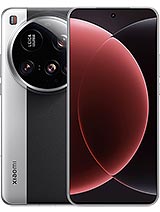 Xiaomi 15 Ultra
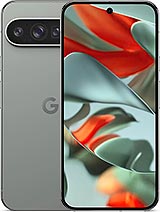 Pixel 9 Pro XL
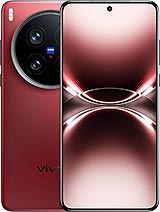 vivo X200 Ultra
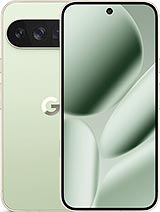 Pixel 10 Pro XL
 Sony Xperia 1 VII
But wired charging is only part of the story. The main news this year is the inclusion of Qi2 25W wireless charging. This brings with it a magnetic attachment that is part of the standard, but Google has decided to brand it Pixelsnap. Much like MagSafe, you would be able to purchase magnetic chargers that would latch onto the back of the phone or even use non-charging accessories with the magnetic back, like car holders. Moreover, the standard also works with existing MagSafe accessories, but you won't get the full 25W charging speeds as MagSafe is limited to 15W.
We did not have any compatible chargers to test this feature with at the time of writing, but it's certainly something to look forward to in the future.
Speakers
The Pixel 10 Pro XL has a pair of stereo speakers that are seemingly unchanged from last year's model. As mentioned before, the bottom loudspeaker has been repositioned, so you are far less likely to block it with your hand when you hold the phone.

In terms of audio quality, the Pixel 10 Pro XL seems to perform similarly to the 9 Pro XL. The sound is bassy and full-bodied at lower volumes, but thins out as you go higher. Also, as before, the volume bar seems to have far too many steps, and the first several seem to do very little. This somewhat logarithmic volume adjustment scale feels annoying compared to typical linear scales found on other devices, and once again, Google just seems to do things differently for no obvious reason.


Tip us
2.1m 180k
RSS
EV
Merch
Log in I forgot my password Sign up