Honor 400 review
Display
The display is one of the highlights of the Honor 400 package. It packs a decently sized 6.55-inch AMOLED panel with 10-bit color and a rather odd but still pretty high 1264 x 2736 pixel resolution. That works out to a pixel density of around 460 ppi, which is incredibly sharp.

Honor advertises a whopping 5,000 nits of display brightness. We did our standardized testing and got 613 nits by maxing out the slider. And in auto brightness mode in a bright environment, we got 1,550 nits. That's pretty great and makes for great visibility outdoors.
Max display brightness test
White test pattern, 75% fill (nits)
- Manual mode
- Auto mode
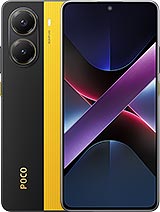
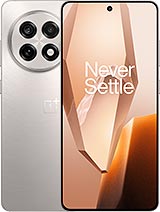
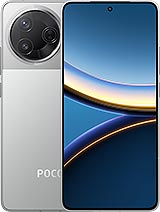
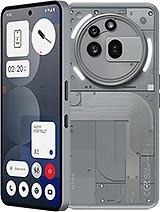
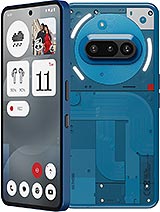
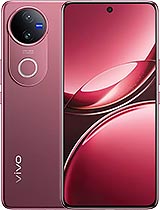
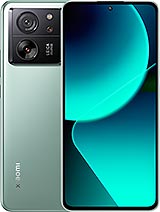
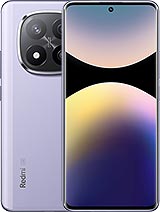
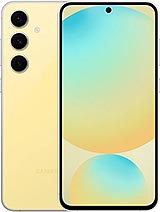
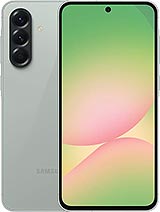
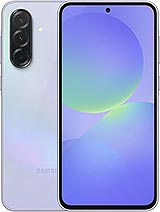
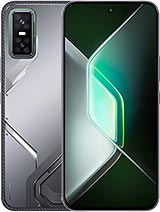 Infinix GT 30 Pro
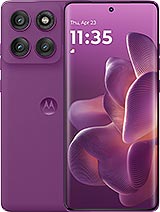 Motorola Edge 60 Pro
 Honor 400
 Honor 400 Pro
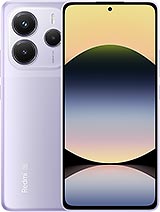 Redmi Note 14 5G
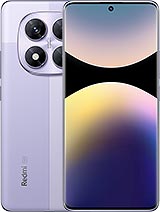 Redmi Note 14 Pro 5G
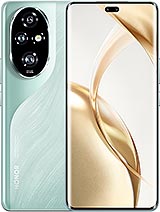 Honor 200 Pro
Three refresh rate modes are available on the Honor 400 Pro - Dynamic, Standard, and High.
Oddly, both High and Standards are fixed at 120Hz and 60Hz, respectively. Usually, the High mode still drops the refresh rate to a lower level for idle screens, but not on this Honor.
The Dynamic one dials down to 60Hz for static images and video streaming. We saw 90Hz and 120Hz used in most compatible apps.
Naturally, high refresh rate gaming works fine and very consistently since the High mode locks the refresh rate to 120Hz. On top of that, this mode has a per-app whitelist for high refresh rate mode, which helps increase the whole setup's versatility.

The Honor 400 has official HDR certification on its display. On a decoder level, it can handle HDR10, HDR10+ and HLG (no Dolby Vision). We can confirm that the phone managed to stream high-resolution HDR10 content on YouTube, Netflix and Prime Video. As you can imagine, the phone has the highest possible Widevine L1 DRM certification.
Battery life
The Honor 400 can either come with a 5,300 mAh battery or a 6,000 mAh one, depending on your region. The unit we got is the European one, which means 5,300 mAh.
The battery test results are not impressive. With an Active Use Score of 12:29 hours, the handset falls short of the competition, performing noticeably worse than most phones in its price range.
The Honor 400 seems to be struggling in all screen-on tests, especially in the web and video streaming scenarios.
Charging speed
Once again, depending on your region, the Honor 400 will either come with 66W wired fast charging support or 80W charging support. Our unit is a European one, which means 66W charging.
When it comes to charging, the Honor 400 holds its own with a 66W charging speed. It can go from 0 to 100% in just over 40 minutes, and a quick 30-minute charge restores about 80% of the battery. While this performance surpasses some competitors, it's slightly behind a few others in the same price range. Nevertheless, the gap is fairly minimal.
Charging speed
- in 15 min
- in 30 min
- Time to full charge (from 0%)
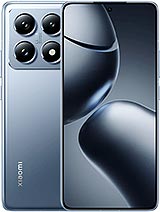 Xiaomi 14T Pro
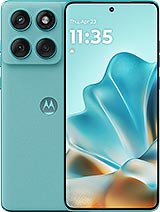 Motorola Edge 60 Fusion
Motorola Edge 60 Pro
Honor 400
Honor 200 Pro
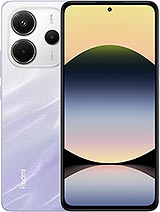 Redmi Note 14 4G
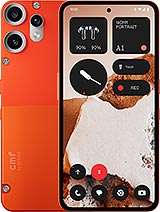 CMF Phone 2 Pro
The Honor 400 has a pretty standard but still very nifty set of charging optimization options. By default, Smart Charging is turned on, which tries to learn your usage patterns and charge to 80% and only full charge the device right before you need to use it. There is also safe charging, which waits for the battery to drop down to 95% before resuming charging, if left plugged in. You can also create a custom charging profile for even more control.

The Honor 400 does not support wireless charging.
Speakers - loudness and quality
The Honor 400 features a hybrid stereo speaker system, where the earpiece also functions as a stereo speaker, complemented by additional top-facing outlets to enhance audio balance. This is exactly like the Pro version.

At maximum volume, Honor provides a 200% High Volume mode that boosts higher frequencies, though this comes at the cost of reduced vocal clarity and bass depth. While it does make the sound subjectively louder, it compromises overall audio quality-a tradeoff worth considering.
The speakers earned a "Very Good" rating in our loudness test at full volume. The sound output is solid, with clear high frequencies and decent vocals, but the bass remains limited.
Use the Playback controls to listen to the phone sample recordings (best use headphones). We measure the average loudness of the speakers in LUFS. A lower absolute value means a louder sound. A look at the frequency response chart will tell you how far off the ideal "0db" flat line is the reproduction of the bass, treble, and mid frequencies. You can add more phones to compare how they differ. The scores and ratings are not comparable with our older loudspeaker test. Learn more about how we test here.
Connectivity
The Honor 400 has simultaneous SA/NSA Sub-6 5G connectivity on both of its Nano-SIM slots. There is also eSIM support. The Honor 400 has GPS, GALILEO, GLONASS, QZSS and BDS support for location. Local connectivity is handled by dual-band Wi-Fi 6 and Bluetooth 5.4 with LE and aptX HD support. There is also an NFC on board and an IR blaster. No FM radio, though.

A simple USB 2.0 data connection backs up the Type-C port. That means a theoretical maximum transfer rate of 480 Mbps. There is USB Host/OTG support, but nothing fancier like video output.
The Honor 400 has a TDK-Invensense ICM4X6XX accelerometer and gyroscope combo, an AKM AK0991X magnetometer and compass combo, and an amsAG TSL2510 ambient light sensor. Unfortunately, the QTI UPD proximity sensor seems to be a virtual one. It still does a pretty consistent job of turning off the display during calls. There is no barometer either.


Tip us
2.1m 180k
RSS
EV
Merch
Log in I forgot my password Sign up