Honor Magic V5 review
MagicOS 9 on top of Android 15
The Magic V5 runs on Honor's latest MagicOS 9, sitting on top of Android 15.
Honor has an amazing software support policy in place for the Magic V5, promising a total of seven years of OS and security updates. That applies only to the UK and EU markets, though. We aren't sure what other regions get.

The visuals are sleek and rounded, animations are nice and well timed, operation is smooth - no complaints. The iOS-like pill-shaped Magic Capsule notification is present here as well, even if the selfie cameras aren't really pill-shaped - it is useful for features such as timers, background music, and video playback. Neat little things that you can't get everywhere include large folders and cards - another name for the widgets that you can add for in-house apps, indicated by a bar under the app icon.


Magic OS


More Magic OS
Sure enough, there are some AI-based features, like the Magic Portal functionality - long-press on, say, an image, and a bar appears on the side with pre-selected apps and actions allowing you to search, email, and put down a note about the highlighted item. For instance, you could search online for any item you see pictured on a shopping site like eBay. It can also do other useful things, like dragging an address onto the maps app to get directions.


Magic Portal • Google Lens • Air gestures
The front-facing camera can also be used for air gestures - a familiar capability also found on the previous model.
Of course, the Magic V5 has a selection of AI tools. There is a suite of AI editing tools. There is an image-to-video feature that leverages Google's VEO models. AI Cutout can intelligently move objects in photos through smart selection and content fill. AI Eraser basically does the same thing, but only removes the selected object.
Honor announced their Deepfake Detection back at last year's IFA, but we see it implemented here for the first time. The system is intended for video calls. Once triggered, it analyzes the incoming video feed for any signs of deepfake manipulation and gives the user a percentage rating of how likely the image is to be doctored in any way.
Naturally, the big screen offers a lot more space for work and play. Magic OS has a great multi-window implementation with intuitive actions and both horizontal and vertical splits with a relatively wide ratio adjustment range (not just 50/50), plus floating windows.


Big screen interface
The Honor Magic V5 is particularly adept at communicating with Apple devices. Honor made sure to include both easy sync and content sharing capabilities within the OS. For example, you can easily share a LivePhoto from your iPhone with the Magic V5, and it will be received as a LivePhoto with the motion intact.
Benchmarks and performance
The Magic V5 runs on the flagship Snapdragon 8 Elite chipset. This basically means you get the cream of the crop in terms of performance, features and connectivity options. No compromises. In the CPU department, the phone has two Oryon V2 Phoenix L cores, running at up to 4.32 GHz and six Oryon V2 Phoenix M cores, clocked at up to 3.53 GHz. The onboard GPU is a powerful Adreno 830.

The Snapdragon 8 Elite is paired with 12GB or 16GB of quad-channel LPDDR5X RAM (plus up to 16GB of virtual memory) and either 256GB, 512GB or 1TB of storage. Honor doesn't state exactly what kind of storage chips it is using, but according to our testing, these are either UFS 4.0 or perhaps even the slightly faster and newer UFS 4.1.
Our review unit is a 16GB/512GB model.
Looking at some actual benchmark numbers starting with GeekBench and its CPU testing, we can see that the Snapdragon 8 Elite, as expected, is a chart-topper. It should be noted, however, that we performed our testing in the phone's Performance mode. When it is disabled (and it is by default to conserve battery and minimize heat), performance is significantly slashed.
AnTuTu, with its more comprehensive set of benchmarks, is quite generous towards the Magic V5 and its cover display, but less generous when it comes to rendering on the internal display. We aren't sure why the phone falls so far behind the rest of the Snapdragon 8 Elite crowd when using its main display, but we did double-check the results.
It might just be a benchmark compatibility bug since 3DMark and its off-screen rendering show the Snapdragon 8 Elite perform pretty much as expected.
GeekBench 6
- Multi-core
- Single-core
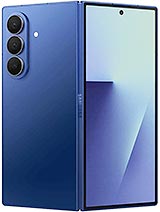 Galaxy Z Fold7
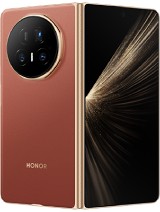 Honor Magic V5
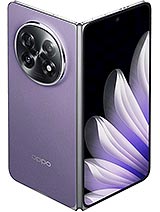 Oppo Find N5
 Huawei Mate X6
 Honor Magic V2
 Pixel 9 Pro Fold
 Tecno Phantom V Fold2
AnTuTu 10
Honor Magic V5 (Cover Display)
Oppo Find N5 (Cover display)
Galaxy Z Fold7
Oppo Find N5
Honor Magic V5
 Honor Magic V3
Tecno Phantom V Fold2
3DMark
- Wild Life Extreme (2160p)
- Solar Bay (1440p)
Oppo Find N5
Galaxy Z Fold7
Honor Magic V5
Honor Magic V3
Pixel 9 Pro Fold
Tecno Phantom V Fold2
Huawei Mate X6
Thermal-throttling
The Magic V5 offers great peak performance, as expected from the Snapdragon 8 Elite. However, it loses a significant portion of its performance within approximately fifteen minutes. We guess that is to be expected from such a thin device.

Thermal-throttling
It is worth noting that the heat buildup got so high during our testing that the review unit failed to go through a 3DMark WildLife Extreme stress test run.


Tip us
2.1m 180k
RSS
EV
Merch
Log in I forgot my password Sign up