Huawei MatePad Pro 12.2 (2025) review
Camera
The Huawei MatePad Pro 12.2 (2025) has two cameras on its back - a 50MP primary and an 8MP ultrawide shooter. We wonder why Huawei insists on having an ultrawide camera on such a large tablet, which likely will always be used indoors.
Image quality leaves a lot to be desired, and Exposures turn out darker than we'd expect. The dynamic range is limited, and the photos lack any sparkle regardless of which camera is used. We guess these cameras will be best used for scanning documents and QR codes.






Main camera samples: 0.6x • 1x • 2x
The main camera can capture 4K30 video, while the ultrawide is limited to 1080p30 video capturing. There is no electronic stabilization on either camera.
The front camera for video calls and selfies is an 8MP imager with a fixed focus. The output is not very sharp, and the dynamic range is quite limited.
Video recording is 1080p from this front-facing camera - we've added a video frame grab below. The video frame is about the same quality as a photo out of this camera, which tells you a lot about the general photo quality. Again, this is a large-screen tablet, so we don't think the cameras are important.



Front-facing camera: Selfie • 1080p Selfie video screengrab
Performance and benchmarks
Huawei refreshed the MatePad Pro 12.2" this year with a new chipset, the Kirin T92A, which is a derivative of the Kirin 9020 found in its phones like the new Pura 80 series and the Mate X6.
The Kirin T92A has a similar 8-core CPU consisting of 1x2.5GHz + 3x2.0GHz + 4x1.6 GHz cores, but the frequency on the mid cores is lower here, and of course, there is no phone modem as the tablet is Wi-Fi only.
The GPU inside T92A is HiSilicon Maleoon 920.
We tested the new MatePad Pro in two modes, Standard and Performance. The latter offers a tangible improvement in CPU speed (around 12%) and a more significant boost to GPU performance (around 17%).
The higher clock speeds allow the 2025 MatePad Pro 12.2 to edge out its 2024 predecessor in the single-core test.
Performance mode kicks in only in multi-core tasks, but even then, this wasn't enough to catch up to the 2024 tablet.
Overall, the CPU on the Kirin T92A appears to be comparable to the Snapdragon 888 in terms of performance.
GeekBench 6
- Multi-core
- Single-core
 OnePlus Pad 3
 Xiaomi Pad 7 Pro
Xiaomi Pad 7
 Honor MagicPad 2 12.3
 Huawei MatePad Pro 12.2 (2024)
 MatePad Pro 12.2 2025 (Performance)
 Infinix XPad GT
MatePad Pro 12.2 2025 (Standard)
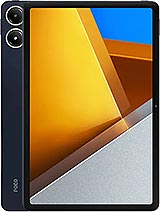 Poco Pad
HiSilicon used a new GPU for this chip, Maleoon 920, instead of the 910 found in the 9000S. How are those two different? HiSilicon has been fairly secretive about its chips, so we don't know.
However, there is a definite improvement - Standard mode allows the 2025 tablet to match the 2024 model and Performance mode gives it a 15% lead. That said, Huawei only has access to mid-range performance - the Kirin T92A beats the Snapdragon 7s Gen 2 but is no match for the 7+ Gen 3. It comes close to the Snapdragon 888 from 2021.
3DMark - Wild Life Extreme (2160p)
OnePlus Pad 3
Honor MagicPad 2 12.3
Xiaomi Pad 7 Pro
Xiaomi Pad 7
Infinix XPad GT
MatePad Pro 12.2 2025 (Performance)
Huawei MatePad Pro 12.2 (2024)
MatePad Pro 12.2 2025 (Standard)
Poco Pad
Overall performance as measured by AnTuTu is pretty solid with a score of over 1 million (though it needed the boost of Performance mode to clear that threshold).
AnTuTu 10
OnePlus Pad 3
Xiaomi Pad 7 Pro
Xiaomi Pad 7
Honor MagicPad 2 12.3
MatePad Pro 12.2 2025 (Performance)
Infinix XPad GT
MatePad Pro 12.2 2025 (Standard)
Huawei MatePad Pro 12.2 (2024)
Poco Pad
Huawei's silicon endeavors and SMIC semiconductor nodes are improving, but they still have a lot of catching up to do, especially if the company wants to match the cutting-edge offerings from Qualcomm, MediaTek and other chipset makers.
Finally, we ran our usual stress tests, and the sustained performance is commendable - 79% for CPU and virtually no throttling - 99.6% - for GPU.
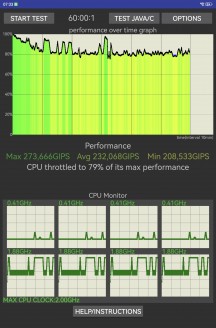
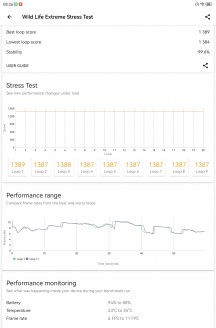
CPU test • GPU test
Our verdict
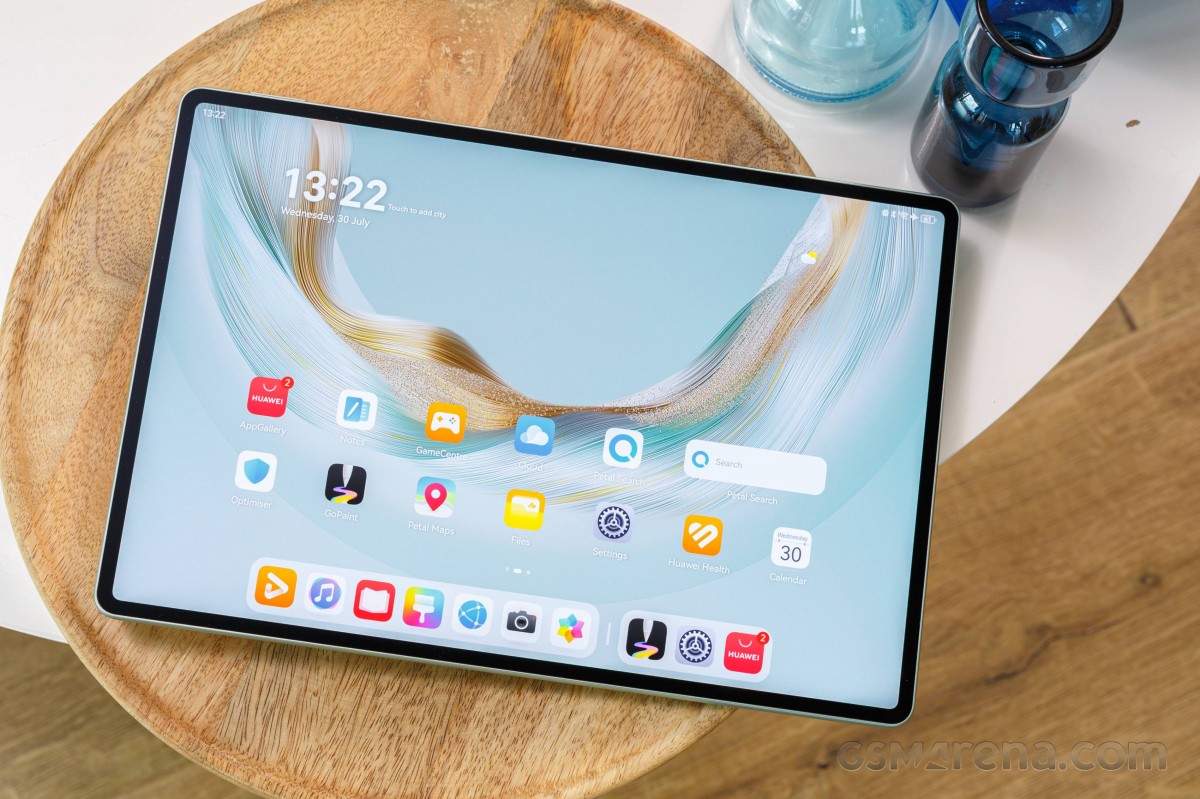
The Huawei MatePad Pro 12.2 (2025) is a premium tablet that starts at €850 for the base 12/256GB variant and goes up to €1,000/£900 if you want the 12/512GB version with a PaperMatte display.
We are impressed by the tablet's display, the great battery life and the incredibly fast charging. The 3rd Gen M-Pencil works really well, and the rich drawing and writing options are constantly evolving in software. The default Huawei Notes app and the Huawei GoPaint app found on the MatePad tablets are the best we've seen compared to what other tablet makers ship on their tablets.
Huawei is also putting a lot of effort into improving HarmonyOS and EMUI. The OS has become feature-rich and has some perks that can be appreciated even by power users. And you can get most apps from the Google Play Store to work one way or the other, as long as you are the tinkerer type. Despite that, the outdated Android core remains the usual elephant in the room.
The PaperMatte option is not cheap, and not everyone will find it paper-like. It is fingerprint-resistant, and the anti-glare effect is amazing, but with a €150 markup, you have to think twice if it's worth that to you. Of course, it comes with double the storage, so that helps.
The lack of GMS and the limitations in app support are far less likely to matter on a tablet than on a phone. Having absolutely the best performance on the tablet is not that important either, so these are not deal breakers. Rear camera quality is not as important as on a phone either.
We'd consider a large tablet's main use cases to be web browsing, video watching, possibly video conferencing, and note-taking and sketching. The MatePad Pro covers all these use cases wonderfully.
Huawei has also doubled down on the laptop-replacement side of the market by offering not only an excellent keyboard, but also a wireless NearLink mouse and PC-grade Office application in supported markets.
Pros
- Superb display, bright, fast, colorful.
- PaperMatte glass is quite nice.
- Class-leading battery life.
- Incredibly fast charging, and the dual-port 100W charger comes bundled in most places.
- Powerful speakers with very good quality.
- Comes bundled with a keyboard with a touchpad.
- Great Notes and GoPaint apps.
- Workarounds like GBox, microG or AuroraStore allow you to get most apps from the Play Store to work.
Cons
- No cellular version (and no GPS).
- No Google Mobile Services.
- No video recording stabilization (EIS).
- Mediocre chipset performance.


Tip us
2.1m 180k
RSS
EV
Merch
Log in I forgot my password Sign up