Moto G & G Play (2026) review
Reasonable camera performance
The Moto G (2026) sits a notch below even the G Power 2026 in terms of its camera hardware and omits the ultrawide module. It does replace it with an unassuming 2MP macro unit with fixed focus, so ultimately, there are still two cameras on the back, if you're inclined to count that one. The selfie camera is the same - it's a 32MP camera that outputs 8MP images, so it's a fairly substantial improvement
Moto G (2026) camera specs:
- Rear camera (main): 50MP OmniVision OV50D (1/2.88", 0.61µm-1.22µm); 29mm, f/1.8, OIS, multi-directional PDAF (9cm - ∞);
- Macro: 2MP OmniVision OV02B (1/5.0", 1.75µm); 21mm, f/2.5, fixed focus;
- Front camera (selfie): 32MP Samsung ISOCELL KDS (S5KKDS, likely a variation of S5KKD1, 1/3.42", 0.64µm-1.28µm); 23mm, f/2.2, fixed focus;
The Moto G Play (2026) downgrades the camera system even further. It's only got a 32MP camera on the back. Another difference is at the front, where the G Play uses an 8MP camera.
Moto G Play (2026) camera specs:
- Rear camera (main): 32MP Samsung ISOCELL KD1 (S5KKD1, 1/3.42", 0.64µm-1.28µm); 28mm, f/2.2, PDAF;
- Front camera (selfie): 8MP OmniVision OV08F (likely a variation of OV08B 1/4.0", 1.12µm); 26mm, f/2.0, fixed focus;
A noteworthy aspect of these cameras is the unusually long 29mm equivalent focal length, which means they won't fit as much in the frame as you might be used to from other phones.
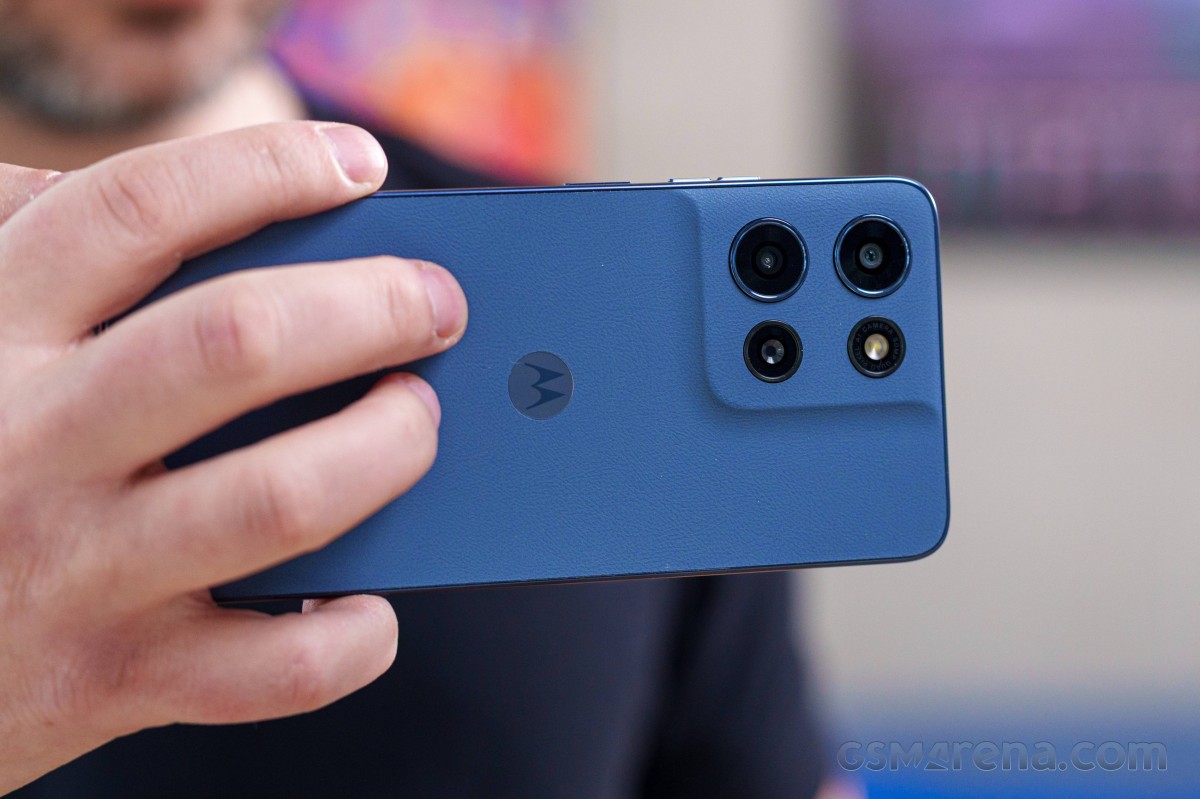
Since the cameras are almost the single major difference between the Moto G (2026) and Moto G Play (2026), we will look into the general image quality produced by the Moto G (2026), and we'll point out how it compares to the Moto G Play (2026) with some side-by-side samples as we go along.
Daylight photo quality
Main camera
The Moto G's rear camera's 1x results offer a good dynamic range and faithful color reproduction. Detail is decent overall, though things are a little grainy, a bit more so than what our experience with the Moto G Power 2026 was. There's no 50MP mode.










Daylight samples, main camera (1x)
Here's a handful of people shots to illustrate what we think is a good, true-to-life rendition of skin tones. Portrait mode is doing alright with subject detection, but dynamic range takes a significant hit.








People, main camera (1x): Photo mode • Portrait mode
The Moto G Power 2026 didn't have a 2x shortcut in the viewfinder, but it did have an ultrawide cam to add variety in coverage. Here, in the absence of another camera, you do get a 2x button instead. Having a button to get there doesn't make the photos any better, and we'd rate the zoom performance as passable, at best.








Daylight samples, main camera (2x)
A little quirk we noticed with the Moto G’s main camera is that sometimes it has issues with autofocus, which leads to blurry photos more often than we’d like. The issue is exacerbated after dark.




Moto G (2026) exhibits the odd issues with auto focus
Moto G Play (2026) comparison
In good light, the rear cameras of the Moto G (2026) and Moto G Play (2026) have very comparable image quality. The Moto G Play (2026), however, didn't have any of the auto focus issues of the Moto G.








Rear camera comparison Daylight: Moto G (2026) • Moto G Play (2026)




Rear camera comparison People: Moto G (2026) • Moto G Play (2026)
Macro camera
The Moto G Power 2026's macro camera is little more than a waste of space (not a lot of space, we gather, but even so). It's got a relatively wide 21mm-equivalent lens with a very short focus distance and barely any resolution - so you'll be throwing a shadow on your subject, and getting distorted images with not a lot of detail.



Daylight samples, macro camera
Selfies
The selfies on the Moto G (2026) are a breath of fresh air in its overall not stellar camera performance. It's not like they're amazing, but they are better than on the previous generation and pretty nice for the class.






Selfie samples
Moto G Play (2026) comparison
The Moto G's selfie camera has a wider field of view than the G Play, but the image quality is again similar. We even like the Moto G Play’s take on faces better.




Rear camera comparison Selfie: Moto G (2026) • Moto G Play (2026)
Low-light photo quality
Main camera
In the dark, the Moto G (2026)'s rear camera would often struggle to acquire focus in our usual test scenes - an issue we didn't observe on the Moto G Power 2026. We had to tap to focus, take extra shots, and reframe several times, and even then we ended up with scenes without a real keeper. Sharpness is meh even in the photos that are in focus, but dynamic range and colors aren't half bad, after all.






Low-light samples, main camera (1x)
Night mode didn't help with the focusing, and it didn't really bring a notable improvement in other areas, with the added sharpening possibly making things worse, we reckon.






Low-light samples, main camera (1x), Night mode
At 2x zoom, between the focusing woes and the upscaling, you'd likely end up with generally unusable photos, whether in photo mode or in night mode.




Low-light samples, main camera (2x)




Low-light samples, main camera (2x), Night mode
Moto G Play (2026) comparison
In low light, the rear cameras of the two phones once again have very comparable image quality, providing okay exposures but with clipped highlights and mushy detail. The Moto G’s auto focus issues continue after dark, as expected (samples not included below).








Rear camera comparison Low-light: Moto G (2026) • Moto G Play (2026)
Night mode improves performance to good levels, though neither is anything to write home about.








Rear camera comparison Night mode: Moto G (2026) • Moto G Play (2026)
Video quality
The Moto G (2026) has a very basic video recording feature set. The rear camera maxes out at 1080p60fps, while the selfie camera is capped at 1080p30fps. You can still choose between h.264 and h.265 codecs, but there's no HDR recording. Stabilization is apparently always on - there's no toggle of any sort, but the videos are apparently stabilized.
You can check out the playlist below, which includes multiple video samples.
You'd be wise not to expect great video quality from the Moto G (2026), but the 1x footage from the rear camera is just about usable. Dynamic range and colors are good, and detail is alright for 1080p. Low-light clips are very noisy, but reasonably sharp.



Moto G (2026), video screengrabs: Daylight, 1x • Daylight 2x • Low light 1x
The Moto G's autofocusing issues carried over to video recording as well, and we observed some focus hunting when shooting from a fixed standing position and more of it when walking. The situation is particularly bad in low-light conditions.
The video stabilization does quite admirably if you're not walking and you get the focus right, while videos shot while walking will have a bit more of a tremor from the focusing.
Moto G Play (2026) comparison
On the positive side, the Moto G captures slightly sharper and more contrasty videos than the G Play, and at 2 times zoom, the gap widens even more.
At night, the Moto G again has the advantage in quality, but only if you can get it to focus properly on your subject, which turned out to be a challenge once again.








Rear camera comparison Video snapshot: Moto G (2026) • Moto G Play (2026)
Camera quality verdict
The Moto G and Moto G Play's rear cameras are about as basic as they come. Nevertheless, we found daytime photos to be decent, and video quality was acceptable in good light. Low-light photos and videos are pretty mediocre, though Night mode at least helps the photos a bit. The Moto G's erratic auto focus behavior makes it hard to recommend for its camera. The Moto G Play (2026) offered a more reliable performance in this respect. We also liked its selfies somewhat better. The Moto G (2026) does have better video quality than the G Play (2026) - when it gets the focus right.


Tip us
2.1m 180k
RSS
EV
Merch
Log in I forgot my password Sign up