Moto G Power (2026) review
Display
The display is probably a weak point in the Moto G Power (2026)'s specs sheet. The display is a pretty spacious 6.8 inches in diagonal, but that's about the only thing that it has going for it. The panel is an IPS LCD one, which is kind of a bummer now that OLED has become so ubiquitous even in the lower end of the market.

The resolution isn't bad at FullHD+ (1080 x 2388 pixels), but it is not impressive either. At this diagonal, this works out to a perfectly sharp 387 ppi, or so.
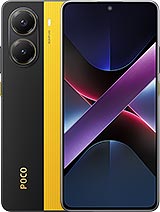
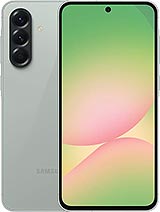
We ran our usual array of standardized tests on the display and got decent, but far from incredible, numbers. We got just shy of 500 nits by maxing out the slider and a max auto brightness of 940 nits. This sort of brightness is ok for most situations, but out in sunny weather, you are definitely going to struggle.
Max display brightness test
White test pattern (nits)
- Manual (75% fill)
- Auto (75% fill)
- Peak Auto (10% fill)
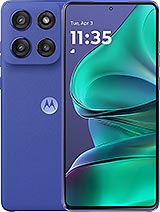
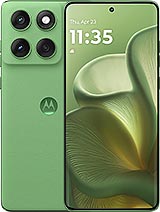
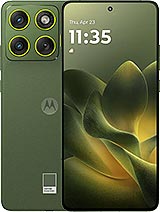
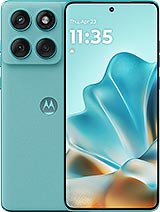
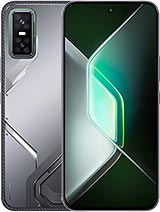 Infinix GT 30 Pro
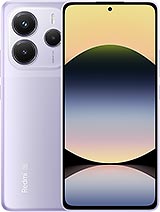 Redmi Note 14 5G
 Redmi Note 14 Pro 5G
 Poco X7
 Moto G Power (2025)
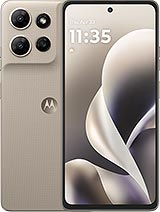 Moto G Power (2026)
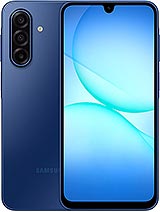 Galaxy A17
The display on the Moto G Power (2026) can refresh at up to 120Hz. It can actually operate at 30Hz, 60Hz, 90Hz and 120Hz. There are a total of three modes for refresh rate you can choose in settings. "Efficiency first" caps the refresh rate to 60Hz, which means that the phone switches down to 30Hz when nothing is happening on screen and then up to 60Hz when you are interacting with it. That is the basic logic for the other two modes as well. The difference is that in the default "Smart and balanced" mode, the phone is a lot more conservative with going up to 120Hz and tends to favor 90Hz more often. In the final "Hyper smooth" mode, you rarely ever get 90Hz and most of the time the phone stays at 120Hz, but does still occasionally drop down to 60Hz and 30Hz.

Unfortunately, high refresh rate gaming is very inconsistent with this automatic switching setup, even if we appreciate that it is quite dynamic in nature and should thus save a fair bit of power.
The even worse bit, however, is that the display pixels on this particular LCD are very sluggish and slow to respond. Regardless of the refresh rate, there is a lot of smearing and ghosting, especially around slower-moving objects or while scrolling text.
It is frankly one of the worst displays we've seen in a while.
The Moto G Power (2026) lacks any HDR support. On a more positive note, it is certified for the highest possible Google Widevine L1 DRM, allowing services like Netflix to offer up FullHD streams.
Battery life
Battery life on the Moto G Power (2026) is solid, but far from spectacular, unlike what its name suggests.
The phone has a decently large 5,200 mAh battery and makes pretty good use of it in most scenarios. Both call time and video streaming time are great, and the phone does alright with web browsing, too. Gaming could definitely use a boost, and that's despite the fact that we run the gaming portion of the tests at 60Hz to give the best chance possible to shine.
Charging speed
The Moto G Power (2026) supports 30W charging via what it calls TurboCharge. While it seems to be based on simple USB Power Delivery, it is not exactly the same thing, and in our testing, we did not get the full 30W charging rate with a generic PD charger. You should probably get something like the 33W Moto-branded charger to get the best speeds possible.

Having said that, even those aren't fast by any means. Fifteen minutes on the charger in our testing resulted in 27% of battery, and thirty minutes resulted in 47% battery. A full charge took almost exactly an hour and a half. These are not great speeds for 2026.
Charging speed
- in 15 min
- in 30 min
- Time to full charge (from 0%)
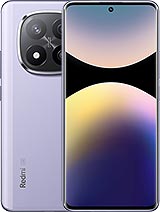 Redmi Note 14 Pro+ (Global)
Moto G Power (2025)
Infinix GT 30 Pro
Galaxy A17 5G
Moto G Power (2026)
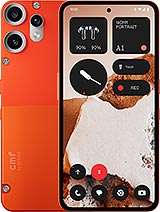 CMF Phone 2 Pro
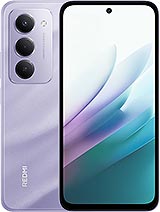 Redmi 15 5G
Unfortunately, unlike last year's model, the 2026 iteration lacks wireless charging.
In terms of battery protection features, the phone can limit its charging to 80% so as to preserve battery health for longer. This can either be done on a fixed schedule, or you can let AI learn your usage patterns and adjust top-offs accordingly automatically.
Speakers - loudness and quality
The Moto G Power (2026) has a stereo speaker setup with one main bottom-firing speaker and another front-facing one, above the display, doubling as an earpiece. This intrinsically means that balance isn't amazing. The bottom-firing speaker is noticeably louder.

Quality is decent. Nothing to phone home about, but you still get clear mids and mostly undistorted highs. The sound stage isn't particularly rich, but then again, it's decent enough for a budget device.
On a more positive note, the Moto G Power (2026) gets loud, like really loud. You should have absolutely no trouble hearing it when it rings, if that is your main concern.
The Moto G Power (2026) has Dolby Atmos support. That includes a couple of smart equalizers that adapt to whatever you are listening to, as well as a few presets and a full set of manual tuning sliders for custom profiles.
Use the Playback controls to listen to the phone sample recordings (best use headphones). We measure the average loudness of the speakers in LUFS. A lower absolute value means a louder sound. A look at the frequency response chart will tell you how far off the ideal "0db" flat line is the reproduction of the bass, treble, and mid frequencies. You can add more phones to compare how they differ. The scores and ratings are not comparable with our older loudspeaker test. Learn more about how we test here.
Connectivity
The Moto G Power (2026) is a 5G device. It supports SA/NSA 5G connectivity on its singular Nano-SIM slot. Beyond that, it also has eSIM compatibility, which is a nice addition. For location, the phone supports GPS, GALILEO and GLONASS. Local connectivity is handled by pretty basic dual-band Wi-Fi ac/5, plus Bluetooth and NFC. There is an FM radio receiver on board and a convenient 3.5mm audio jack to go along with it.

The Type-C port is backed up by a simple USB 2.0 data connection, which means a theoretical maximum throughput of up to 480 Mbps. There is USB OTG/Host support, but nothing fancier like video output via Alt mode.
The Moto G Power (2026) has a surprisingly plentiful set of sensors. There is an st lsm6dso accelerometer and gyroscope combo, a qst qmc6308 magnetometer and compass combo, a sensortek stk3a5x light and hardware proximity combo, and there is even a bosch bmp580 barometer.


Tip us
2.1m 180k
RSS
EV
Merch
Log in I forgot my password Sign up