OnePlus 13s hands-on review
OxygenOS
The OnePlus 13s runs on OxygenOS 15 running on Android 15. The company has promised four years of Android updates and six years of security updates.

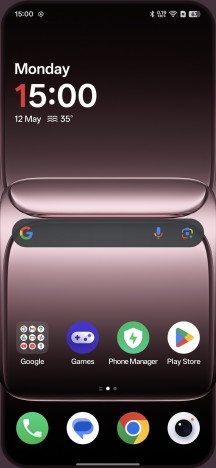
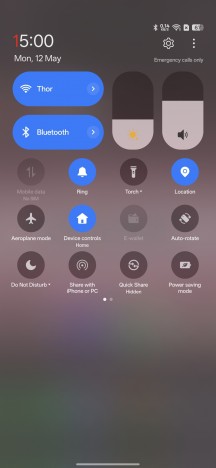
The phone comes with some new software features but we will get into those later. It's important to address the experience of using OxygenOS, which unfortunately has deteriorated over the years, undoing many of the improvements it has had.
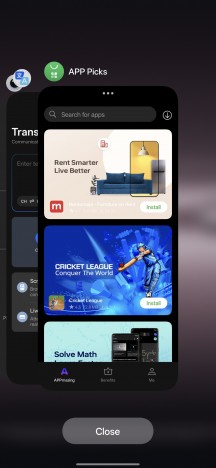
Many factors contribute to this. For starters, it's the amount of pre-installed apps. At a time when many vendors are being vocal about the reduction or a complete lack of bloatware and pre-installed apps on their phones, OnePlus has only doubled down on increasing it.
OxygenOS 15
There is an oppressive insistence from OnePlus on having its own version of every app, which results in two web browsers, two photo galleries, two file managers, two app stores, and even two contacts apps. It seems the company is incapable of picking one from each of these and worse, won't let you do it either since none of these can be uninstalled.


Pre-installed apps
OxygenOS is also genuinely awful in the way it wastes your time with inane notifications. Every few days you will be asked to manually optimize the battery usage for one of the apps you have on your phone. Phones from other companies manage this automatically on your behalf and even though OxygenOS is set to manage this automatically, it will still bother you to tinker with the background usage settings for one of the apps for absolutely no reason. This is just one of the many kinds of system notifications the phone will keep popping up throughout the day and of course, you do not have permission to disable these notifications.
The OS is also incredibly aggressive in the way it shuts down apps in the background. There is no coming back later to an app you had opened previously as it would have guaranteed to be closed by then. It is often a struggle to run our testing apps that require background processing as the phone would just quit them without warning even if there is no shortage of memory.
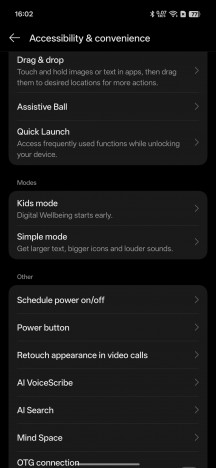

Features and customization
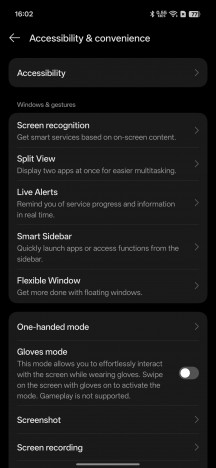
These annoyances often get in the way of enjoying the things that are actually good. OxygenOS has robust multitasking capabilities inherited from tablets and foldables, which makes it surprisingly functional, even on a smaller screen. There is extensive customizability on offer. The built-in apps, while sometimes superfluous, all function well. Little touches such as an app used to share a file opening in its own floating window instead of taking up the entire screen are appreciated. And finally, the phone was perfectly stable in our use with no bugs to report.
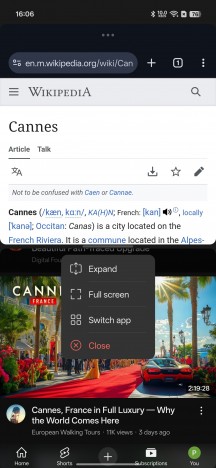
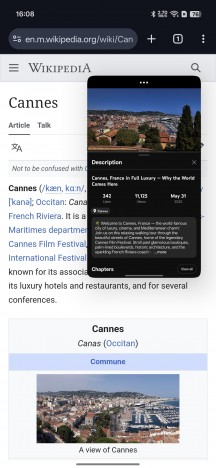
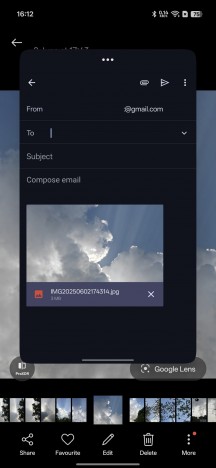
Multitasking
Clearly, there is a lot to appreciate here. But it's buried underneath much more in-your-face annoyances that taint the overall experience. OnePlus needs to take a page from competitors like Nothing in minimizing distractions and annoyances while maintaining functionality, otherwise the software will remain a sore spot for the company.
Plus Key
Debuting on the OnePlus 13s is what the company calls the Plus Key. This officially ends the eleven-year run the Alert Slider had as the best physical switch on any Android phone. But just as the Alert Slider was based on the iPhone's Ring/Silent switch, the Plus Key is based on the iPhone's Action button. And this time it's not even subtle.
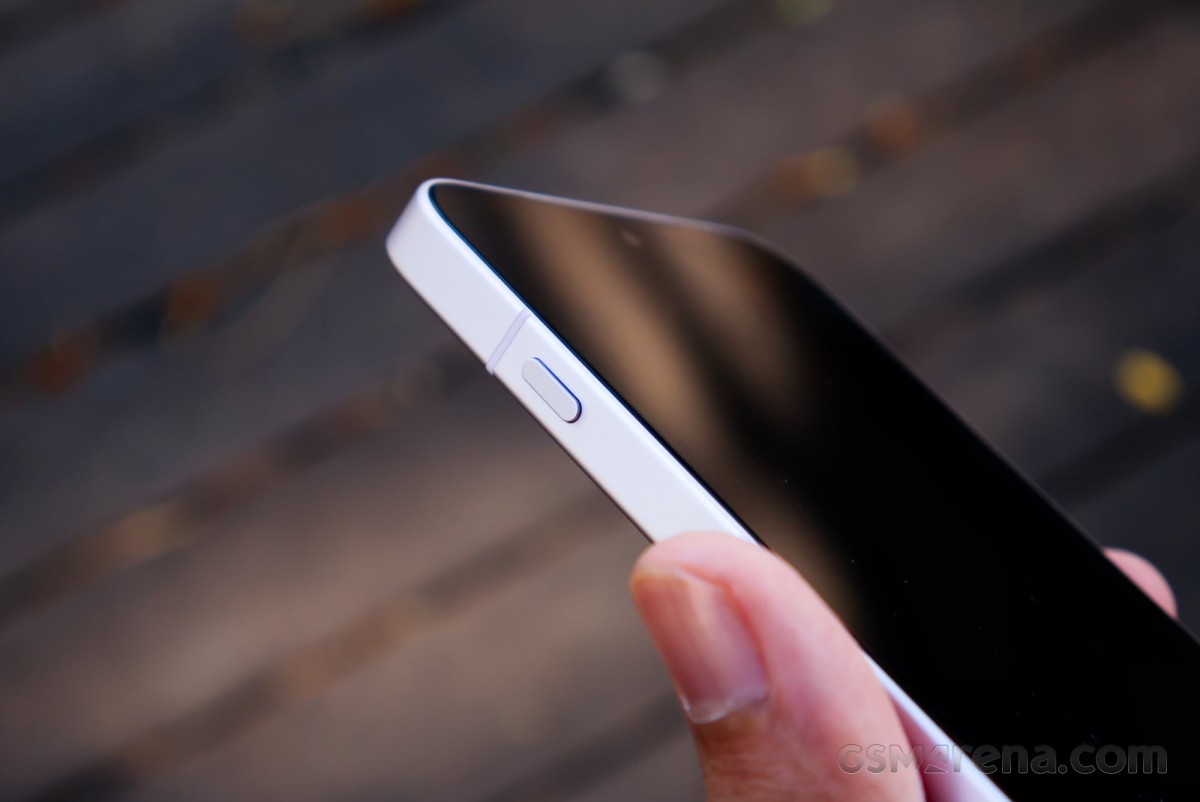
The menu for the Plus Key can be found in the Settings app. Open the menu and you get a UI very similar to that of the iPhone's but with somehow fewer options and only one of them can be set at a time. And that's really our problem with this button.
The Alert Slider might have had the same idea as the iPhone but it went a step further and added a third notch for DND instead of just toggling the ringer. The Plus Key, meanwhile, is satisfied being a cheap knock-off of the iPhone's Action button with even fewer options to choose from.
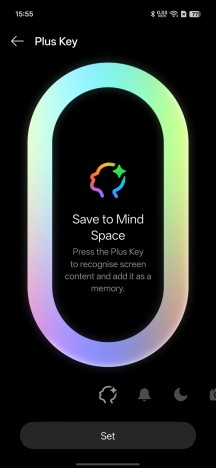

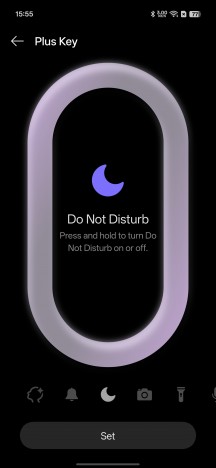
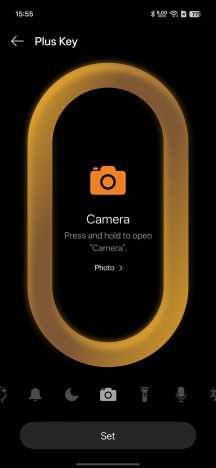
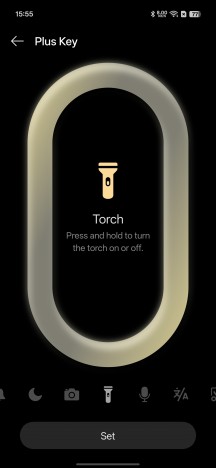
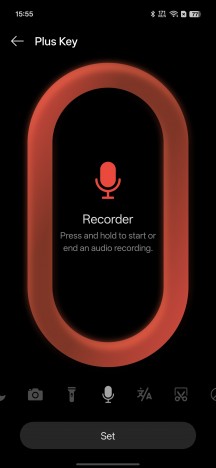
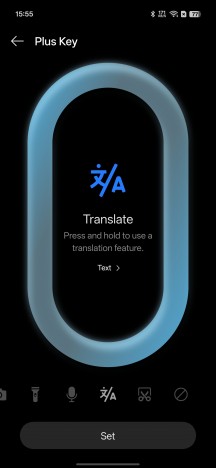

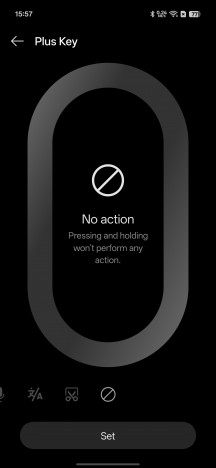
Plus Key functions
One would expect the Android implementation to have added perhaps single, double, or even triple-tap gestures along with added functions so you can do more with the same button. However, it is content doing the same lackluster singular press-and-hold function as on the iPhone, which feels like a massive waste of potential.
OnePlus AI
Along with the Plus Key, the OnePlus 13s is also the launchpad for OnePlus's AI endeavors, unimaginatively titled OnePlus AI.
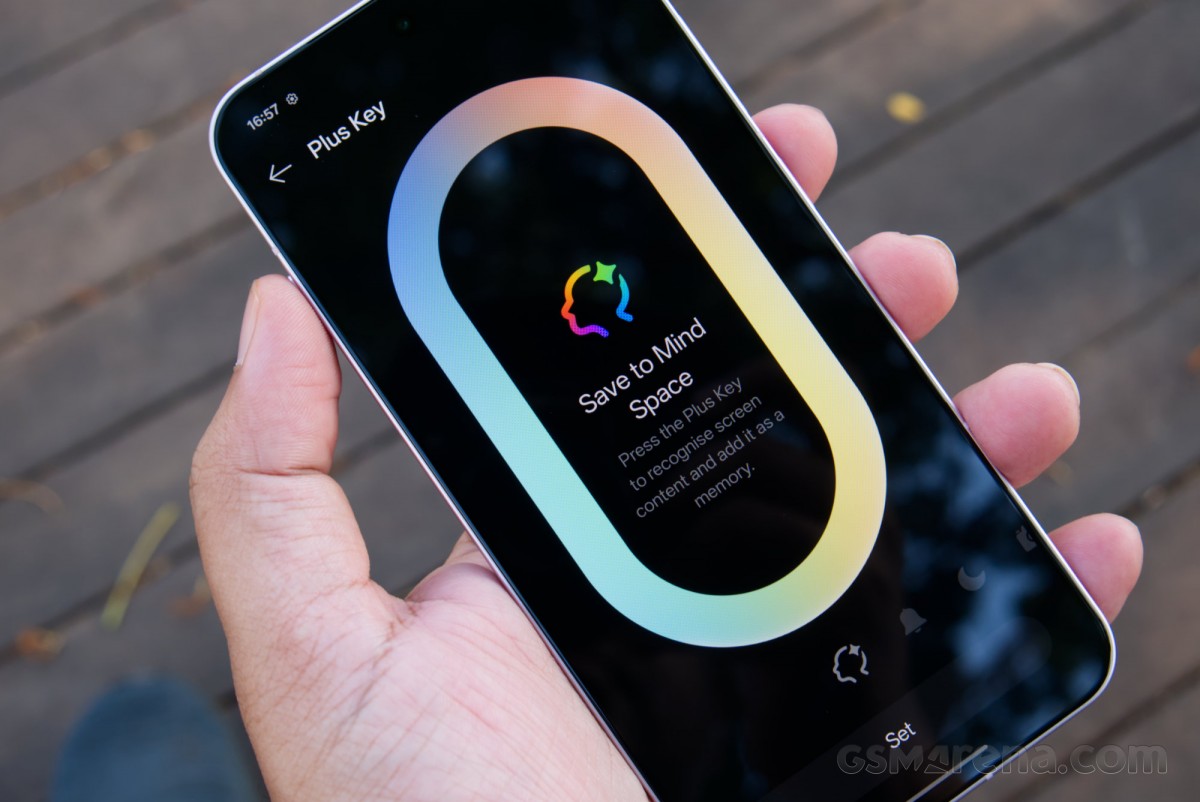
This includes a bunch of new features but the main one is AI Plus Mind. Assigned by default to the Plus Key but can also be brought up with a three-finger swipe up, it captures a screenshot and uses AI to analyze the contents within. It can parse information such as phone numbers, addresses, dates, etc., and file them along with the image. You can easily click on these details later to add them to your calendar, and contacts, or open them in Maps. It can also summarize the text within the image and later this year you will also be able to automatically categorize saved content.
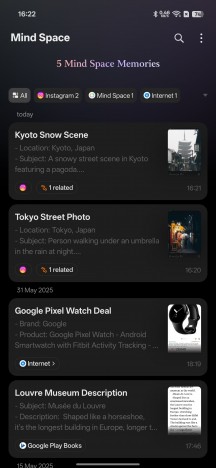
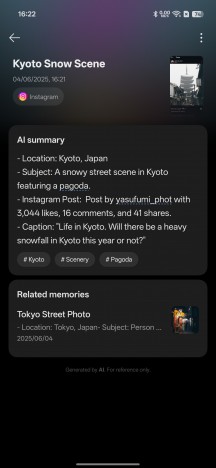

Mind Space
Other AI features include AI Voicescribe for recording, summarizing, and translating calls in popular messaging, video, and online meeting apps, an AI Call Assistant with the new OnePlus Dialler app (currently exclusive to India) that can also do real-time call translation and call summarise on regular phone calls, an AI Search feature for contents on the device, AI Reframe for adjusting photo compositions, and coming later this year, AI Best Face 2.0, which can automatically correct facial expressions. There's also a new AI Translation app, which other than doing basic translations, can also be run on top of other apps so it can continuously translate the text on screen or the audio currently playing.
OnePlus has also announced improved integration with Google Gemini, which will now work in OnePlus apps like OnePlus Notes, Clock, and more.
OnePlus's AI features so far seem limited but also relevant to what users might actually need. Most of these features do have valid use cases and we got decent use out of the AI Plus Mind feature to quickly file away information as it's like a screenshots utility on steroids. It would serve the company well to stick with such usable features on its AI journey instead of trying to be everything for everyone.
Performance
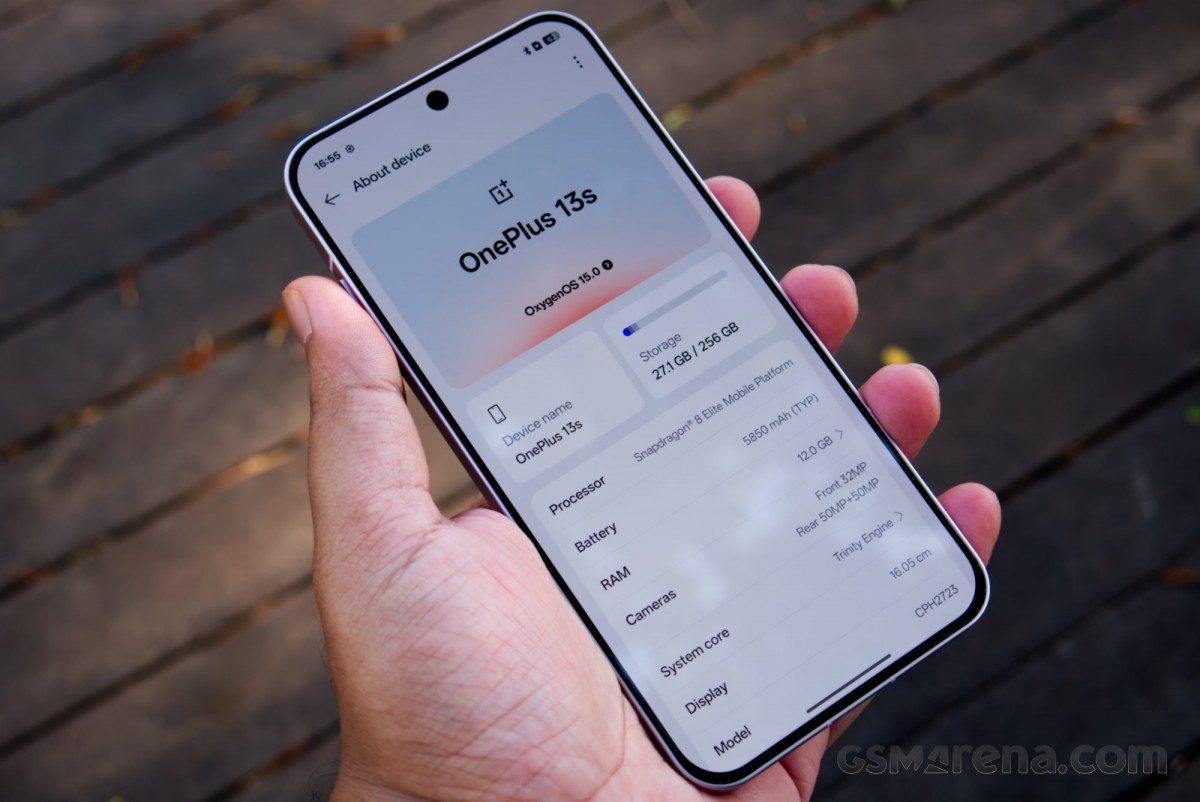
The OnePlus 13s is powered by the Qualcomm Snapdragon 8 Elite chip, which is ultimately the source of OnePlus' flagship claims. Paired with the chip is 12GB of LPDDR5X memory and a choice of either 256GB or 512GB of UFS 4.0 storage.
OnePlus has also employed a 4,400mm² vapor chamber to keep the chip cool. While larger than that of most phones of this size, it's also less than half the size of the 9,925mm² vapor chamber used by the OnePlus 13 which has the same chip. To prevent some of that excess heat from pooling in one spot, the OnePlus 13s also has a graphite sheet underneath the back glass that spreads it around and prevents hotspots.
As usual, there are two aspects to the phone's performance, what we see in practice and what we can measure with benchmarks. In benchmarks, the OnePlus 13s routinely fell short of the OnePlus 13. The smaller heatsink design prevents the chip from running at higher clock speeds outside of short bursts so any extended benchmark will result in a lower overall score.
GeekBench 6
- Multi-core
- Single-core
 OnePlus 13
 OnePlus 13s
 Poco F7 Ultra

 Poco F7 Pro
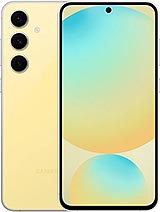 Galaxy S24 FE
 Motorola Edge 60 Pro
 Realme 14 Pro+
AnTuTu 10
OnePlus 13
Poco F7 Ultra
OnePlus 13s
 Realme GT 7
Galaxy S24 FE
Motorola Edge 60 Pro
Realme 14 Pro+
3DMark - Wild Life Extreme (2160p)
OnePlus 13
OnePlus 13s
Poco F7 Ultra
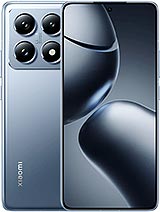 Xiaomi 14T Pro
Galaxy S24 FE
Motorola Edge 60 Pro
Realme 14 Pro+
And just to confirm that the limitations were cooling-related and not due to underclocking, the OnePlus 13s produced the same benchmark scores as the OnePlus 13 once we cooled it down below ambient. This shows the OnePlus 13s isn't running a gimped version of the Snapdragon 8 Elite but rather just has to clock down more aggressively once the smaller heatsink reaches its limit.
This does not have much bearing on real-world performance, which was always excellent. The OnePlus 13s also handled Indian summers well, keeping display brightness up even when shooting all day under a 40°C sun. The phone also offered excellent gaming performance, although the maximum 120Hz refresh rate was reserved for only a handful of whitelisted titles, such as BGMI. Everything else just ran at 60fps.

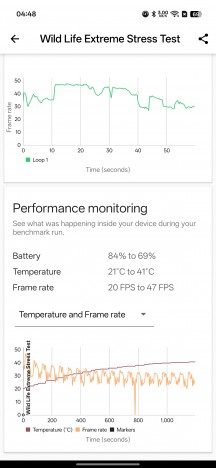
Getting back to thermal performance, the OnePlus 13s did well in our tests specifically designed to highlight cooling performance. However, one has to keep in mind you are also getting proportionately less performance compared to other Snapdragon 8 Elite devices so while the phone never gets uncomfortably hot, it's also not running full throttle. Having said that, this chip has so much performance to offer that even if you lose some of it under extensive use, there's still a lot available.
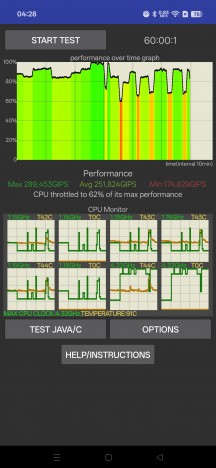
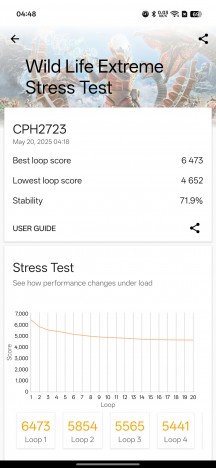
Thermal throttling


Tip us
2.1m 180k
RSS
EV
Merch
Log in I forgot my password Sign up