OnePlus Nord CE5 review
Display
The OnePlus Nord CE5 has a 6.77-inch OLED display. It has a 2392 x 1080 pixel resolution and a 120Hz refresh rate. The panel features a 10-bit color depth and is certified for HDR10+ compatibility.

OnePlus says that the Nord CE5 can do 800 nits of typical brightness, with 1,300 nits of whole display brightness and 1,430 nits of peak brightness. We did our standardized testing and measured 811 nits by maxing out the slider and 1,231 nits in max auto mode with a bright light source present.
Max display brightness test
White test pattern, 75% fill (nits)
- Manual mode
- Auto mode


 Infinix GT 30 Pro
 Poco X7 Pro (with no boost)
 Galaxy A36
 OnePlus Nord CE5
 Galaxy A56
 Infinix Note 50 Pro 4G
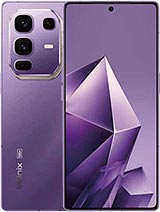 Infinix Note 50 Pro+
In terms of refresh rate, the Nord CE5 supports 120Hz. The phone reports support for 30Hz, 60Hz, 90Hz and 120Hz operation. In terms of modes, the phone offers three settings: Auto Select, Standard, and High.

Standard is self-explanatory. It just locks the refresh rate to 60Hz. Auto Select and High both offer a refresh rate of up to 120Hz. They seem to behave in the exact same manner - you get 120Hz while interacting with the phone, and then after a few seconds of inactivity, the refresh rate drops down to 60Hz. We rarely saw 90Hz in action. A few Google apps do use it, but that's about it.
The main difference between the Auto select and High modes seems to be that High offers a per-app refresh rate selector, which sounds pretty neat on the surface. In practice, however, it wasn't helpful in forcing our test games to push past 60Hz. We had very little success when it comes to high refresh rate gaming.
On a more positive note, the Nord CE5 is HDR10+ certified. In software, it reports decoder support for HDR10, HDR10+, and HLG (excluding Dolby Vision). We are also happy to see that the phone supports the highest possible Google Widevine L1 DRM certification for streaming services to make use of.
Battery life
We are reviewing the global version of the Nord CE5, which has a 5,200 mAh battery, whereas the Indian variant boasts a larger 7,100 mAh battery.
We ran our standardized battery testing and got a very solid Active Use Score of 14:42 hours. That's quite respectable among the Nord CE5's peers and pretty much in line with what we would expect out of a Dimensity 8350 chip and a 5,200 mAh battery combo.
Charging speed
Just like its non-CE sibling, the Nord CE5 supports 80W SuperVOOC charging. We expected to see similar charging behavior between it and the Nord 5, but unfortunately, probably due to the different chipset, the Nord CE5 charges noticeably slower.
Still, the Nord CE5 holds its own reasonably well with a full charge cycle of around 55 minutes.
Charging speed
- in 15 min
- in 30 min
- Time to full charge (from 0%)
Infinix Note 50 Pro+
Galaxy A56
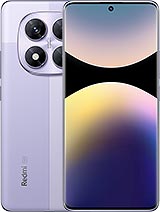 Redmi Note 14 Pro 5G
OnePlus Nord CE5
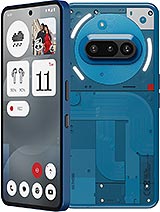 Nothing phone (3a)
Galaxy A36
Infinix GT 30 Pro
Speakers - loudness and quality
The OnePlus Nord CE5 features a single, bottom-firing speaker. There is no second speaker and no amplified earpiece for a hybrid setup. That's definitely a bummer, even at this price point.

In terms of loudness, the Nord CE5 managed a GOOD rating, which is respectable. Quality isn't a particular strong suit. Mids are muddy and muffled more often than not. Highs sound reasonably well, though, without much distortion. There is virtually no bass.
Use the Playback controls to listen to the phone sample recordings (best use headphones). We measure the average loudness of the speakers in LUFS. A lower absolute value means a louder sound. A look at the frequency response chart will tell you how far off the ideal "0db" flat line is the reproduction of the bass, treble, and mid frequencies. You can add more phones to compare how they differ. The scores and ratings are not comparable with our older loudspeaker test. Learn more about how we test here.
Connectivity
The Nord CE5 is a dual-SIM device with two Nano-SIM slots. It supports SA/NSA Sub-6 simultaneous 5G on both SIM slots. By the way, the second Nano-SIM slot is a hybrid one. It can accommodate either a SIM card or a microSD memory card, up to 1TB.
For positioning, the phone supports Navic, GPS, GLONASS, BDS, Galileo, and QZSS. Unfortunately, only single-band.

Dual-band 2x2 MIMO Wi-Fi 6/ax handles local connectivity. There is also Bluetooth 5.4 with aptX and LHDC5.0 support. There is also an onboard NFC chip and an IR blaster located on the back, next to the cameras. Unfortunately, no 3.5mm audio jack. The Type-C port is backed up by a simple USB 2.0 data connection, which means a theoretical max transfer rate of 480 Mbps. It lacks fancy additional features, such as video output.
The Nord CE5 features a decent set of onboard sensors. First off, it has a bosch BMI2XY accelerometer and gyroscope combo, also, a memsic MMC5603 magnetometer and compass combo. Also included is an OPLUS Fusion Light Sensor. And last but not least, the phone features a hardware proximity sensor - the Sensortek STK6A7X. No virtual proximity here. There is no barometer, though.


Tip us
2.1m 180k
RSS
EV
Merch
Log in I forgot my password Sign up