Samsung Galaxy A37 review
The competition
While the Galaxy A37 is a reasonably affordable device, it is definitely not cheap in absolute terms. You are still looking at around $450/€430 for the base 128GB variant. Granted, some regions do get a launch special from Samsung, which doubles the storage to 256GB at no cost.
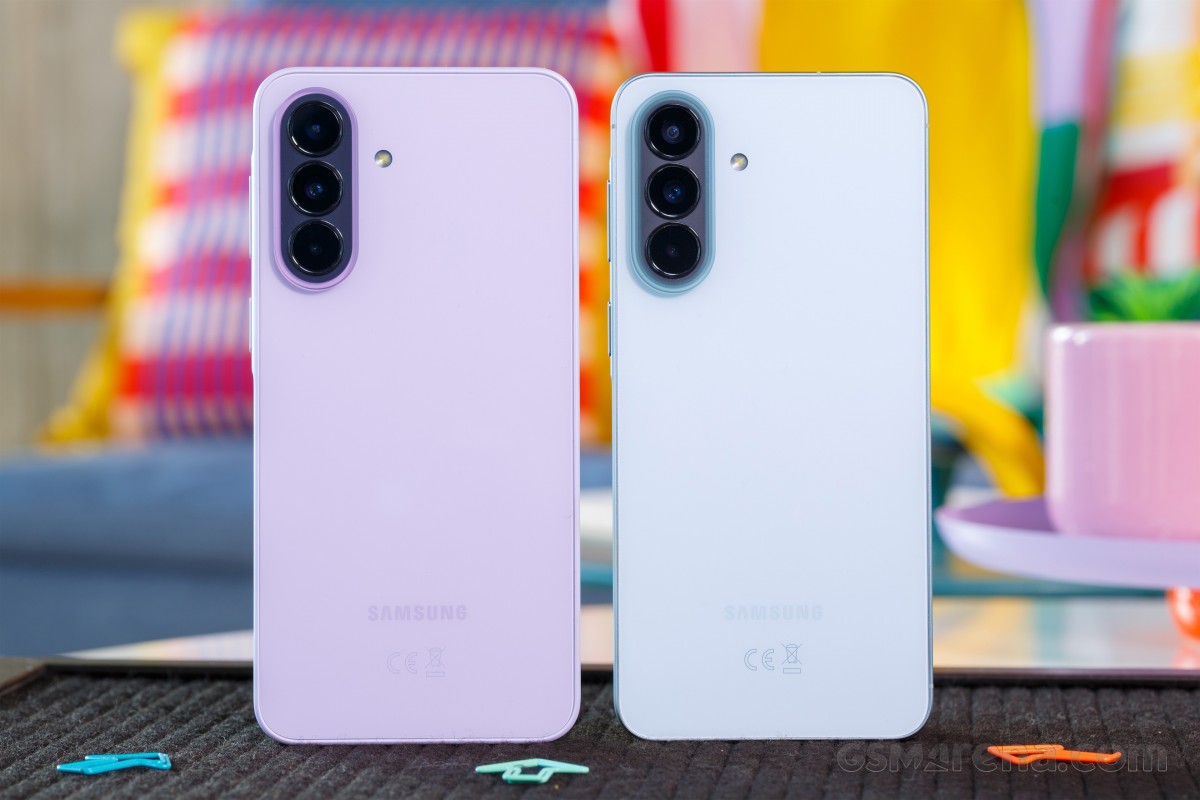 Left: Galaxy A37 • Right: Galaxy A57
There are quite a few interesting competitors in this price range.
In Samsung's lineup, there is the Galaxy A56. It's a slightly older phone, but with Samsung's excellent six-year update promise, that shouldn't matter much.
Compared to the Galaxy A37, the A57 gets an aluminum body, an HDR10+ certified display, a more potent Exynos 1580 chipset and a higher resolution 12MP ultrawide camera. Nothing major, but still a few upgrades here and there and all of it starting at just €280 at current pricing.




Samsung Galaxy A56 • Xiaomi Poco X8 Pro Max • vivo V70 • Nothing Phone (4a)
Over in camp Xiaomi, the Poco X8 Pro is definitely within budget. More impressively and as a kind of testament to Xiaomi's aggressive pricing and value propositions, you can even get a base Poco X8 Pro Max for around €430. And mind you, the base config for the Poco has 12GB of RAM and 256GB of storage. Some other highlights include an aluminum frame, IP68/IP69K ingress protection, a very large 6.83-inch, 120Hz, Dolby Vision certified display, a MediaTek Dimensity 9500s chipset, paired with fast UFS 4.1 storage for excellent performance on a whole other level than the A37. Also in the mix are stereo speakers and a large battery with modern Si/C chemistry and 100W charging.
If you find yourself looking for a better camera experience, then the vivo V70 might be a good fit. It has a dedicated 50MP, 3x periscope telephoto camera. Also, excellent build quality and display, a decent Snapdragon 7 Gen 4 mid-range chipset with UFS 4.1 storage and a fairly large battery with 90W charging.
 Left: Galaxy A37 • Right: Galaxy A57
The Nothing Phone (4a) also brings a dedicated 50MP, 3x periscope telephoto to the table. Nothing has a unique design and software approach as a potential draw as well. That said, the Snapdragon 7s Gen 4 isn't particularly powerful and doesn't expect any marathons from the more modestly-sized battery pack.
Our verdict
The Samsung Galaxy A37 is a very easy phone to like, but a much harder one to wholeheartedly recommend. It checks most of the important boxes for a modern midranger - a bright and smooth AMOLED display, solid build with proper ingress protection, dependable battery life, and a mature, feature-rich software experience with class-leading long-term support.

The problem isn't what the Galaxy A37 does wrong - it's what it doesn't do at all. This is yet another iteration that feels more like a refinement than a real upgrade. Performance is merely adequate and noticeably behind some of its direct rivals, charging speeds are decent but far from class-leading, and the feature set hasn't meaningfully evolved. Even the camera system, while perfectly serviceable, lacks any real ambition.

And then there's the elephant in the room - internal competition. With devices like the Galaxy A56 offering better performance and similar longevity at a lower price, the A37 ends up in an awkward position. It leans heavily on Samsung's ecosystem, software polish, and brand recognition, but those alone might not be enough this time around.

Ultimately, the Galaxy A37 is a safe, predictable choice. If you value stability, long-term updates, and a familiar One UI experience, it will serve you well. But if you are chasing value or cutting-edge features in the midrange segment, there are simply more compelling options out there - sometimes even within Samsung's own lineup.
Pros
- Premium build with Gorilla Glass Victus+ and IP68 rating.
- Great Super AMOLED display with high brightness.
- Improved battery life.
- Latest OneUI 8.5, six major OS updates.
- Very good main camera performance, both day and night.
- Stereo speakers with good quality and loudness.
Cons
- Underwhelming chipset performance for the price class.
- Screen has no HDR video support.
- Ultrawide camera is unimpressive.
- Not very fast to charge; no wireless charging either.
- The virtual proximity sensor for turning off the screen during calls is not as good as a physical one.
- Expensive at launch.
| 128GB 6GB RAM | $ 297.50 |
£ 279.98 |
| 256GB 8GB RAM | $ 352.50 |
£ 277.58 |
| 128GB 8GB RAM | £ 299.00 |
₹ 40,990 |
| Show all prices | ||


Tip us
2.1m 180k
RSS
EV
Merch
Log in I forgot my password Sign up