Samsung Galaxy Z Flip7 FE review
FE is as just good as the real thing (camera-wise)
One of the important areas where the Z Flip7 FE isn't at a disadvantage compared to the 'real' Z Flip7, is the camera system - this more affordable model has the same camera hardware on its cover and on the inside, as does the higher-end clamshell. That said, it's also the same hardware as on the Z Flip6, so it could be argued that the Galaxy Flip lineup is simply standing still, the FE naturally included.
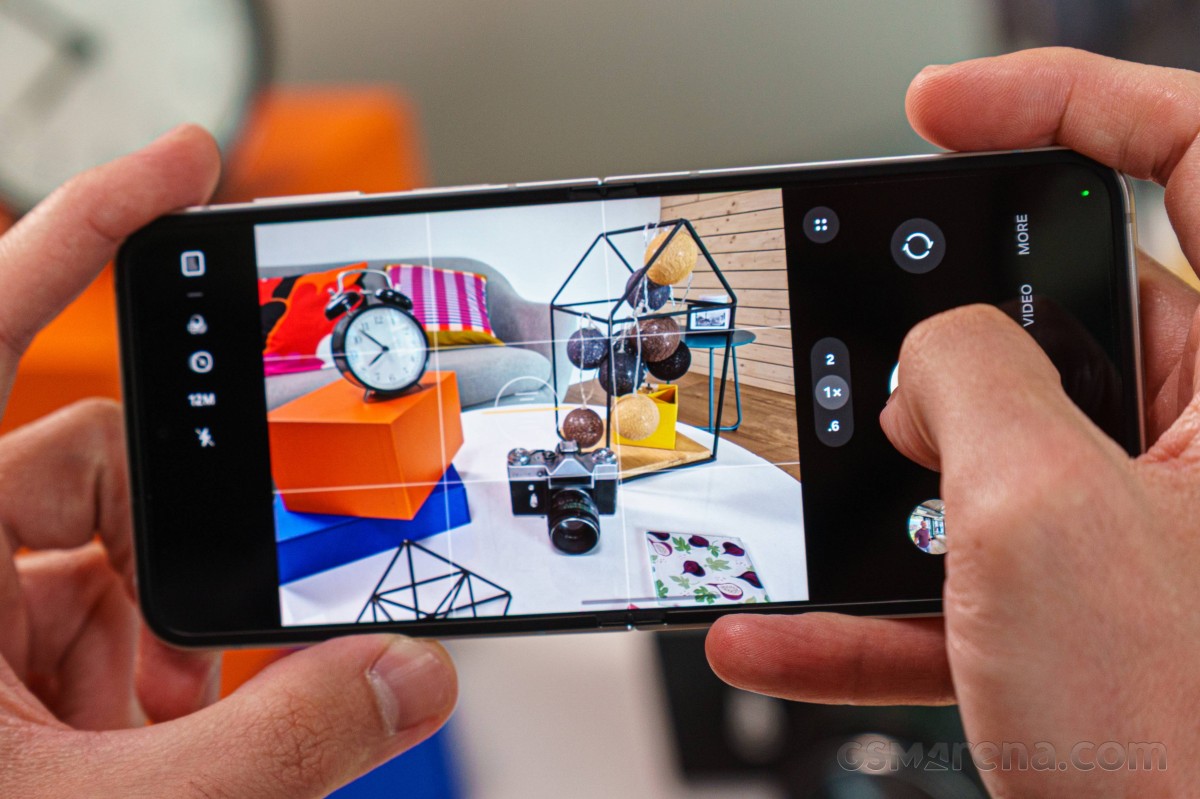
Sure, the Z Flip6 did get an upgraded main camera last year, and we can't expect major steps with every generation. It's a 50MP Tetrapixel unit with some 2x zoom chops that the Z Flip5 couldn't quite match. It's almost worth appreciating that Samsung didn't pull some sort of deliberate segmentation shenanigan by fitting the Flip5's main camera.
Naturally, the ultrawide camera is missing autofocus - that remains a Galaxy Ultra feature, with only the latest Z Fold7 somehow allowed to join their ranks.
The selfie camera is also shared between all the Flips, which is a welcome sight since it's a pretty solid piece of kit.
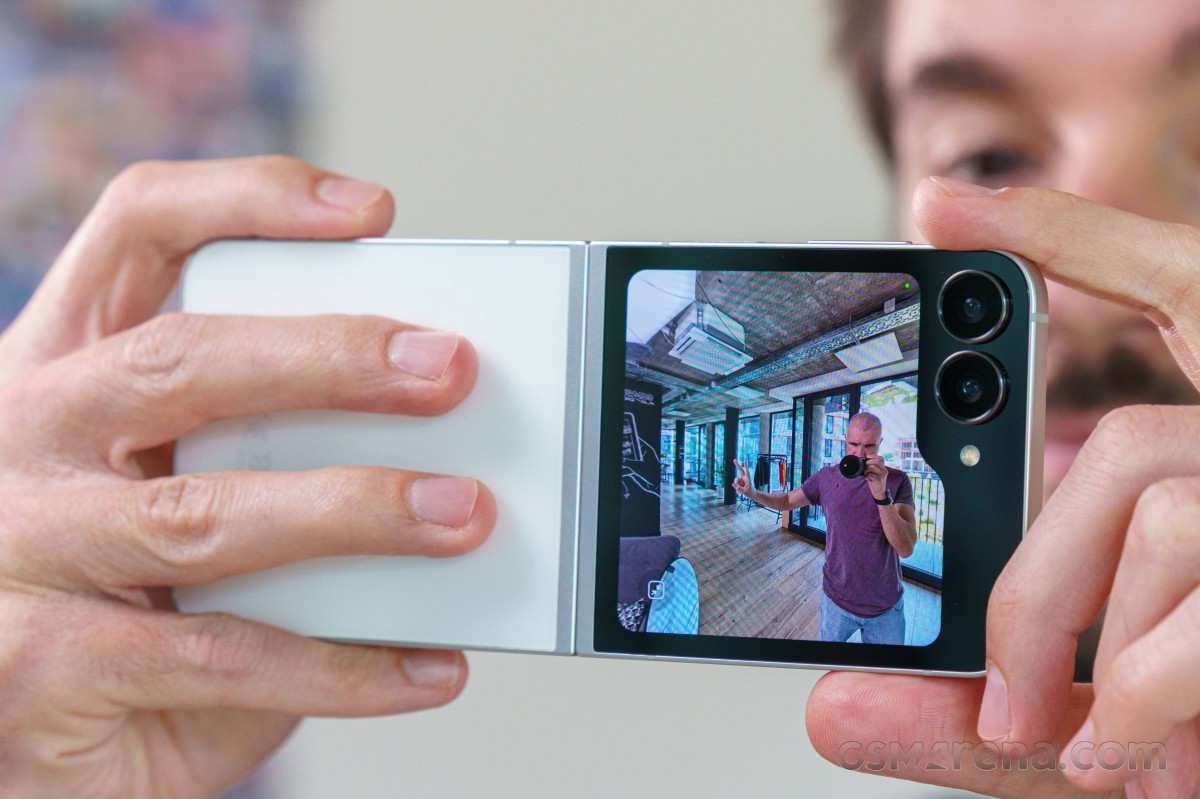
- Wide (main): 50MP Samsung ISOCELL GN3 (1/1.57", 1.0µm - 2.0µm), f/1.8, 23mm, dual pixel PDAF, OIS; 4K@60fps
- Ultrawide: 12MP Samsung ISOCELL 3LU (1/3.2", 1.12µm), f/2.2, 13mm, fixed focus; 4K@60fps
- Internal camera: 10MP Samsung ISOCELL 3J1 (1/3.0", 1.22µm), f/2.2, 23mm, fixed focus; 4K@60fps
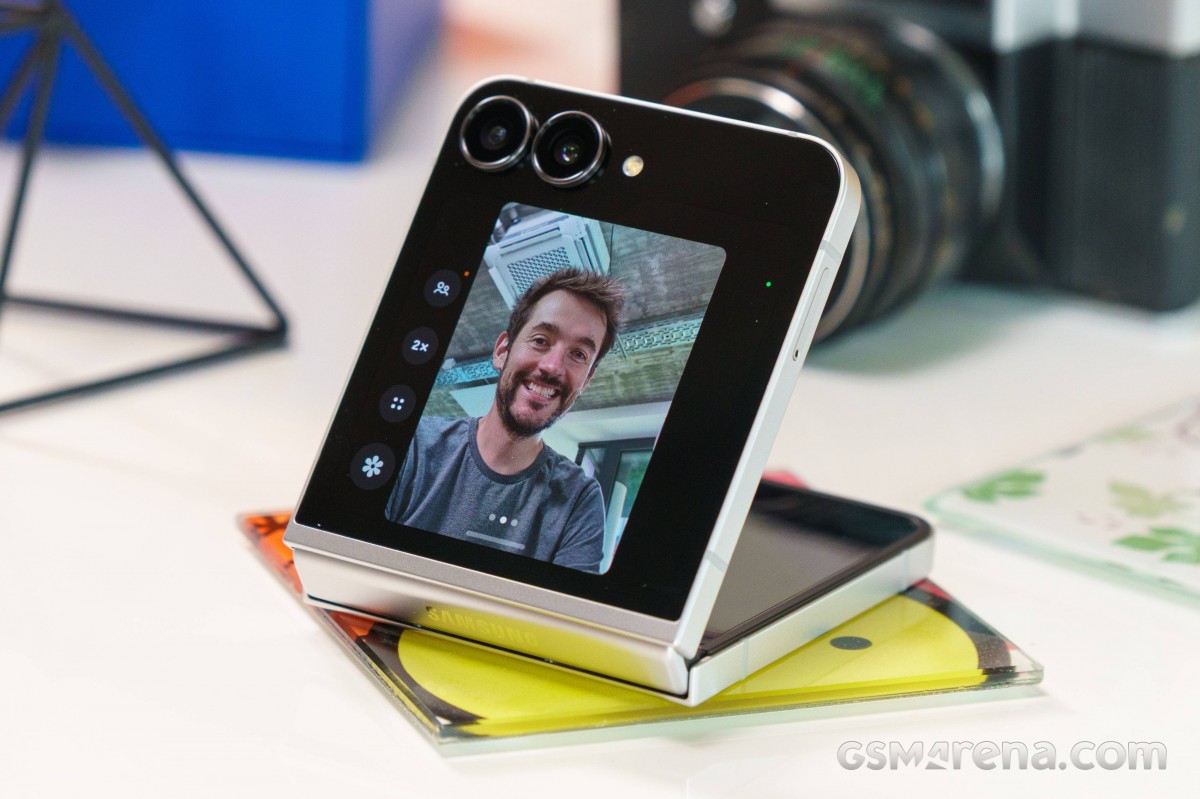
The Z Flip7 FE is also making full use of the form factor inherent advantage, even though it's not quite as great as the non-FE in terms of cover viewfinder size. Still, you get a nicely capable cover screen UI with modes, zoom levels, aspect ratios, and whatnot, plus some waist-level and overhead shooting capabilities on the internal display.
Daylight photo quality
Main camera
With essentially the same camera hardware as the Z Flip7 on board the Z Flip7 FE, it's no surprise that the FE captures more or less the same photos as its more upmarket stablemate. From the main camera at 1x, that means very good photos, indeed. Detailed is rendered without excessive processing and noise well-controlled. The ever-so-slightly warm tendencies from the auto white balance don't hurt, and colors are looking great overall. Dynamic range won't leave you wanting either.











Daylight samples, main camera (1x)
You can also expect very good shots of people, with natural skin tones and spot-on exposures.




Daylight samples, main camera (1x), Photo mode




Daylight samples, main camera (1x), Portrait mode, 1x
There's a bit of a detail benefit to be had if you shoot at 50MP, even though there may be a bit more noise and dynamic range in difficult scenes will suffer. It's worth exploring, unlike on some other phones.








Daylight samples, main camera (1x), 50MP
Moving on, shooting at 2x will also get you very usable images - good, even. It's not strictly pin-sharp-level of detail we're talking about, but not half bad either. At 2x you also stand to capture pretty solid closeups too.











Daylight samples, main camera (2x zoom)
Similarly, shooting people at 2x will mean slightly inferior absolute sharpness, but improved perspective and more convenient shooting distance.




Daylight samples, main camera (2x zoom), Photo mode




Daylight samples, main camera (2x zoom), Portrait mode
Ultrawide camera
The ultrawide's main flaw is its lack of focusing capability, so it will only capture sharp results with subjects beyond a certain distance - no close-up subjects with this one (well, not sharp ones anyway). We appreciate the rather extreme coverage and the generally very good sharpness with distant subjects. The well-tuned colors and wide dynamic range don't hurt either.











Daylight samples, ultrawide camera (0.6x)
Selfies
Selfies are kind of a big thing with clamshells - being able to frame photos on the cover display when shooting with the main camera is a boon, indeed. But the Z Flip7 FE's internal selfie camera isn't too bad either - its 10MP shots have very good detail. That said, the Z Flip7 was a little bit more consistent in delivering sharp internal camera selfies, in our experience.






Selfie samples, internal camera
Compared to the 'real' Z Flip7, the Z Flip7 FE's cover display doesn't offer quite as much room for framing, but it's good enough. Main camera selfies do offer improved detail and some background separation, plus you get to enjoy the autofocus for more unconventional angles.







Selfie samples, rear camera, 1x
2x zoom selfies are also on the menu, whether in portrait orientation at arm's length, or from across the room with the phone propped up in flex mode.






Selfie samples, rear camera, 2x
Then there's the ultrawide camera, which can serve for capturing more context in your selfies, or larger groups of people, or simply distorted perspectives.






Selfie samples, ultrawide camera, 0.6x
Low-light photo quality
As we've come to expect from recent Samsungs, there's a rather significant difference between the low-light photos captured in Photo mode and those taken in Night mode. We tend to prefer a more straightforward full-auto approach, but it could be argued that the Samsung way gives the user a bit more control over the process.
Main camera
The images you'd get from Photo mode are fairly grainy and their shadows can be pretty soft, even though detail is generally good in better-lit scenes. Dynamic range is very good though, and colors are on point.








Low-light samples, main camera (1x)
Night mode will get rid of the noise, at the expense of some heavier sharpening (that's still not too offensive). Dynamic range doesn't change a whole lot.








Low-light samples, main camera (1x), Night mode
2x zoom results remain very usable and you can once again choose between the two distinct looks - Photo mode's noisier rendition and the more processed but cleaner Night mode.








Low-light samples, main camera (2x)








Low-light samples, main camera (2x), Night mode
Ultrawide camera
The ultrawide captures softer images in the dark than what the Z Flip7 was capable of, a minor but consistent difference that surprised us a little. It's decent overall, with excellent colors and dynamic range almost making up for the pixel-level imperfections.







Low-light samples, ultrawide camera (0.6x)
Night mode cleans up the noise and brings the two Z Flips7s' closer together, though the FE might just be that little bit behind.







Low-light samples, ultrawide camera (0.6x), Night mode
Video recording
The Galaxy Z Flip7 can record video up to 4K60 with all three of its cameras including the internal selfie camera. Additionally, in the Pro Video mode, you can set the frame rate at 24fps.
The default codec is h.265 with further options - you can set it to quality priority or file size priority, and when in quality priority, you can flip an extra toggle for high(-er) bit rate recording. You can also enable HDR10+ capture when using the h.265 codec, and you also get the option for Log recording in Pro Video mode. Or you can keep things simple and switch back to the good old h.264 codec.
Electronic stabilization is available up to 4K30 on all cameras (but not 4K60) and it can be switched off in settings, if you'd like to stabilize your footage otherwise.
You can check out the playlist below, which includes multiple video samples.
The Z Flip7 FE captures solid-looking videos, without really standing out. Sharpness is okay in 4K30 at 1x zoom and the 2x mode is pretty decent too. The ultrawide is on the soft side of things, but alright for the class. Color rendition is pleasing and dynamic range is nicely wide too.
The electronic stabilization worked well in our experience, with only very minor shake left in footage taken while walking. Standing shots are nicely stable, and pans are smooth too.
In the dark, the main camera's clips are decent - not as noisy as from the Z Flip7, but somewhat softer. The ultrawide isn't very sharp either. Exposure, dynamic range, and colors are very good on both cameras though.


Tip us
2.1m 180k
RSS
EV
Merch
Log in I forgot my password Sign up