vivo X Fold5 review
Displays
Let's start with the cover display. At 6.53 inches, it is quite sizeable, and with a 21:9 aspect ratio, it's a perfect fit for movie watching. It was not that long ago that foldable cover displays were so small and/or misshapen that such a statement would have been ludicrous.

At first glance, it almost seems like vivo is reusing cover displays from the X Fold3 generation. The size and aspect ratio match, even the odd 1172 x 2748-pixel resolution. However, the X Fold5 does have some upgrades on its cover display. Most notably, while the refresh rate remains at 120Hz, the display now utilizes LTPO technology, just like the internal panel. This means much more dynamic and granular refresh rate adjustments and potentially more power saving in the process.

Vivo claims that the cover display can reach an impressive peak brightness of 5,500 nits, which is about 1,000 nits more than the previous generation. We did our usual standardized testing and got 627 nits of brightness by maxing out the slider. This goes up 1877 nits with a bright light source present. That's definitely enough to be comfortable outdoors.
Max display brightness test
White test pattern, 75% fill (nits)
- Manual mode
- Auto mode
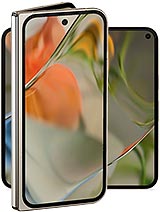 Pixel 9 Pro Fold (Cover display)
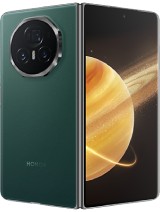 Honor Magic V3 (Cover display)
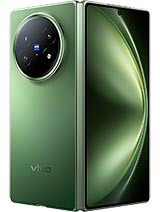 vivo X Fold5 (Cover display)
 vivo X Fold3 Pro (Cover display)
 Oppo Find N5 (cover display)
 Huawei Mate X6 (Cover display)
 Tecno Phantom V Fold2 (cover)
The cover display is certified for HDR10+ and Dolby Vision.
The inside display could very well be borrowed from the X Fold3. It measures 8.03 inches diagonally, with a 2200 x 2480-pixel resolution, and features a 120Hz refresh rate with LTPO technology, as well as a maximum brightness rating of 4,500 nits.
We also conducted our standardized testing on this display and obtained very similar figures to those on the cover display - 695 nits on the slider and 1,916 nits with a bright light source.
Max display brightness test
White test pattern, 75% fill (nits)
- Manual mode
- Auto mode
vivo X Fold3 Pro
Pixel 9 Pro Fold
vivo X Fold5
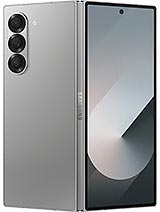 Galaxy Z Fold6
Huawei Mate X6
Honor Magic V3
Tecno Phantom V Fold2
The inside display is also certified for HDR10+ and Dolby Vision. The phone reports decoder support for all popular HDR formats: HDR10, HDR10+, HLG and Dolby Vision. It also has the highest possible Widevine L1 DRM certification.
The refresh rate behavior is very similar on both displays. You get very dynamic refresh rate switching behavior and refresh rates as low as 1Hz when there is no movement on the screen.
There are three refresh rate modes to choose from in settings: Smart Switch, Standard and High. All of these seem to share the same dynamic refresh rate switching logic, just with slightly different "caps". High and Smart Switch can both reach up to 120Hz, but High seems to favor it slightly more.
As for the actual switching logic, the phone cycles through a few "preset" refresh rates, but does so very dynamically thanks to LTPO tech, and there are quite a few "presets". As we've mentioned, we've seen 1Hz for idle. We've also seen 30Hz, 40Hz, 60Hz, 80Hz, 90Hz and 120Hz.
Naturally, we tried some high-refresh-rate gaming, and that worked with most of the titles we tried, which is great.
Battery life
Despite its thin and light profile, the X Fold5 has managed to fit a whopping 6,000 mAh battery inside its body. This battery is even larger than the 5,700 mAh one inside last year's X Fold3 Pro, which was already a chart-topper in this aspect. Unsurprisingly, the X Fold5 now holds the title for the largest battery in a global foldable.
Silicon cathode battery technology offers increasingly impressive density, and the X Fold5 appears to be at the cutting edge. It utilizes second-generation semi-solid battery technology and various enhancements to the cathode, anode, and battery chemistry. One of the consequences of these advanced materials is significantly improved discharge performance in cold conditions.
We ran our standardized battery tests on the X Fold5, and despite its slightly larger battery, it doesn't manage to outpace the X Fold3 Pro in battery life. The two are pretty much on par, but an Active Use Score of 13:21 hours is still very impressive for a foldable phone.
We also tested the cover display on the X Fold5. We expectedly got a big increase in all on-screen tests.
Charging speed
The vivo X Fold5 is officially rated for 80W fast charging. Our review unit shipped with a 90W vivo FlashCharge charger in the box. We can't guarantee that that will be the case in every market, so check with your retailer. It is also worth noting that vivo still relies on a Type-A to Type-C cable. Thankfully, it seems to be a normal cable and not a proprietary one with extra pins.

The X Fold5 charges really quickly. Fifteen minutes on the charger results in around 38% charge. Thirty minutes gets you around 70% and a full charge requires around 46 minutes. Not bad at all.
Charging speed
- in 15 min
- in 30 min
- Time to full charge (from 0%)
Huawei Mate X6
vivo X Fold3 Pro
Oppo Find N5
vivo X Fold5
Tecno Phantom V Fold2
Galaxy Z Fold6
Pixel 9 Pro Fold
Speakers - loudness and quality
The speaker setup on the X Fold5 Pro consists of two units, both in the cover screen half of the device. One of them directs the sound through a dotted opening on the bottom, while the other has an outlet in the frame at the top as well as towards a slit above the cover display to serve as an earpiece.
Each speaker plays its own channel - the top speaker gets the left track in portrait mode, with auto-switching in place to account for the phone's orientation in landscape mode. This is essentially the same speaker setup as the X Fold3.

Despite its apparent lack of internal space, the X Fold5 managed a Very Good loudness score, which is admirable.
Quality-wise, things aren't too bad, but there is practically no bass, and highs can get somewhat distorted.
Use the Playback controls to listen to the phone sample recordings (best use headphones). We measure the average loudness of the speakers in LUFS. A lower absolute value means a louder sound. A look at the frequency response chart will tell you how far off the ideal "0db" flat line is the reproduction of the bass, treble, and mid frequencies. You can add more phones to compare how they differ. The scores and ratings are not comparable with our older loudspeaker test. Learn more about how we test here.
Connectivity
The vivo X Fold5 is a dual-SIM device. It supports simultaneous SA/NSA Sub-6 5G connectivity on both of its Nano-SIM slots. Unfortunately, there is no eSIM support. The phone is fully equipped with location services, including GPS (L1+L5), BDS (B1I+B1c+B2a), Galileo (E1+E5a), QZSS (L1+L5), and GLONASS.
Local connectivity is well-covered too. The phone supports Wi-Fi 7 with tri-band capabilities and access to the 6GHz spectrum, as seen on our review unit. However, on some markets, this might be downgraded to dual-band connectivity due to local restrictions on the 6GHz band.
Also on board is Bluetooth 5.4 with LE, aptX HD, aptX Adaptive and aptX Lossless support.
You also get NFC and an IR blaster, located on the back of the phone next to the rear cameras.
No FM radio, though or a 3.5mm audio jack. Not that the latter would have fit anyway, seeing how the Type-C port barely fits.

A high-speed USB 3.2 data connection is supported by the Type-C port. It can achieve 5 Gbps transfer speeds, which is impressive for a phone. Of course, the X Fold5 has USB Host/OTG support. Another feature it has is DisplayPort output over USB Alt mode, allowing you to easily connect an external display with an inexpensive adapter or dongle.
The X Fold5 has a full set of onboard sensors. There is an LSM6DSVX accelerometer and gyroscope combo, an AK0991X magnetometer and compass combo, an undisclosed light sensor and a goodix GLS6151C hardware proximity sensor.
The proximity sensor is only on the cover display, not the inside one; however, there is an ambient light sensor on the inside as well, for a total of two. Last, but not least, there is an STMicro LPS22DF barometer onboard as well.


Tip us
2.1m 180k
RSS
EV
Merch
Log in I forgot my password Sign up