Xiaomi 17 Ultra Leica Edition review
HyperOS 3 and Android 16
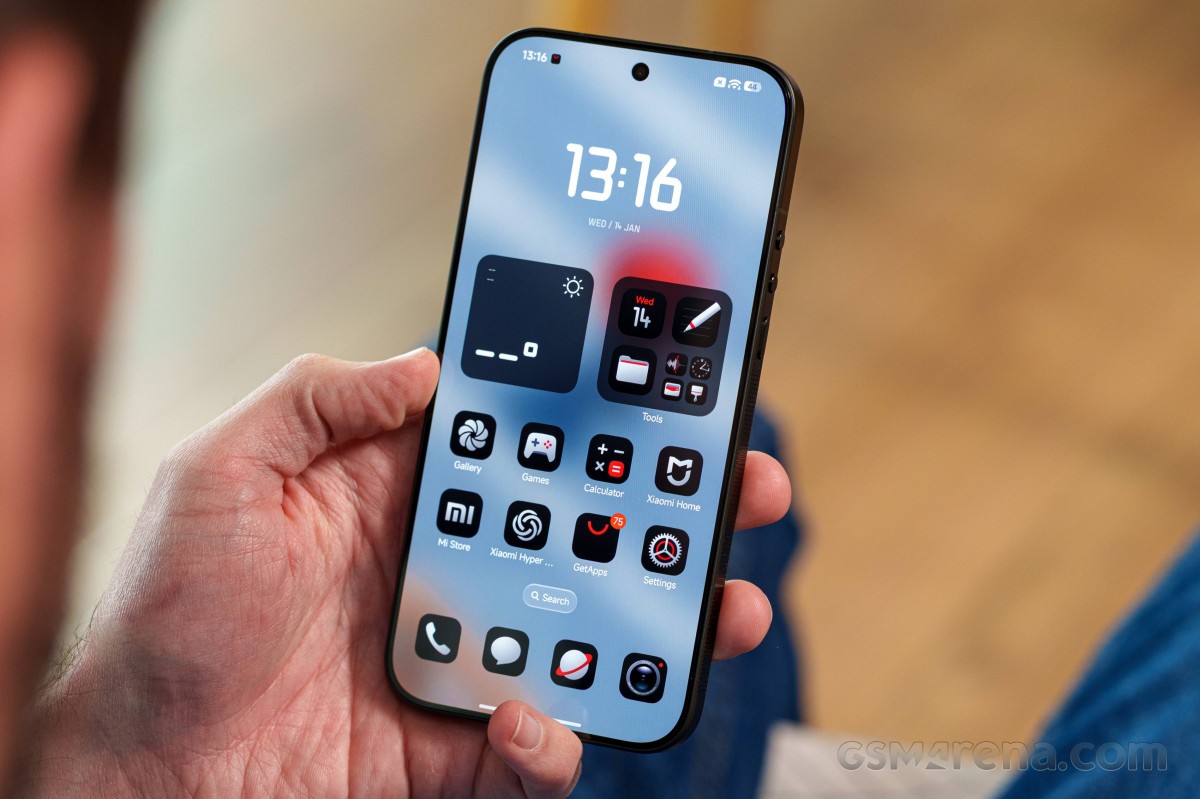
The Xiaomi 17 Ultra runs on the latest HyperOS 3 software, based on Android 16. This is not the first Xiaomi device we have reviewed with this edition of the OS. The Xiaomi 17 Pro Max, for example, has largely the same feature set, software-wise, so we suggest you check out our Xiaomi 17 Pro Max review where we do a deeper dive into HyperOS 3.
Xiaomi hasn't explicitly revealed how many major OS upgrades the Xiaomi 17 series should expect as it's not an important consideration on the Chinese markets, but if last year's Xiaomi 15 family is of any indication, it's likely 4 major OS upgrades and 6 years of security patches.
A notable distinction of the Xiaomi 17 Ultra by Leica is that the OS ships with a pre-installed Leica-inspired theme with its own icons and font.
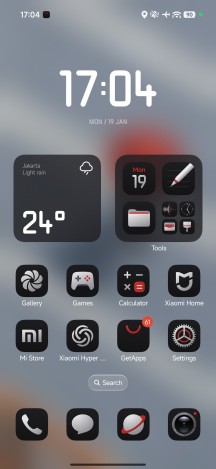
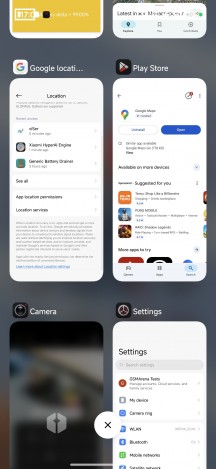
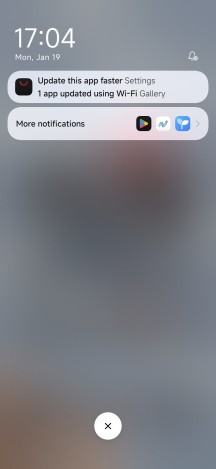
Home screen • Recent apps • Notification shade
Another thing to note is that the Chinese version of the ROM comes with its limitations. It only has the Chinese and English languages, and some features that require Google Services won't work. For instance, you don't get the Google Discover feed, there is no Location History in Google Maps, no QuickShare with other Android Phones, there is no Android Auto, or Voice Activation for Google Assistant.
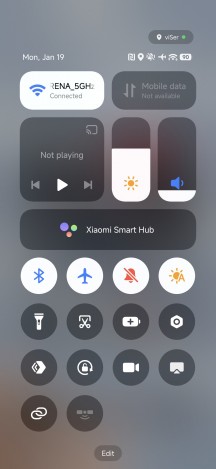
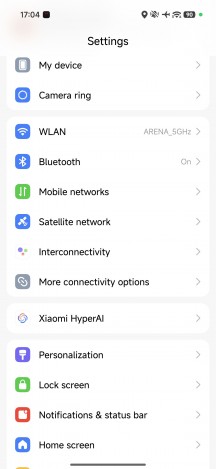
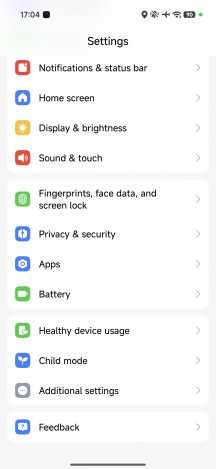
Control center • Settings menu • Settings menu
Other than that, if you are importing this phone from China, you can get the essentials working without a problem. Downloading the Google Play Store is easy from Xiaomi's GetApps app, and from there on, you can download the rest of the Google apps.
Google Gemini can be installed and works fine, though we haven't tested it beyond the chatbot features. Google Wallet works okay, but it can give you some trouble from time to time. You can even enable Circle to Search by following some multi-step tutorials found online. But at the end of the day, you still won't be getting the proper "westernized" Android experience. So your satisfaction with a gray import like this one will really depend on your expectations.
Something else to keep in mind - the reviewed Xiaomi 17 Pro Max unit is a China-only phone running the Chinese version of HyperOS, so some features will likely be different or completely removed from the global version of the ROM (if and) when it gets released outside China.
Benchmark performance
The Xiaomi 17 Ultra runs on the flagship Snapdragon 8 Elite Gen 5 chipset, a successor to the highly-regarded Snapdragon 8 Elite chip from last year. At launch, the 17 Pro Max was the first phone to feature Qualcomm's new silicon. It promises significant performance and efficiency improvements.
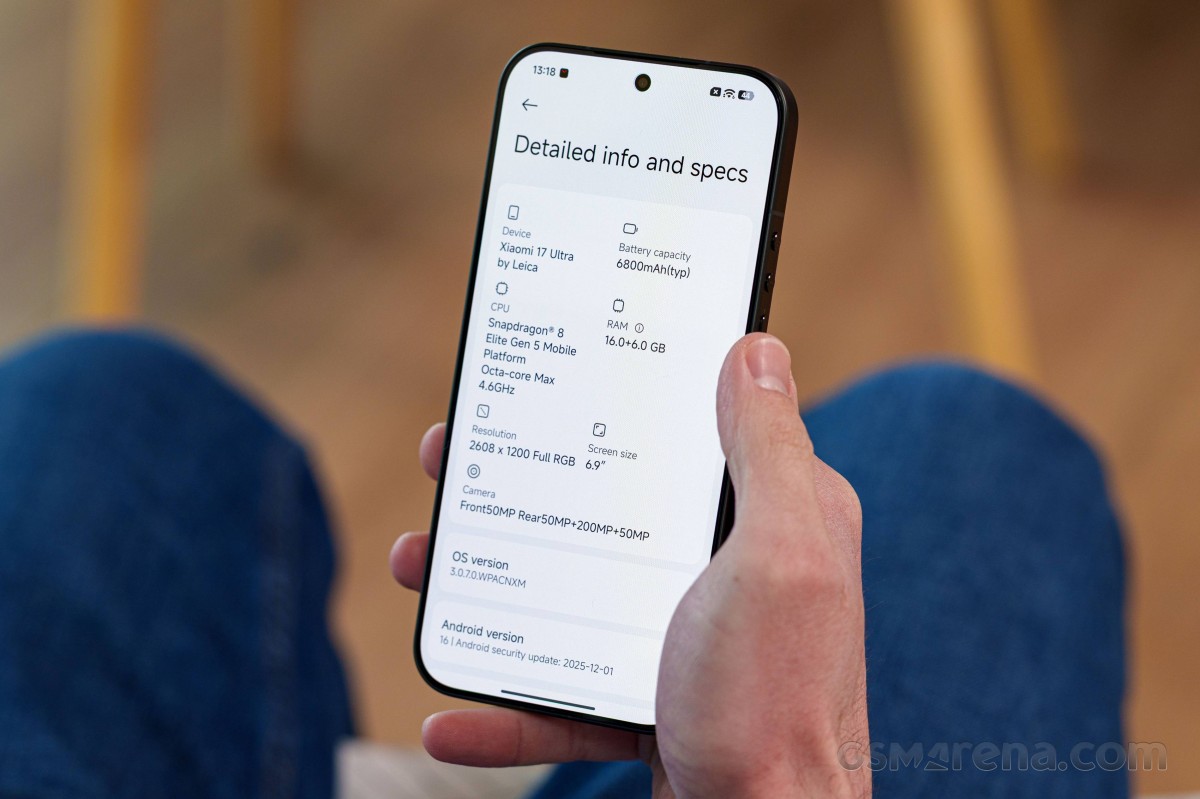
The SoC is based on the 3nm manufacturing process and features third-generation Oryon CPU cores, promising 20% performance and 30% efficiency boost. The octa-core CPU configuration is 2+6 with 2x high-performance Oryon V3 Phoenix L cores ticking at 4.6 GHz and 6x Oryon V3 Phoenix M cores running at 3.62 GHz.
The GPU on board is Adreno 840 and also promises 23% improvement in performance and 20% in power efficiency. It should also be 25% better at ray-tracing than its predecessor.
Other notable features include Unreal Engine 5 engine support for console-level gaming and a Hexagon NPU with Qualcomm Sensing Hub enable 37% faster AI number crunching and agentic AI assistants.
When it comes to memory, the Xiaomi 17 Ultra offers 12GB/512GB configuration as a standard but can also be found in 16GB/512GB and 16GB/1TB flavors. All configurations make use of UFS 4.1 memory chips. We reviewed the 16GB/512GB version.
GeekBench 6
- Single-core
- Multi-core
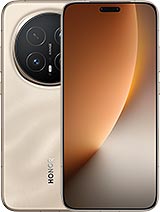 Honor Magic8 Pro
 Xiaomi 17 Ultra
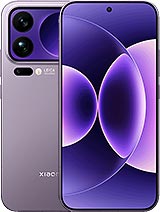 Xiaomi 17 Pro Max
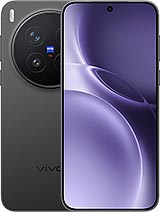 vivo X300 Pro
 Oppo Find X9 Pro
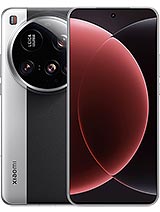 Xiaomi 15 Ultra
 Galaxy S25 Ultra
AnTuTu
- v10
- v11
vivo X300 Pro
Xiaomi 17 Ultra
Oppo Find X9 Pro
Xiaomi 15 Ultra
Xiaomi 17 Pro Max
Galaxy S25 Ultra
3DMark
- Wild Life Extreme (Highest)
- Solar Bay (Ray Tracing)
vivo X300 Pro
Honor Magic8 Pro
Xiaomi 17 Ultra
Oppo Find X9 Pro
Xiaomi 17 Pro Max
Galaxy S25 Ultra
Xiaomi 15 Ultra
The benchmarks above show that the Xiaomi 17 Ultra utilizes the chipset's capabilities to the fullest and even outpaces many of its Snapdragon 8 Elite Gen 5-powered rivals. Still, the difference is negligible, so there's nothing out of the ordinary.
Sustained performance
The Xiaomi 17 Ultra has the uneasy task of maintaining high performance during long and heavy workloads, as the Snapdragon 8 Elite Gen 5 SoC is quite demanding. And according to our stress tests, the device did fairly well. The CPU throttled down to around 60% and maintained fairly stable clock speeds 10 minutes after the stress test had started. We count this as a minor win as many other handsets go between high and low clock speeds, which could potentially result in great frame rate variation during gaming. Whereas the 17 Ultra, it tends to maintain lower clock speeds but without much variation.
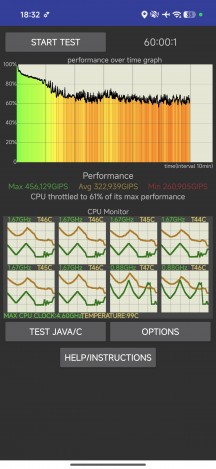
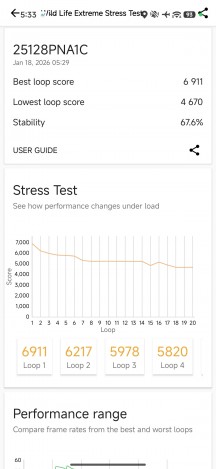
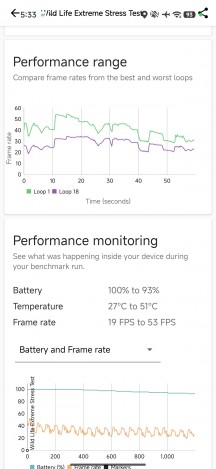
CPU and GPU stress tests
The GPU stress test was also generally okay as the 3DMark Wild Life Extreme Stress Test results returned 67% GPU stability.


Tip us
2.1m 180k
RSS
EV
Merch
Log in I forgot my password Sign up