RedMagic 7 Pro review
Synthetic benchmarks
As always, the nubia uses the best available hardware in the industry from Qualcomm. Sure, there's also the Exynos from Samsung and Apple's silicon, but that's an entirely different topic. Today's flagships, or at least most of them, are running the Snapdragon 8 Gen 1. Even the standard Red Magic 7 has it.
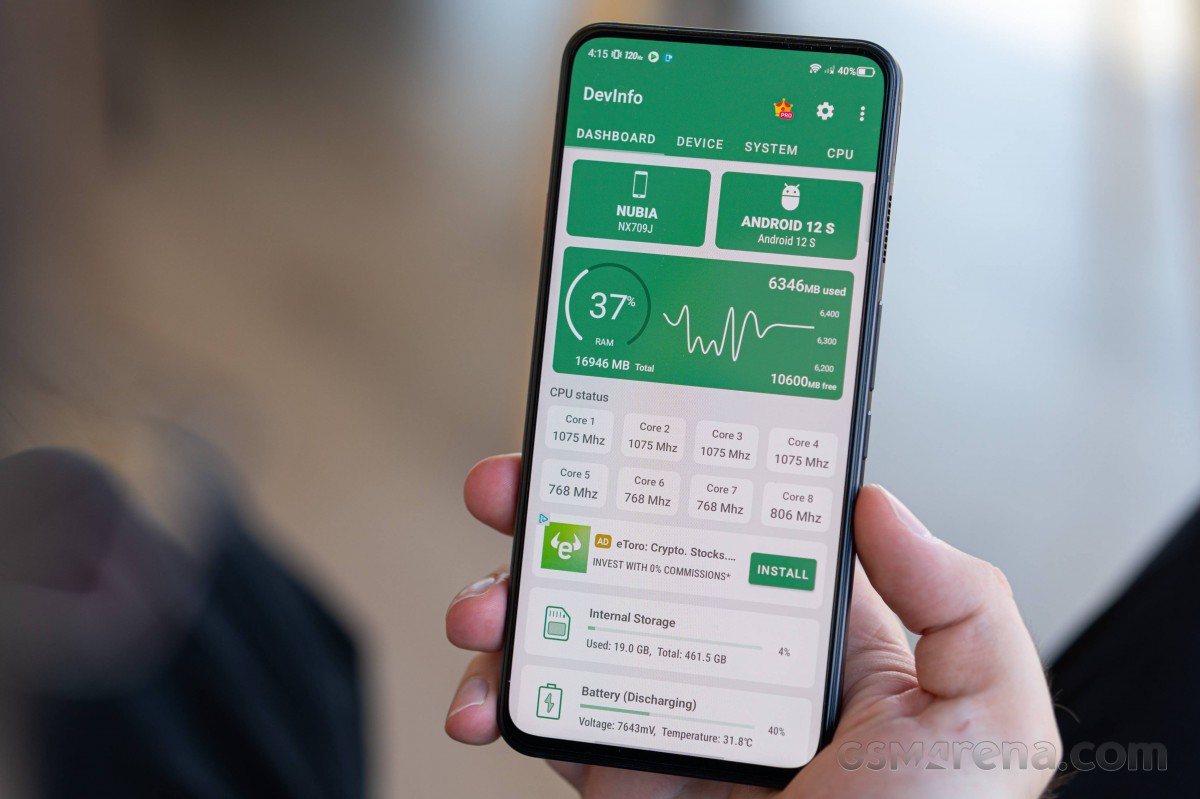
The chipset's CPU is based on ARM's new Cortex-X2, Cortex-A710 and Cortex-A510 cores. Respectively, these core clusters are 1x Kryo Prime @3.0 GHz, 3x Kryo Gold @2.5 GHz and 4x Kryo Silver @1.8 GHz. The Adreno 730 GPU, clocked at 818 MHz, takes care of graphically-intensive tasks. The whole chip is based on Samsung's 4nm 4LPE manufacturing process promising further power savings from last year's Snapdragon 888 series.
And while there's a wide variety of memory options, the Pro version for the global market only comes with 16GB/256GB or 16GB/512GB.
Of course, we ran the usual benchmarks to see how the device holds against the competition and to check if there are any inconsistencies due to poor hardware implementations.
GeekBench 5 (multi-core)
Higher is better
-
Apple iPhone 13 Pro Max
4706 -
ZTE nubia Red Magic 7
3855 -
ZTE nubia Red Magic 7 Pro
3845 -
Asus ROG Phone 5 Ultimate
3728 -
Asus ROG Phone 5
3710 -
iQOO 9 Pro
3708 -
Samsung Galaxy S22 Ultra (1440p)
3657 -
Asus ROG Phone 5s Pro
3521 -
Realme GT2 Pro
3501 -
OnePlus 10 Pro
3447
GeekBench 5 (single-core)
Higher is better
-
Apple iPhone 13 Pro Max
1741 -
ZTE nubia Red Magic 7 Pro
1251 -
ZTE nubia Red Magic 7
1246 -
Realme GT2 Pro
1238 -
iQOO 9 Pro
1231 -
Samsung Galaxy S22 Ultra (1440p)
1180 -
Asus ROG Phone 5 Ultimate
1128 -
Asus ROG Phone 5s Pro
1117 -
Asus ROG Phone 5
1110 -
OnePlus 10 Pro
975
AnTuTu 9
Higher is better
-
ZTE nubia Red Magic 7 Pro
1056511 -
ZTE nubia Red Magic 7
1056488 -
iQOO 9 Pro
997948 -
Samsung Galaxy S22 Ultra (1440p)
968359 -
Realme GT2 Pro
966251 -
Samsung Galaxy S22 Ultra (1080p)
940400 -
OnePlus 10 Pro
886248 -
Apple iPhone 13 Pro Max
801691 -
Asus ROG Phone 5s Pro
735588
GFX Car Chase ES 3.1 (offscreen 1080p)
Higher is better
-
Apple iPhone 13 Pro Max
121 -
ZTE nubia Red Magic 7
97 -
ZTE nubia Red Magic 7 Pro
97 -
OnePlus 10 Pro
97 -
iQOO 9 Pro
95 -
Realme GT2 Pro
95 -
Samsung Galaxy S22 Ultra (1440p)
76 -
Samsung Galaxy S22 Ultra (1080p)
76 -
Asus ROG Phone 5
71 -
Asus ROG Phone 5s Pro
70
GFX Car Chase ES 3.1 (onscreen)
Higher is better
-
ZTE nubia Red Magic 7
77 -
ZTE nubia Red Magic 7 Pro
77 -
Samsung Galaxy S22 Ultra (1080p)
69 -
Apple iPhone 13 Pro Max
60 -
Asus ROG Phone 5s Pro
59 -
Asus ROG Phone 5
59 -
Realme GT2 Pro
48 -
OnePlus 10 Pro
48 -
iQOO 9 Pro
46 -
Samsung Galaxy S22 Ultra (1440p)
37
GFX Aztek ES 3.1 High (onscreen)
Higher is better
-
ZTE nubia Red Magic 7
58 -
ZTE nubia Red Magic 7 Pro
58 -
Samsung Galaxy S22 Ultra (1080p)
51 -
Asus ROG Phone 5s Pro
40 -
Asus ROG Phone 5
40 -
OnePlus 10 Pro
37 -
iQOO 9 Pro
36 -
Realme GT2 Pro
36 -
Samsung Galaxy S22 Ultra (1440p)
30
GFX Aztek ES 3.1 High (offscreen 1440p)
Higher is better
-
ZTE nubia Red Magic 7
43 -
ZTE nubia Red Magic 7 Pro
43 -
OnePlus 10 Pro
43 -
Realme GT2 Pro
42 -
iQOO 9 Pro
40 -
Samsung Galaxy S22 Ultra (1080p)
32 -
Samsung Galaxy S22 Ultra (1440p)
31 -
Asus ROG Phone 5s Pro
28 -
Asus ROG Phone 5
28
3DMark Wild Life Vulkan 1.1 (offscreen 1440p)
Higher is better
-
ZTE nubia Red Magic 7
10118 -
ZTE nubia Red Magic 7 Pro
10112 -
Apple iPhone 13 Pro Max
9751 -
iQOO 9 Pro
9673 -
OnePlus 10 Pro
9610 -
Realme GT2 Pro
9487 -
Samsung Galaxy S22 Ultra (1440p)
7437 -
Asus ROG Phone 5 Ultimate
5745 -
Asus ROG Phone 5
5744 -
Asus ROG Phone 5s Pro
5556
In the CPU-heavy tests, such as Geekbench, the new SoC from Qualcomm seems to be doing a better job than the competition from Samsung in both single and multi-threaded scenarios. In combined workloads like AnTuTu 9, the Snapdragon 8 Gen 1 takes a more significant lead over the Exynos 2200 and its predecessor.
Then it's no surprise that in the GPU-bound, the Adreno 730 dominates, and Samsung needs to work a bit more on its new Xclipse GPU co-developed with AMD.
Sustained performance
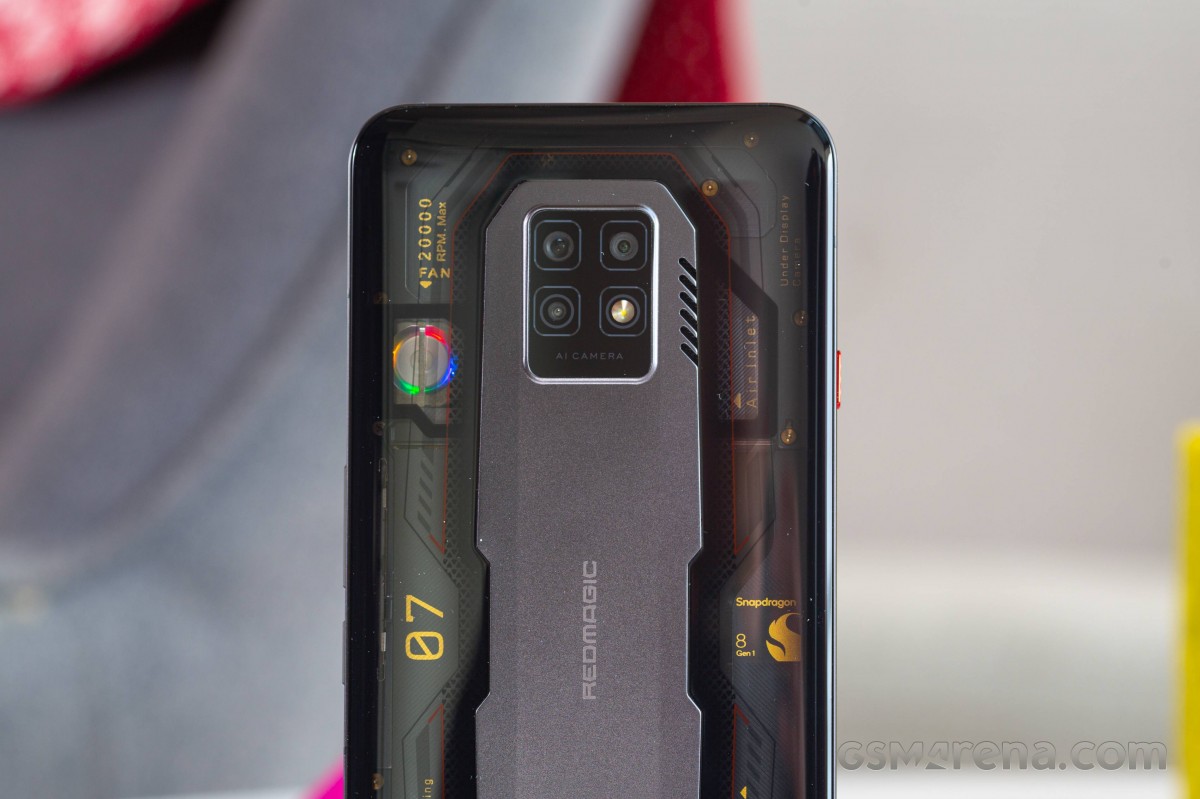
This is arguably the most important aspect of a gaming smartphone. Frames and horsepower don't matter if you aren't able to keep up the high performance for longer periods of time. Flagship chipsets from the last couple of years are notorious for overheating, and nubia addresses this with a conventional active cooling design. Although the word conventional might apply to a gaming PC, it's definitely unique in the smartphone realm.
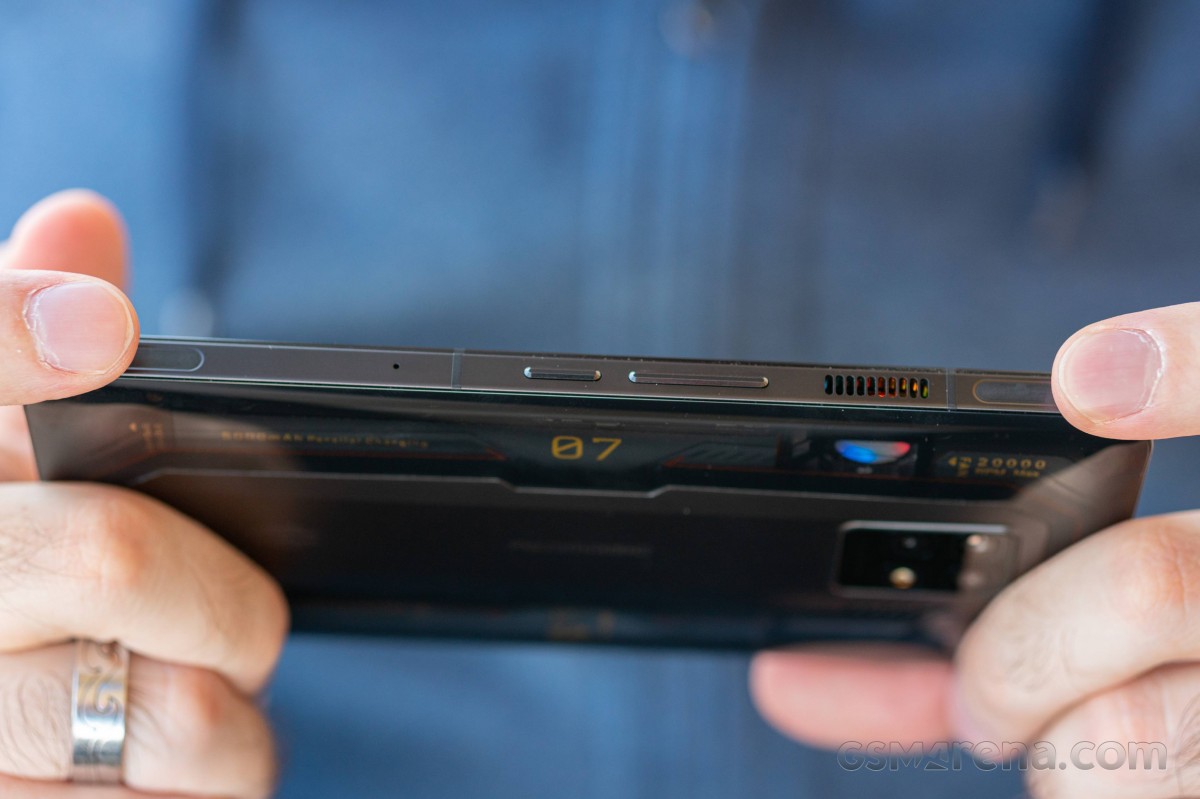
As we already mentioned, the Pro option skips one of the vents on the side and relies only on the back intake grille, and the side exhaust vent placed right next to the fan. The latter caps at 20,000 RPM and features a metal cover that reduces sound emissions.
In addition to the unorthodox air cooling solution, nubia has applied "space-grade materials" for additional heat dissipation. This includes a graphene composite layer, aircraft-grade aluminum for the middle frame, a copper coil and a big vapor chamber attached to it. All of this is attached to the chip using a high thermal conductivity gel.
As usual, we ran an hour-long CPU stress test that consisted of 100% load on all eight cores. CPU is usually the main contributor to the heat, so we test it using a CPU throttling app. We started off with 60-minutes long stress test without the cooling fan. The graph is a little bumpy but performance remains stable throughout the whole test, and the phone was able to keep 82% of the SoC's maximum performance. That's an excellent result, although a tad lower than the one we got on the Red Magic 7, which retained 87% of the theoretical maximum performance. The most important thing is that there are no sudden or big drops in performance, ensuring smooth gameplay.
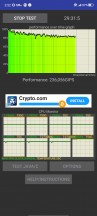
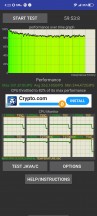
CPU stress test w/o fan: 30 min • 60 min
Then we turned on the cooling fan, and after an hour, the test returned 86% retention (as opposed to the 92% we got on the vanilla 7). The curve seems flatter with the fan on, though, and the CPU hovered closer to the 90% mark throughout the whole test.
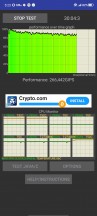
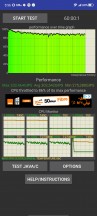
CPU stress test w/ fan: 30 min • 60 min
In both tests, we felt the frame was hotter than on the Red Magic 7. It was a challenge to touch it for more than a few seconds. Still, we wouldn't complain about that, as it's only natural after an hour-long CPU stress test. We feel that sustained performance is more important in this case. You can always slap a case on the phone that would insulate your fingers from the frame.
High refresh rate gaming
Unfortunately, it's still the Wild West when it comes to HRR gaming. Most phones, the Red Magic series included, don't push games beyond 60fps. Only a handful of games went above that threshold, and that's Call of Duty Mobile, which ran at 90fps, while Air Force 1945, Sky Force: Reloaded, and Real Racing 3 got up to 120fps. The rest of the games we tried were locked at 60fps despite the built-in refresh rate counter showing 120Hz. PUBG Mobile, Garena Free Fire, Genshin Impact, Mobile Legends, Arena of Valor, and Asphalt 9 reached only 60fps at a 120Hz refresh rate.


Tip us
2.1m 180k
RSS
EV
Merch
Log in I forgot my password Sign up