Amazfit GTR watch review
Competition
Wearable tech has definitely come a long way in recent years. There are plenty of options out there, covering pretty much every use case and taste. So much so, in fact, that it's getting increasingly easy to get lost in the growing sea of wearables.
 Left to right: Xiaomi Mi Band 4, Amazfit Bip, Huawei Watch GT 2, Amazfit GTR
You really have to get your priorities well sorted out first to pick a device that works best for your needs. If you are the type of person who enjoys advanced and flexible features, the kind that only an actual app ecosystem can provide, then you should probably look into a proper smartwatch. Google's own WearOS has been declining in popularity lately, but there are still some great options from Fossil, like the Sport. TicWatch is also a big player in the niche with nifty offers like the E2, Pro and S2, to name a few.

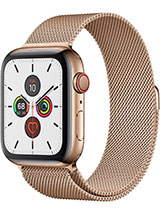
Samsung Galaxy Watch • Apple Watch Series 5
Samsung deserves a mention for its persistence with the Tizen platform. Once overshadowed by WearOS, it is now arguably even more potent and application-rich than its Google competitor. And last, but not least, the king of the hill - Apple's own Watch family of devices, which hardly need any introduction or advertisement at this point.
Going for a full-featured smartwatch has its perks. You typically get all the bells and whistles, including advanced activity sensors, GPS, even some multimedia capabilities here and there. What you end up sacrificing is battery life. Having to charge one more device on a daily basis is just a deal-breaker for many users.
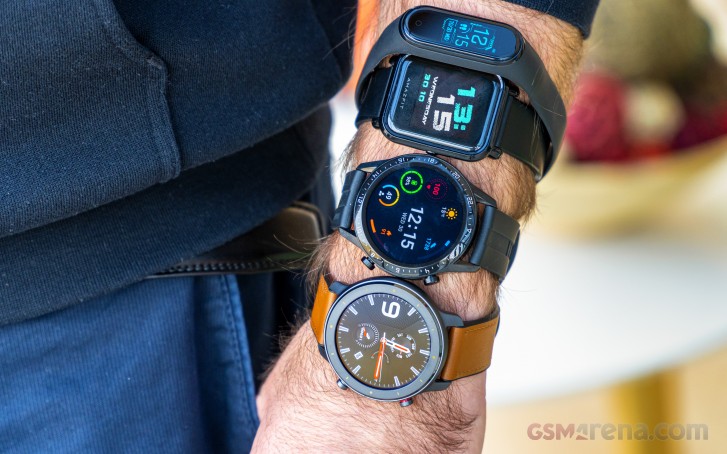 Top to bottom: Xiaomi Mi Band 4, Amazfit Bip, Huawei Watch GT 2, Amazfit GTR
Addressing this, on the other end of the spectrum are smart activity trackers like the exceedingly popular Xiaomi Mi Band family. These typically have battery life measured in weeks. All the while, features like notifications and even advanced tracking sensors and GPS on devices like the Huawei Band 3 Pro have been steadily shrinking the gap between them and smartwatches. If activity tracking is your main priority and you generally don't mind a sportier look, then definitely delve into this wearable niche. You'll save a few bucks in the process as well.
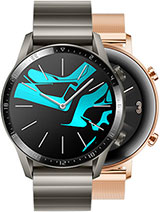
Huawei Watch GT 2
Then there are devices like the Amazfit GTR that don't necessarily fit in either of the above clear-cut categories. A classic watch aesthetic, combined with less versatile, but more energy-efficient software, these new devices tend to strive for a nice balance. And Huami is definitely not alone in this niche either. Huawei and the Watch GT 2, in particular, are after the same market. Pushing a device big on both looks and endurance. If you are looking for as close an alternative to the Amazfit GTR as possible, then definitely look no further than Huawei's offer.
Final thoughts
Devices like the Amazfit GTR illustrate the progress made in the smart wearable market. The odd tech niche was reinvigorated fairly recently after a long pause, waiting for technology to catch up. Since then, manufacturers have been thrashing back and forth between features and functionality, looks and utility, power and endurance.
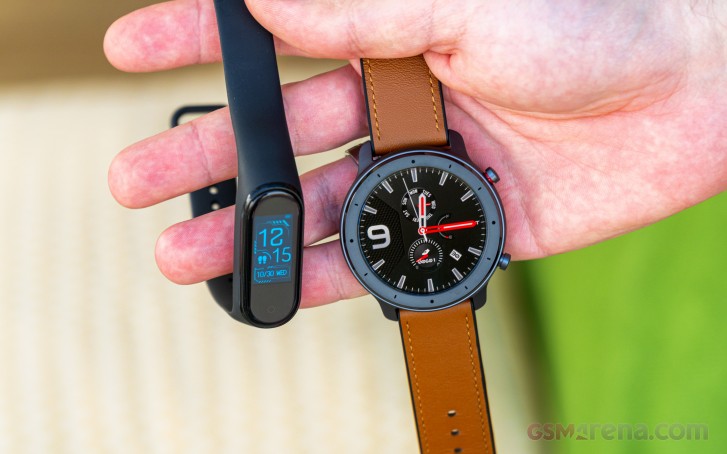 Left: Xiaomi Mi Band 4, Right: Amazfit GTR
The GTR proves you can make a solid middle-ground choice work. Now, it's just a matter of striking the exact balance for the widest possible appeal. Honestly, the GTR came pretty close in our book. That being said, there is still plenty of room for refinement. Software, especially, sticks out as a long-standing sore point for Huami. A company that has otherwise proven time and time again it can delivery properly designed, quality hardware.
Even taking the odd bug and quirk into consideration, we still think the Amazfit GTR deserves a solid recommendation overall. Just be sure to familiarise yourself with what exactly it has to offer before you pull the trigger.
Pros
- Stylish exterior with great build quality
- Amazing, class-leading battery life
- Vibrant and very sharp OLED display
- Activity tracking works surprisingly well and is really in-depth
Cons
- Aluminum might be prone to easier scratching
- The display has a bit too much glare in bright sunlight
- The buttons look good, but feel a bit mushy
- The charging base is a bit too small and causes issues
- There is no official way of sideloading additional watchfaces. Still, the modding community is very active
- There are some minor software glitches here and there
- Buttons are very underutilized and navigation needs some work
- UI is a bit slow at times and wake-up times could definitely use some optimization as well
- No onboard speaker so no sound alerts of any kind


Tip us
2.1m 180k
RSS
EV
Merch
Log in I forgot my password Sign up