Motorola Edge 60 review
Display
The Motorola Edge 60 comes with a 6.67-inch P-OLED screen with 2,712 x 1,220 pixels or 444ppi density. The screen supports up to 120Hz refresh rate, 10-bit color depth and HDR10+ streaming.
A curved Gorilla Glass 7i shield handles the protection.

Motorola advertises the screen as capable of up to 4,500nits of peak brightness.
In our display test, the panel got nicely bright with a maximum automatic brightness of about 1,400 nits. Using the slider manually, the maximum we could get was 495 nits, which is par for the course.
The minimum brightness at white patch was 4 nits, which is higher than the usual 2 nits we get in this scenario.
Max display brightness test
White test pattern, 75% fill (nits)
- Manual mode
- Auto mode
 Motorola Edge 60 Pro
 Motorola Edge 50
 Motorola Edge 60
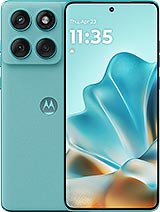 Motorola Edge 60 Fusion
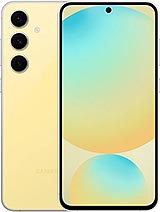 Galaxy S24 FE
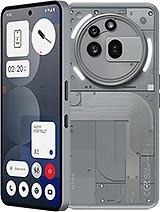 Nothing phone (3a) Pro
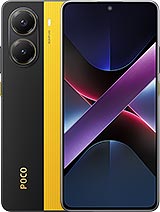 Poco X7 Pro
The display on the Motorola Edge 60 supports up to 120Hz refresh rate. There are three modes - Auto, 120Hz, and 60Hz.
Both Auto and 120Hz show the UI at 120Hz and choose high refresh rates for most of the compatible apps. Auto usually uses 90Hz for apps, while 120Hz goes up to 120Hz, obviously. In both modes, the refresh rate reverts to 60Hz for static content and video playback.
The 60Hz mode has the refresh rate fixed at 60Hz.
The Edge 60 is certified for HDR10 and HDR10+ content, and it is recognized by YouTube and hardware scanning apps. Netflix is yet to whitelist it and serves 1080p content in standard dynamic range only.
Battery life
The Motorola Edge 60 is powered by a 5,200mAh battery, a minor increase over the 5,000mAh cell inside the Edge 50. Some markets like China are getting the phone with a 5500mAh battery, but it's 5200mAh in most of the world. The battery is paired with a 4nm Mediatek Dimensity 7300 chipset just like in the Fusion.
Update, 22 May 2025: Since this review was published, we procured another review unit and we got better results in both battery life and charging. We've updated the analysis and the numbers below accordingly.
In our proprietary tests, the Edge 60 achieved an Active Use Score of 13:32h, which is a good score. It's slightly behind the Edge 60 Fusion, but overall, the Edge 60 did relatively well across all tests and certainly better than the Motorola Edge 50.
Charging speed
The Motorola Edge 60 supports 68W TurboCharge and while it ships with a properly rated USB-C cable, there is no such adapter inside the retail box.
Oddly, while the Edge 50 had wireless charging support, Motorola has opted out of it for the Edge 60.

Any 68W+ USB-PD adapter with PPS should be able to charge the Edge 60 at the fastest rate possible, but we used Motorola's 68W charger.
It recharged 48% of the battery in 15 mins, 81% in 30 mins, and a full charge took 45 minutes - the same as the Edge 50 with similar specs.
Charging speed
- in 15 min
- in 30 min
- Time to full charge (from 0%)
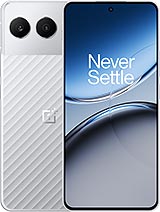 OnePlus Nord 4
Poco X7 Pro
Motorola Edge 60 Fusion
Motorola Edge 60 Pro
Motorola Edge 60
Motorola Edge 50
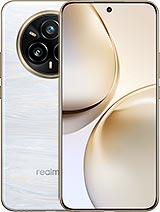 Realme 14 Pro+
We had the Charge boost option On for our tests to get the fastest charging possible but you can't turn it off if you are concerned about the battery longevity.
You also get the option of setting a charging limit to 80% of the capacity, which might come in handy if you always have the phone hooked on a charger and you are concerned that keeping it at 100% might deteriorate the battery health.
Speakers
The Motorola Edge 60 has two speakers - one at the bottom, and the earpiece acting as a second one. There is support for the Dolby Atmos enhancement, and it's on by default.

The Motorola Edge 60 scored an Excellent mark on our loudness test. Unfortunately, the audio quality is average at best - the relatively high loudness score can be attributed to the very well presented high frequency range, but it's at the expense of vocals, and there is minimal thump.
Use the Playback controls to listen to the phone sample recordings (best use headphones). We measure the average loudness of the speakers in LUFS. A lower absolute value means a louder sound. A look at the frequency response chart will tell you how far off the ideal "0db" flat line is the reproduction of the bass, treble, and mid frequencies. You can add more phones to compare how they differ. The scores and ratings are not comparable with our older loudspeaker test. Learn more about how we test here.


Tip us
2.1m 180k
RSS
EV
Merch
Log in I forgot my password Sign up