OnePlus Nord 5 review
6.83-inch 144Hz display
The OnePlus Nord 5 gets a bigger and faster display this time around. The handset features a 6.83-inch OLED panel with 144Hz refresh rate and a 1272 x 2800px resolution. Additionally, the panel supports HDR10+, Dolby Vision, high PWM brightness control for reduced eye strain, and the Ultra HDR standard.

On that note, the LivePhoto feature now supports Ultra HDR in the Gallery app. And you can extract 4K HDR stills.
When it comes to real-world performance, the display can get decently bright. Our unit got up to 1330 nits in auto mode and up to 787 nits in manual mode. In our experience, anything above 1,000 nits is enough for a comfortable outdoor experience.
Max display brightness test
White test pattern, 75% fill (nits)
- Manual mode
- Auto mode
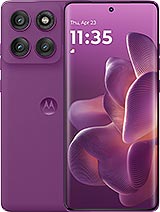 Motorola Edge 60 Pro
 Poco F7
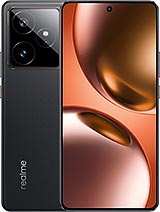 Realme GT 7
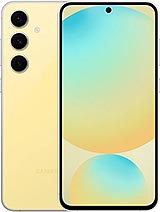 Galaxy S24 FE
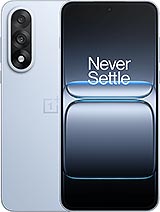 OnePlus Nord 5
 OnePlus 13R
 OnePlus Nord 4
Refresh rate
The phone has three refresh rate modes - Auto, Standard and High. The latter option is still automatic in the sense that it dials down the refresh rate to 60Hz when the screen is idle, but it prioritizes high-refresh rates in apps. For instance, Chrome doesn't go beyond 90Hz in Auto mode, but boosts up to 120Hz in High mode.

However, the advertised 144Hz refresh rate is not actually available for everyday use in apps and menus. The highest refresh rate that you can manually configure the device to is 120Hz, and even per-app settings do not go beyond that.
The only way to achieve the advertised 144Hz refresh rate is in games. More specifically, in the handful of games OnePlus has whitelisted. This includes titles like BGMI, Call of Duty: Mobile, and Free Fire. In some cases, such as in Call of Duty: Mobile, the 144Hz refresh rate is automatically achieved in game. In BGMI, there is a slightly convoluted procedure involved in first setting the game to the lowest graphical preset/highest in game refresh rate and then enabling the Adaptive Frame Booster option through the OnePlus gaming overlay. The phone then uses frame generation to achieve the 144Hz refresh rate.
Considering its limited application, it feels disingenuous to claim that the phone has a 144Hz refresh rate display. Sure, the hardware is there, but you really aren't experiencing it most of the time. And if you don't play the games where it is accessible, you functionally just have a 120Hz display, which feels like a scam.
Battery life
Depending on the market, the OnePlus Nord 5 features either a 5,200 mAh battery or a 6,800 mAh cell. Indian consumers will receive the larger unit, while European users will settle for the 5,200 mAh variant. Interestingly, the 5,200 mAh battery is a downgrade compared to last year's Nord 4.
In addition to the smaller battery, the Nord 5 features a larger display and more powerful chipset, which would negatively affect endurance compared to the previous model.
However, we are happy to report that the decreased cell capacity and more demanding hardware have had minimal effect on battery life. The Nord 5 performed similarly to the Nord 4 in our battery tests, retaining excellent endurance. We are particularly impressed by the solid web browsing score.
Charging speed
The Nord 5 supports up to 80W charging using the company's proprietary SuperVOOC charging standard, but it can also negotiate 18W over Power Delivery or 33W when PPS is available. For context, last year's Nord 4 supported 100W fast charging, significantly reducing the charging time.

Either way, the charging rate is competitive and is definitely one of the faster ones. The phone can complete a full charging cycle within 42 minutes, while a 30-minute charging cycle replenishes almost 80% of the battery capacity.
Charging speed
- in 15 min
- in 30 min
- Time to full charge (from 0%)
 OnePlus Nord 4
Realme GT 7
Motorola Edge 60 Pro
OnePlus Nord 5
OnePlus 13R
Galaxy S24 FE
 Pixel 9a
There are some charging protections in place as well. The Smart Rapid Charging is disabled by default, which limits the charging rate and preserves battery health. There's also the option to limit the battery charge to 80% for extra protection.
Notably, the handset supports wired reverse charging at 5W. There is also bypass charging, which is very useful when gaming. It protects the battery by supplying the components with power, rather than charging the battery and thus avoiding the inevitable heat build-up from the charging process.
The Nord 5 does not support wireless charging.
Speakers
The handset features a set of hybrid stereo speakers, meaning the top one also acts as an earpiece. Naturally, the full-fledged speaker is noticeably louder at the bottom. It's to be expected from such a setup.
When it comes to loudness, the device scored -25.3 LUFS, which earns the device a "Very Good" loudness score.
Sound quality is also very good, definitely above average. The sound is full, with pronounced bass, although not very deep, while the vocals remain clean. The highs can get a bit distorted at maximum volume levels.
Use the Playback controls to listen to the phone sample recordings (best use headphones). We measure the average loudness of the speakers in LUFS. A lower absolute value means a louder sound. A look at the frequency response chart will tell you how far off the ideal "0db" flat line is the reproduction of the bass, treble, and mid frequencies. You can add more phones to compare how they differ. The scores and ratings are not comparable with our older loudspeaker test. Learn more about how we test here.


Tip us
2.1m 180k
RSS
EV
Merch
Log in I forgot my password Sign up