Oppo Find X10 review
Upgrades to the main camera and the telephoto, nicer selfies too
The Find X10 takes the vanilla model in the lineup a notch or two up in camera hardware compared to the previous generation. The main camera and the telephoto are treated to higher-res sensors (the one on the telephoto is also larger than before), and the selfie camera gets a resolution upgrade and AF.
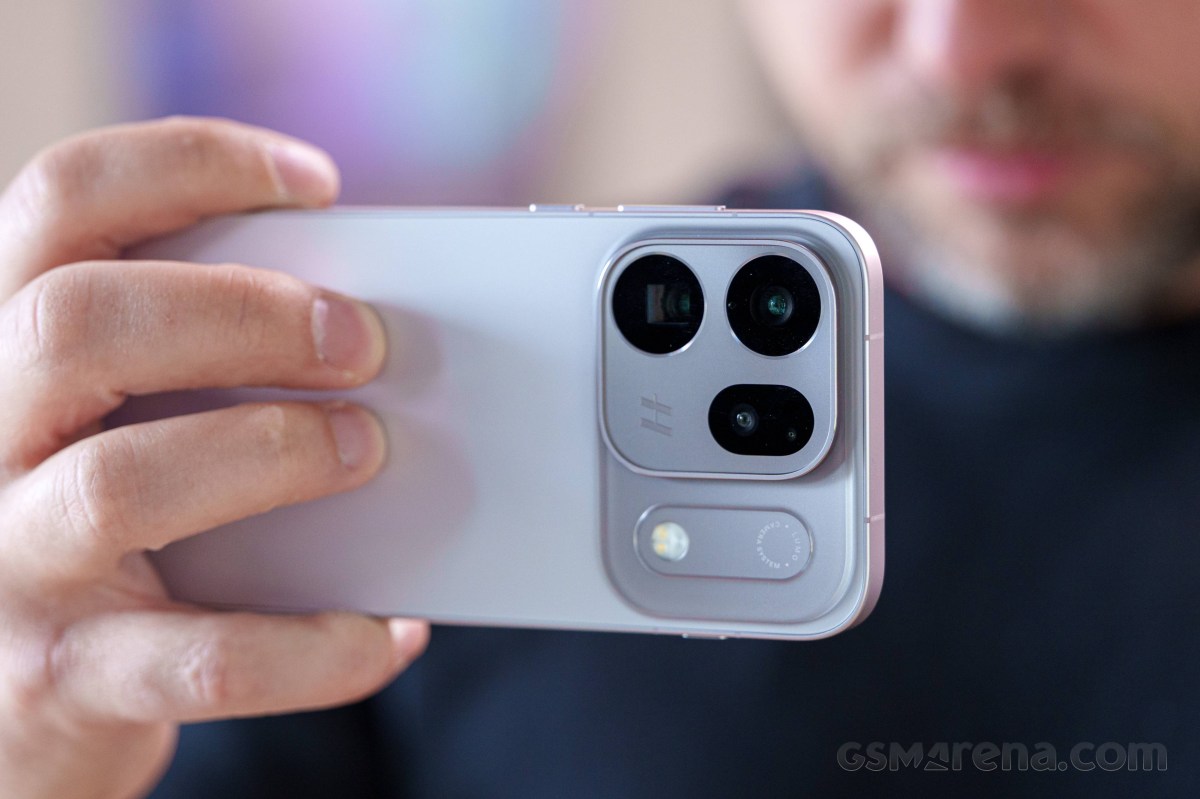
The main camera maintains the same optical format for the sensor, at 1/1.4", but the one on the X10 has a 200MP nominal resolution as opposed to the 50MP one on the X9. The model we have here is the Samsung HPE, which we've seen mostly on Xiaomis - the 17 Ultra's telephoto and the Redmi Note 15 Pro+'s main camera use that one - and there's still no product page on it on Samsung Semiconductors's site. Either way, it's looking like a solid choice.
The telephoto camera also gets upgraded from 50MP to 200MP, but here we're also witnessing an increase in size - from 1/1.95" on the X9 to 1/1.56" on the X10. The X10 is using the Samsung HP5 sensor, same one that the X10 Pro Max has on its telephoto (and ultrawide, for that matter), but the X10 does have a less useful 65mm equivalent lens with somewhat of a middling close focusing capability at 21cm - the X10 Pro Max offers just barely more reach with its 70mm focal length, but noticeably shorter 9cm minimum focusing distance.
The ultrawide camera of the X10 is either entirely unchanged compared to the one on the X9, or they upgraded from one 50MP 1/2.75" sensor to another 50MP 1/2.75" sensor while keeping the lens the same. In any case there's not a lot to write home about here.
The selfie camera is new, that's for sure, and it's also shared with the X10 Pro Max, so that's one area where there's parity between the two models. It too is based on the Samsung JN5 sensor, like the ultrawide camera, and it's a step up in nominal resolution from the 32MP selfie camera of the X9, though the optical format is the same. The ultrawide 18mm focal length is a welcome development too, though the 21mm lens of the previous generation isn't exactly limiting in its field of view.
- Wide (main): 200MP Samsung Isocell HPE (1/1.4", 0.56µm-2.24µm); 23mm, f/1.6, OIS, PDAF (9.5cm - ∞); 8K30/4K120 video recording.
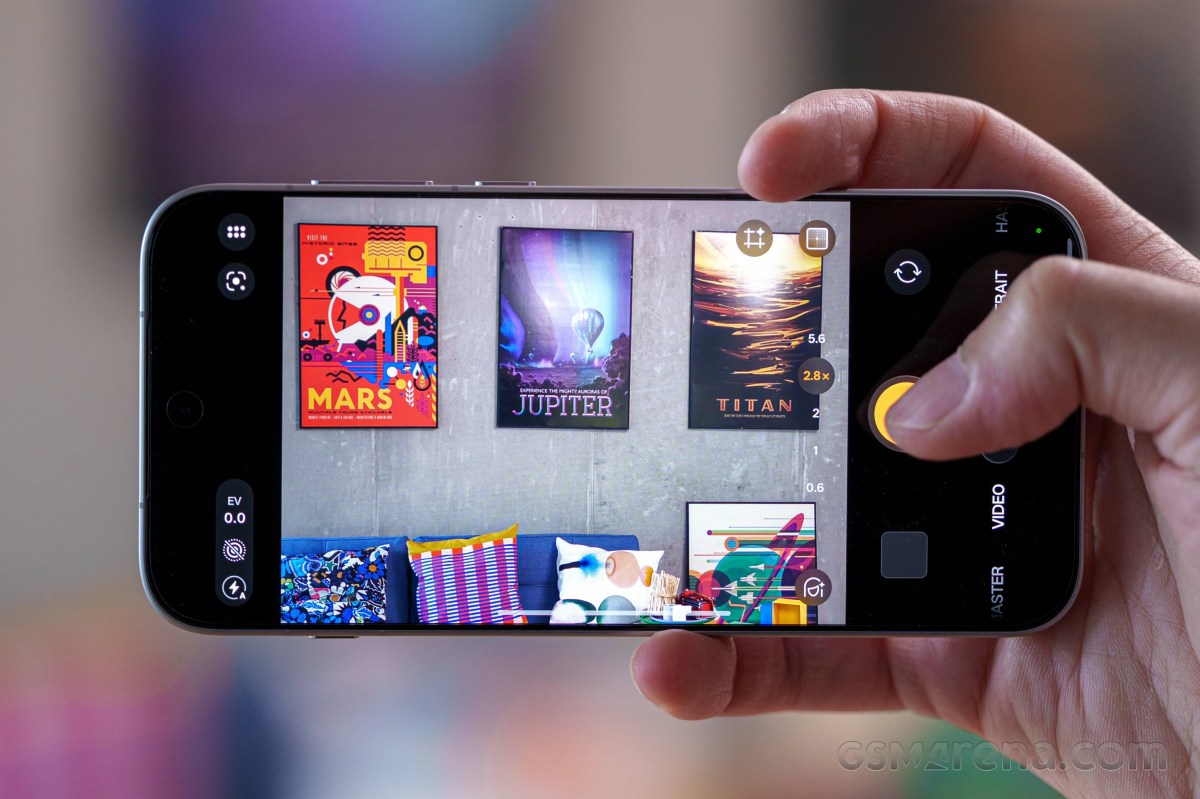
- Telephoto: 200MP Samsung Isocell HP5 (1/1.56", 0.5µm-2.0µm); 65mm (2.8x zoom), f/2.6, OIS, multi-directional PDAF (21cm - ∞); 8K30/4K120.
- Ultrawide: 50MP Samsung ISOCELL JN5 (1/2.75", 0.64µm-1.28µm); 15mm, f/2.0, multi-directional PDAF; 4K60.
- Front camera: 50MP Samsung ISOCELL JN5 (1/2.75", 0.64µm-1.28µm); 18mm, f/2.0, multi-directional PDAF; 4K60.
Last year's Find X9 didn't have a dedicated camera key like the X9 Pro did, so the fact that the X10 doesn't have one either is no big deal, unlike the X10 Pro Max not having it. You can make do just fine with double pressing a volume button to launch the camera or doing a double shake gesture - either of these will open the camera in the last used mode. There's also the Snap Key on the left side of the phone, which you can set to open the camera app into a specific mode.
The Find X10 also supports a teleconverter accessory, the first 'standard' (non-Pro/Ultra) phone in the lineup to do so. While we did have the lens on hand as part of the X10 Pro Max's Hasselblad Teleconverter kit, we didn't have a X10-specific phone case to attach it to, so we haven't shot any samples with a teleconverter on the X10.
Naturally, the Hasselblad references and functionality in the camera UI are also present on the vanilla Find X10 as they are on the X10 Pro Max. The orange accent color is Hasselblad's hue, the high-res mode where you can shoot in 50MP and 200MP resolutions is called Hasselblad Hi-Res, then there's the Xpan mode that will get you 22MP panoramic 65:24 aspect crops from your rear cameras, as if you're shooting on that one historic camera.
Daylight photo quality
Main camera
The default 25MP High resolution photos from the main camera at 1x zoom are very good, better than those from the X10 Pro Max. They're sharp and detailed, perhaps with a bit more sharpening than ideal, but still well rendered and potentially worth the extra storage they take up compared to the 12.5MP counterparts.
Naturally, it's hard to argue with the global properties of these photos. We're looking at excellent dynamic rangе in all sorts of complex lighting. The white balance is generally accurate, with a hint of extra warmth on occasion, and overall well measured levels of saturation in the default color style - vivos will get you notably more vibrant output, Oppos are more conservative, but both brands get you plenty of different color styles, customizable too.








Daylight samples, main camera (1x), 25MP
The Standard resolution 12.5MP images are properly nice too, with excellent natural detail rendition. We'd be perfectly happy shooting in Standard resolution, though if you're FOMO-driven, the thought of potentially missing out on some detail will likely force you to use High.




Daylight samples, main camera (1x), 12.5MP
The 50MP shots are also excellent and you can very well shoot in that resolution and downscale them yourself after the fact, so you can do your own sharpening and stuff. The 200MP mode, as usual, is hard to recommend, though admittedly this isn't the worst attempt at it.




Daylight samples, main camera (1x), 50MP




Daylight samples, main camera (1x), 200MP
Photos of people at 1x are pretty great too - exposures are on point, dynamic range is excellent, skin tones are lively.








Human subjects, main camera (1x): Photo mode • Portrait mode
At 2x zoom, you still get respectable quality in the default 25MP mode, particularly in well lit outdoor scenes. The 12.5MP images are properly excellent.








Daylight samples, main camera (2x), 25MP




Daylight samples, main camera (2x), 12.5MP
Pixel-level quality in the 2x headshots in High resolution Photo mode is a bit lacking in our relatively dim scenes, but the 12.5MP Portrait mode results are again excellent.








Human subjects, main camera (2x): Photo mode • Portrait mode
Telephoto camera
The telephoto camera's photos at 2.8x are quite superb. The default High resolution files have nicely fine detail - we'd say they're living up to the 26MP promise. Dynamic range is excellent too, and the color rendition is vibrant without overdoing it or showing white balance missteps.








Daylight samples, telephoto camera (2.8x), 26MP
The 12.6MP files are also super sharp. On some occasions that could make high-frequency detail look too digital - we're not strictly fans of the grass in the first sample, but overall the images are properly great.




Daylight samples, telephoto camera (2.8x), 12.6MP
We also got wonderful portraits out of the telephoto, with excellent detail in both Photo mode (26MP) and Portrait mode (12.6MP). Saturation might have been a touch too high on occasion resulting in slightly too intense skin tones - the Pro Max was more measured on those same instances - but it's hardly a dealbreaker.








Human subjects, main camera (2.8x): Photo mode • Portrait mode
The 50MP photos are also very good and can be a nice starting point for getting your own detail processing in place, at least in well-lit outdoor scenes. We're yet to be convinced that the 200MP files are of much practical use.




Daylight samples, telephoto camera (2.8x), 50MP




Daylight samples, telephoto camera (2.8x), 200MP
The 5.6x zoom shots even in 26MP resolution stand up remarkably well to pixel-level examination. The 12.6MP versions are top-class as well.








Daylight samples, telephoto camera (5.6x), 26MP




Daylight samples, telephoto camera (5.6x), 12.6MP
Ultrawide camera
The ultrawide camera does a respectable job too, even at 26MP, though it can't quite match the sharpness of the Pro Max's ultrawide. Even so, the photos are quite sharp and detailed, and dynamic range and colors are great too.








Daylight samples, ultrawide camera (0.6x), 26MP
The Standard resolution mode is probably a touch more appropriate for this ultrawide camera, with detail looking top-notch.




Daylight samples, ultrawide camera (0.6x), 12.6MP
Here's a handful of full-res shots as well - not the best ones we've seen, but probably worth a try if you have plenty of light.




Daylight samples, ultrawide camera (0.6x), 50MP
Close-ups
The X10's telephoto camera doesn't exactly impress with its minimum focusing distance - 21cm is more than twice the 9cm of the Pro Max, and then there's the 65mm focal length here vs the 70mm of the higher-tier phone, meaning you won't be able to fill the frame with tiny subjects quite as well here as you could on the Pro Max.
Still, the 2.8x zoom shots at minimum focusing distance are very good and the 5.6x zoom level will improve the magnification significantly, at only a small sharpness cost. In fact, we'd say the 5.6x photos are very good - at close range too, as it was with distant subjects.




Close-up samples, telephoto camera (2.8x)




Close-up samples, telephoto camera (5.6x)
You can, of course, use the ultrawide camera, whether at its native focal length to get some wacky perspectives, or at the main camera's 1x zoom level, though in both cases you'll have to contend with shadows or disturbing your subject. The main camera zoomed in to 2x is another viable option.




Close-up samples, ultrawide camera (0.6x)




Close-up samples, ultrawide camera (1x)




Close-up samples, main camera (2x)
Low-light photo quality
Main camera
The Find X10's main camera captures very good photos at 1x at night. Dynamic range is excellent and colors are nicely saturated and mostly accurate (a hint of warmth never hurt nobody). Detail is generally good, but there's a general lack of absolute sharpness - it's not bad at all, but the Pro Max is notably sharper in the same conditions.








Low-light samples, main camera (1x)
That perception of haziness remains at 2x zoom, though again, we wouldn't call it a dealbreaker. It's just that the higher-end model does better, and that's okay.








Low-light samples, main camera (2x)
Telephoto camera
The Find X10's telephoto is on par with that of the Pro Max in the dark, though - aside from the small difference in reach, that is. We're getting a ton of sharp detail (a bit pixel-y, but not too bad), dynamic range is excellent, the colors are vibrant and have no odd white balance tendencies.










Low-light samples, telephoto camera (2.8x)
At 5.6x, the parity continues - so the Pro Max's brighter lens isn't giving it much of an advantage. Detail is good to very good depending on how much light you have to work with.








Low-light samples, telephoto camera (5.6x)
Ultrawide camera
Where the Find X10's does fall behind somewhat more noticeably is on the ultrawide - the Pro Max's substantially larger (and higher-res) sensor does show its strength here. Still, the results from the X10 show the same wide dynamic range and vibrant colors, it's just that sharpness is only alright.








Low-light samples, ultrawide camera (0.6x)
Selfies
The photos from the Find X10's front-facing camera are the same as those we got on the X10 Pro Max and that can't be a bad thing - these are some of the best selfies on the market. We're getting vibrant colors and lifelike skin tones and excellent dynamic range.








Selfie samples, 0.8x
The wide native field of view is most welcome and the 0.8x photos have excellent sharpness, but if you prefer a little tighter framing, the 1x (21mm) zoom level will get you similarly great quality. We're still not entirely getting the 2x zoom level, but if you have your use cases for it, know that quality is still quite reasonable.




Selfie samples, 1x




Selfie samples, 2x
Photo quality verdict
The Find X10 does a thoroughly good job as a stills camera across all shooting scenarios, with only small missteps here or there. The main camera and the telephoto are properly excellent in daytime, including digital zooming at twice their native focal lengths, while the ultrawide hovers between good and very good. At night, the telephoto excels, while the main camera is merely very good and the ultrawide is about a notch behind still. Selfies are top-class.
Video quality
The Find X10 is no slouch in terms of video recording capabilities. 4K60 is supported on all four cameras (the three rear ones and the selfie camera), while the two 200MP units on the back (the main and the telephoto) can also do 4K120 and 8K30.
There's always-on video stabilization in all quality settings, with an Ultra Steady mode also available up to 4K60 on the rear cameras and up to 1080p30 on the selfie camera. In Pro mode, you get three stabilization options - Off (completely), OIS (only), and Enhanced.
The Pro video mode adds a bunch more things to the mix, starting with a 24fps frame rate. You get Dolby Vision here as well, but also Log recording (Oppo's O-Log2) with 4 pre-set live preview LUTs (which you can also have directly applied to the final video) and an option to import your own. There are also shooting aids, like a waveform (a decently large one too), focus peaking, and audio levels monitoring.
The 'plain' X10, just like the X10 Pro Max, gets open gate recording - you can capture video with the full sensor area, as opposed to using a 16:9 or a 2.39:1 crop, and do your cropping after the fact. Open gate recording is available on all three rear cameras at their native focal lengths at up to 60fps, in SDR, HDR, or O-Log2.
Really, the only difference between the X10 and X10 Pro Max in terms of video recording features is that the ultrawide camera on the Pro Max has 4K120 and 8K30, but we doubt more than 2 people will care.
You can hit 'play' below and use the 'next' button to advance through the playlist of all video samples, or you can watch the full playlist on YouTube.
Daytime videos from the Find X10 are generally very good from all three rear cameras. They are well tuned in their output and will produce compatible global properties, including excellent contrast but also great highlight and shadow development, and vivid color rendition that, while warm-ish, doesn't stray too far from reality.
The main camera clips have good to very good sharpness at 1x - no worse than the X10 Pro Max, though that one isn't exactly perfect in this regard. The Pro Max is properly disappointing at 2x, while the vanilla X10 does quite well - not just in comparison, but in absolute terms.
The telephoto is very good at its native zoom level - with somewhat heavier sharpening than the Pro Max, but roughly the same actual detail. That remains the case at 5.6x, where the X10 is quite respectable and on par with the higher-tier model.
The ultrawide camera's detail is good - nothing too special, but not really lacking either, as these cameras go. The Pro Max is better in this respect, though not by a huge margin.





Video screengrabs, daylight: 0.6x • 1x • 2x • 2.8x • 5.6x
At night, the Find X10 showed a flawed performance across all three of its rear cameras. It simply wouldn't maintain a steady 30fps frame rate (hovered between 22fps and 26fps) and that was the case on at least two software versions, so if it was a matter of an update, then Oppo haven't gotten round to it. Mind you, that was with the Adaptive frame rate setting turned off, and we also tried changing the bitrate (Standard and High quality) and the codec (h.264 and h.265/HEVC), but nothing seemed to help.
That's somewhat unfortunate because the phone has potential for reasonably high-quality low-light video, as evidenced by the screengrabs we have here, though it could be argued that the lower number of frames does allow it to expose them better, plus viewing the actual videos you'd be easily annoyed by the choppiness. Anyway, the X10 Pro Max showed no signs of such an issue, so you do have an alternative, if low-light video is a must.





Video screengrabs, low light: 0.6x • 1x • 2x • 2.8x • 5.6x
Stabilization is generally very good on the Find X10. All three rear cameras stay planted in one direction if you're shooting from a stationary position, though they do feel insecure when panning. Walking shake is handled very well, possibly even a little better than on the Pro Max.
Video quality verdict
The Find X10 is fully tricked out in terms of video recording capabilities, with 4K60 across the board and 4K120 and 8K30 on the main and telephoto cameras, plus there's Dolby Vision across the board and open gate recording. The actual videos we got out of it were mostly very good in daylight, particularly from the main and telephoto camera, though the ultrawide is also about what you can expect in this class. Low-light results were disappointing, though, with unstable frame rates and choppy footage from all three rear cameras- a real shame, as low-light videos have great dynamic range otherwise. Stabilization is pretty great overall, though maybe you should pay extra attention when panning.


Tip us
2.1m 180k
RSS
EV
Merch
Log in I forgot my password Sign up