Poco Pad M1 review
Display
The Poco Pad M1 packs a 12.1-inch IPS LCD screen with 2,560 x 1,600 pixels - that's 249ppi density. The screen supports 120Hz refresh rate, 360Hz touch sampling (240Hz for stylus), 10-bit color depth, and Dolby Vision streaming.

Xiaomi advertises 500nits as typical and 600nits as high maximum brightness.
Our display measurements confirm those numbers - we captured 494 nits of maximum manual and 581 nits of maximum automatic brightness.
The minimum brightness on a white screen was just 1.8 nit.
Max display brightness test
White test pattern (nits)
- Manual (75% fill)
- Auto (75% fill)
 Redmi Pad Pro
 Poco Pad M1
 Poco Pad
 Redmi Pad 2 Pro
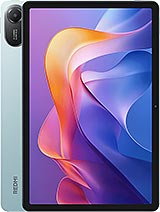 Redmi Pad 2
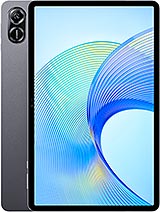 Honor Pad X9
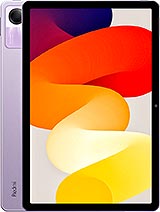 Xiaomi Redmi Pad SE
Refresh rate
The Poco Pad M1 screen supports up to 120Hz refresh rate. There are four available refresh rate modes to choose from - Default (Auto), 60Hz, 90Hz and 120Hz. The 60Hz and 90Hz set the ceiling of the maximum refresh rate, while continuing to switch in a pretty dynamic way. Meanwhile, the only difference between Auto and 120Hz is that Auto would prefer 90Hz for most system apps, while 120Hz will use the maximum.
The display supports 30Hz, 48Hz, 50Hz, 60Hz, 90Hz, and 120Hz steps as per hardware scanning apps.
In real life, for idle screen and static content, the system uses 48Hz. We also saw plenty of variance across different apps: 30Hz (video playback), 48Hz (streaming), 50Hz (streaming), 60Hz (videos and apps), 90Hz (some system apps and games), and 120Hz in benchmarks, games, and the system UI.
HDR and streaming
The Poco Pad M1 supports Dolby Vision video streaming and offers such an option in compatible apps like Netflix. There is no HDR10 support and hence there is no HDR streaming on YouTube.
Battery life
The Poco Pad M1 is powered by a massive 12,000mAh battery - the same as the Redmi Pad 2 Pro.
The tablet scored an Active Use Score of 14:50h, a solid performance for a tablet. It did very well across all of our standalone tests.
Since tablets rarely have cellular connectivity, we use Whatsapp for the call test in our tablet reviews. If you prefer to remove the call component from the calculation of the tablet's Active Use Score, you can easily do that by moving its corresponding slider to zero.
Charging speed
The Poco Pad M1 supports up to 33W wired charging, and in some markets, the tablet ships with Xiaomi's own 33W power adapter.

Such a large capacity battery cannot be charged that fast with a 33W adapter, and our test confirms that. The tablet reached 12% of charge in 15 mins, 22% in 30 mins, 40% in 60mins, and it needed almost 3 hours for a full charge.
Charging speed
- in 15 min
- in 30 min
- Time to full charge (from 0%)
Honor Pad X9
Redmi Pad Pro
Poco Pad
Xiaomi Redmi Pad SE
Poco Pad M1
Redmi Pad 2 Pro
Redmi Pad 2
Such a large battery is also a blessing, though, as the tablet supports up to 27W reverse wired charging. This means you can charge smartphones fast on the go and leave plenty of remaining power for the tablet.
Smart Charging and 80% Charge limit are the two battery protection options.
Speakers
The Poco Pad M1 has four large speakers that support Dolby Atmos. The enhancement is on by default, and it seems to improve the sound by making it deeper and somewhat richer.

The Pad M1, just like the Redmi Pad 2 Pro, supports Sound Boost, a feature we don't really like.
See, the last two steps of the volume scale are marked 200% and 300%. Those bring a minor boost in loudness, sure, but it comes from focusing on purely high frequencies - this worsens the sound, making it flat and squeaky. These options definitely don't produce a pleasant reproduction of music and video.
The sound recording below is with the speakers' volume at 100%, as this is the way music and videos were meant to be enjoyed.
The Poco Pad M1 speakers scored a Very Good mark on our loudness test. The audio quality is very good, too, with excellent vocals, good thump and overall pleasant high range, though the latter could use a small boost.
Use the Playback controls to listen to the phone sample recordings (best use headphones). We measure the average loudness of the speakers in LUFS. A lower absolute value means a louder sound. A look at the frequency response chart will tell you how far off the ideal "0db" flat line is the reproduction of the bass, treble, and mid frequencies. You can add more phones to compare how they differ. The scores and ratings are not comparable with our older loudspeaker test. Learn more about how we test here.


Tip us
2.1m 180k
RSS
EV
Merch
Log in I forgot my password Sign up