Major Junior League
Samsung Galaxy J7 (2017) review: Major Junior League
Performance
The Samsung Galaxy J7 (2017) is running on the Exynos 7870 chipset, which, although incredibly power-efficient, is the same as on last year's model. We certainly wouldn't have minded getting the higher-grade Exynos 7880, which is utilized in the Galaxy A5 (2017).
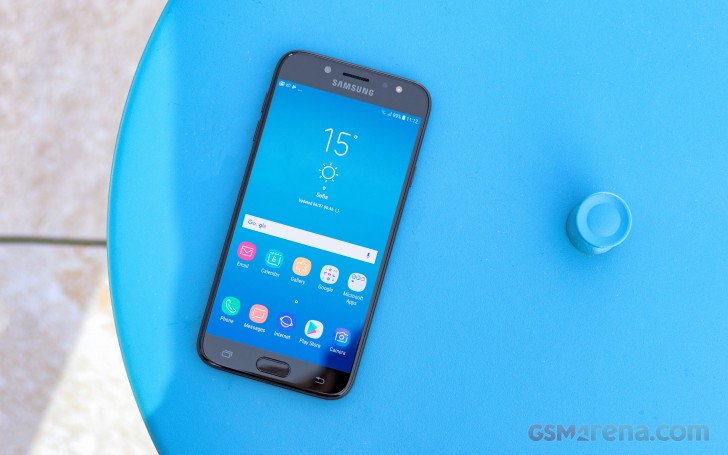
While the 7870 chip has a decent octa-core Cortex-A53 processor clocked at 1.6GHz, its Mali-T830MP1 GPU maybe somewhat disappointing. While this single-core Mali was perfect for the 720p screen on the J7 (2016), having twice as many pixels on the 2017 model will probably be tougher on the GPU.
We kick off our benchmark inspection with some Geekbenching. In the single-core test, the J7 (2017)'s Cortex-A53 scores about the same as other mid-ranges, but lags behind the A72 core inside the Helio X20.
GeekBench 4 (single-core)
Higher is better
-
Xiaomi Redmi Note 4 (Helio X20)
1546 -
Oppo R9s
845 -
Sony Xperia XA1
800 -
Samsung Galaxy A5 (2017)
764 -
Samsung Galaxy J7 (2017)
693
GeekBench 3 (single-core)
Higher is better
-
Huawei P9
1819 -
Oppo F3 Plus
1621 -
Xiaomi Redmi Note 4 (Helio X20)
1596 -
Sony Xperia XA1
1025 -
Samsung Galaxy C7
933 -
Samsung Galaxy J7 (2017)
755 -
Samsung Galaxy J7 (2016)
745
Employing all processing cores will surely solve every problem which could be presented under Android OS but won't impress in our benchmark chart. Still, the score is about the average and expected for the class.
GeekBench 4 (multi-core)
Higher is better
-
Xiaomi Redmi Note 4 (Helio X20)
4456 -
Samsung Galaxy A5 (2017)
3958 -
Sony Xperia XA1
3554 -
Samsung Galaxy J7 (2017)
3388 -
Oppo R9s
3130
GeekBench 3 (multi-core)
Higher is better
-
Huawei P9
6558 -
Oppo F3 Plus
5636 -
Xiaomi Redmi Note 4 (Helio X20)
5166 -
Samsung Galaxy C7
5103 -
Sony Xperia XA1
4539 -
Samsung Galaxy J7 (2017)
4187 -
Samsung Galaxy J7 (2016)
4140 -
Samsung Galaxy J7
3619 -
Samsung Galaxy A5 (2016)
3061
Here comes the interesting part. The Mali-T830MP1 in charge of the graphics department wasn't a big deal last year on a 720p display, so it's even less twelve months later on 4x pixels.
The offscreen tests prove the GPU inside the J7 (2017) is inferior to the competition and outdated. The same Mali, but with three cores and a faster clock speed does far better inside the Exynos 7880 within the Galaxy A5 (2017).
GFX 3.0 Manhattan (1080p offscreen)
Higher is better
-
Huawei P9
18 -
Oppo F3 Plus
17 -
Samsung Galaxy A5 (2017)
15 -
Xiaomi Redmi Note 4 (Helio X20)
15 -
Oppo R9s
10 -
Samsung Galaxy C7 Pro
9.8 -
Samsung Galaxy C7
9.8 -
Sony Xperia XA1
9.6 -
Samsung Galaxy A5 (2016)
5.7 -
Samsung Galaxy J7 (2017)
5.1 -
Samsung Galaxy J7 (2016)
4.9 -
Samsung Galaxy J7
4.1
GFX 3.1 Manhattan (1080p offscreen)
Higher is better
-
Huawei P9
10 -
Oppo F3 Plus
10 -
Xiaomi Redmi Note 4 (Helio X20)
9.5 -
Samsung Galaxy A5 (2017)
9.1 -
Sony Xperia XA1
6.2 -
Oppo R9s
6.2 -
Samsung Galaxy C7
6.2 -
Samsung Galaxy C7 Pro
6.1 -
Samsung Galaxy J7 (2017)
3.3 -
Samsung Galaxy J7 (2016)
3.2 -
Samsung Galaxy J7
2.6
GFX 3.1 Car scene (1080p offscreen)
Higher is better
-
Huawei P9
6.5 -
Oppo F3 Plus
6 -
Xiaomi Redmi Note 4 (Helio X20)
5.4 -
Samsung Galaxy A5 (2017)
5.2 -
Sony Xperia XA1
3.7 -
Samsung Galaxy C7
3.4 -
Samsung Galaxy C7 Pro
3.4 -
Oppo R9s
3.4 -
Samsung Galaxy J7 (2017)
1.9
The Galaxy J7 (2017) scored miserably on the onscreen tests where the increased screen resolution finally caught up with the dated GPU.
GFX 3.0 Manhattan (onscreen)
Higher is better
-
Huawei P9
19 -
Sony Xperia XA1
19 -
Oppo F3 Plus
17 -
Samsung Galaxy A5 (2017)
15 -
Xiaomi Redmi Note 4 (Helio X20)
15 -
Samsung Galaxy C7 Pro
9.8 -
Oppo R9s
9.7 -
Samsung Galaxy C7
9.6 -
Samsung Galaxy J7 (2016)
9.5 -
Samsung Galaxy J7
8.3 -
Samsung Galaxy A5 (2016)
5.7 -
Samsung Galaxy J7 (2017)
5.1
GFX 3.1 Manhattan (onscreen)
Higher is better
-
Sony Xperia XA1
15 -
Huawei P9
11 -
Oppo F3 Plus
11 -
Xiaomi Redmi Note 4 (Helio X20)
9.4 -
Samsung Galaxy A5 (2017)
9 -
Samsung Galaxy J7 (2016)
7.2 -
Samsung Galaxy C7
6.1 -
Samsung Galaxy C7 Pro
6.1 -
Oppo R9s
6.1 -
Samsung Galaxy J7
5.7 -
Samsung Galaxy J7 (2017)
3.3
GFX 3.1 Car scene (onscreen)
Higher is better
-
Sony Xperia XA1
7.9 -
Huawei P9
7.1 -
Oppo F3 Plus
6 -
Xiaomi Redmi Note 4 (Helio X20)
5.4 -
Samsung Galaxy A5 (2017)
5.2 -
Samsung Galaxy C7
3.4 -
Samsung Galaxy C7 Pro
3.4 -
Oppo R9s
3.4 -
Samsung Galaxy J7 (2017)
1.9
The scores from the all-round GPU tests conclude pretty much the same thing - the GPU does a basic job compared to the most recent competitors.
Basemark X
Higher is better
-
Huawei P9
16942 -
Oppo F3 Plus
16695 -
Xiaomi Redmi Note 4 (Helio X20)
13666 -
Oppo R9s
10519 -
Samsung Galaxy C7
10445 -
Samsung Galaxy C7 Pro
10394 -
Sony Xperia XA1
9714 -
Samsung Galaxy J7 (2017)
5489 -
Samsung Galaxy J7 (2016)
5383 -
Samsung Galaxy A5 (2016)
4947 -
Samsung Galaxy J7
3922
Basemark ES 3.1 / Metal
Higher is better
-
Huawei P9
341 -
Xiaomi Redmi Note 4 (Helio X20)
287 -
Oppo F3 Plus
261 -
Samsung Galaxy A5 (2017)
259 -
Sony Xperia XA1
191 -
Oppo R9s
143 -
Samsung Galaxy C7
137 -
Samsung Galaxy C7 Pro
137 -
Samsung Galaxy J7 (2017)
93
Basemark OS II and AnTuTu are good indicators of overall performance and those put the J7 (2017) in the bottom of the pack.
Basemark OS II
Higher is better
-
Oppo F3 Plus
2349 -
Huawei P9
2190 -
Samsung Galaxy C7
1368 -
Sony Xperia XA1
1367 -
Samsung Galaxy J7 (2017)
1171 -
Samsung Galaxy J7 (2016)
999
AnTuTu 6
Higher is better
-
Huawei P9
98069 -
Oppo F3 Plus
91458 -
Xiaomi Redmi Note 4 (Helio X20)
85162 -
Samsung Galaxy C7 Pro
67540 -
Oppo R9s
66081 -
Samsung Galaxy C7
62818 -
Samsung Galaxy A5 (2017)
61020 -
Sony Xperia XA1
60707 -
Samsung Galaxy J7 (2016)
49094 -
Samsung Galaxy J7 (2017)
46822 -
Samsung Galaxy A5 (2016)
35689
We are disappointed to see the J7 (2017) so far behind the competition, even though it had notable potential. We blame Samsung for going cheap on where it mattered the most, and investing mostly in cosmetics.
The good news is, the dated chip was designed quite well. Despite the low scores, we can confirm that the Galaxy J7 (2017) packs enough punch for gaming and while occasional hiccups do happen, especially in 3D games, they won't stop anyone from enjoying a good gaming session. Arcade games run better, of course. But throughout the UI, lag is almost non-existent.
Finally, thanks to the high-end 14nm manufacturing process, the Exynos 7870 runs cool and you won't experience the so-called hot spots during long gaming sessions.


Tip us
2.1m 180k
RSS
EV
Merch
Log in I forgot my password Sign up