vivo X500 Pro Max review
OriginOS 7 based on Android 17
The vivo X500 Pro series debuts OriginOS 7 based on the latest Android 17, promising better visuals, smoother and better performance, new AI tricks and, as always, improved efficiency. Vivo will keep the phone updated for 5 years, which includes 5 major OS upgrades.
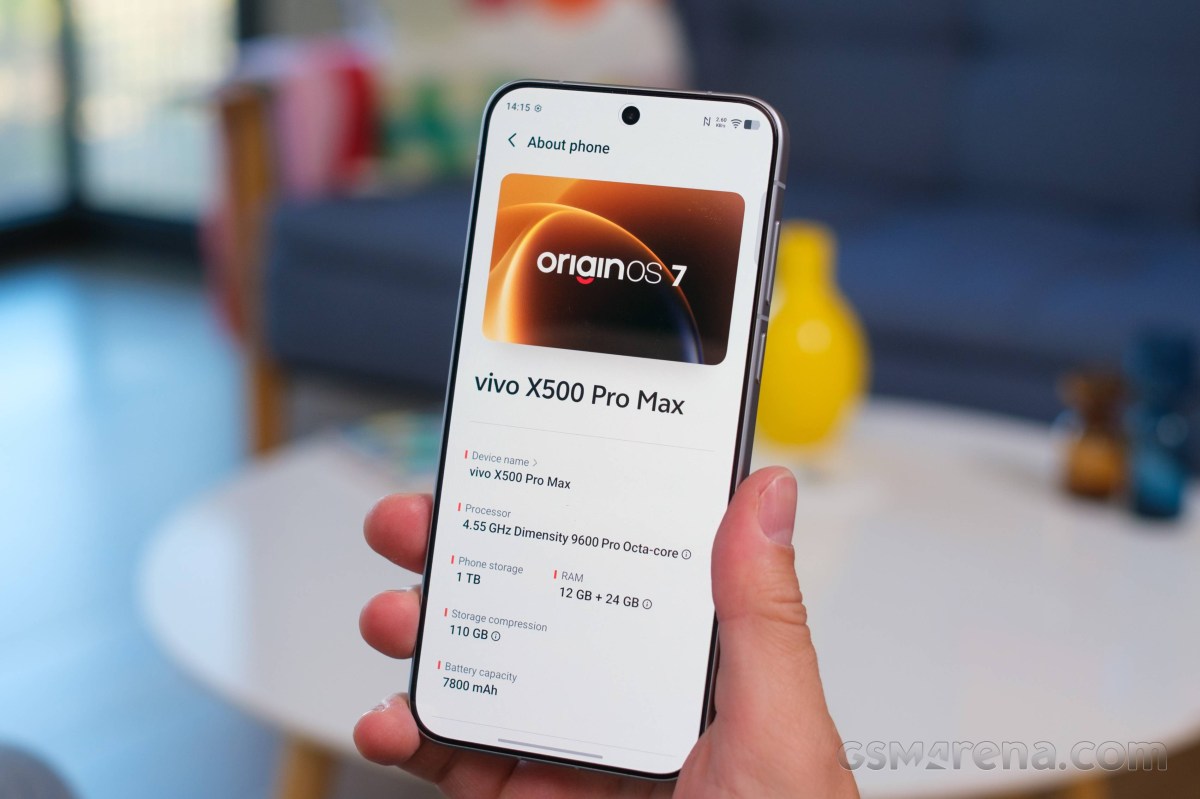
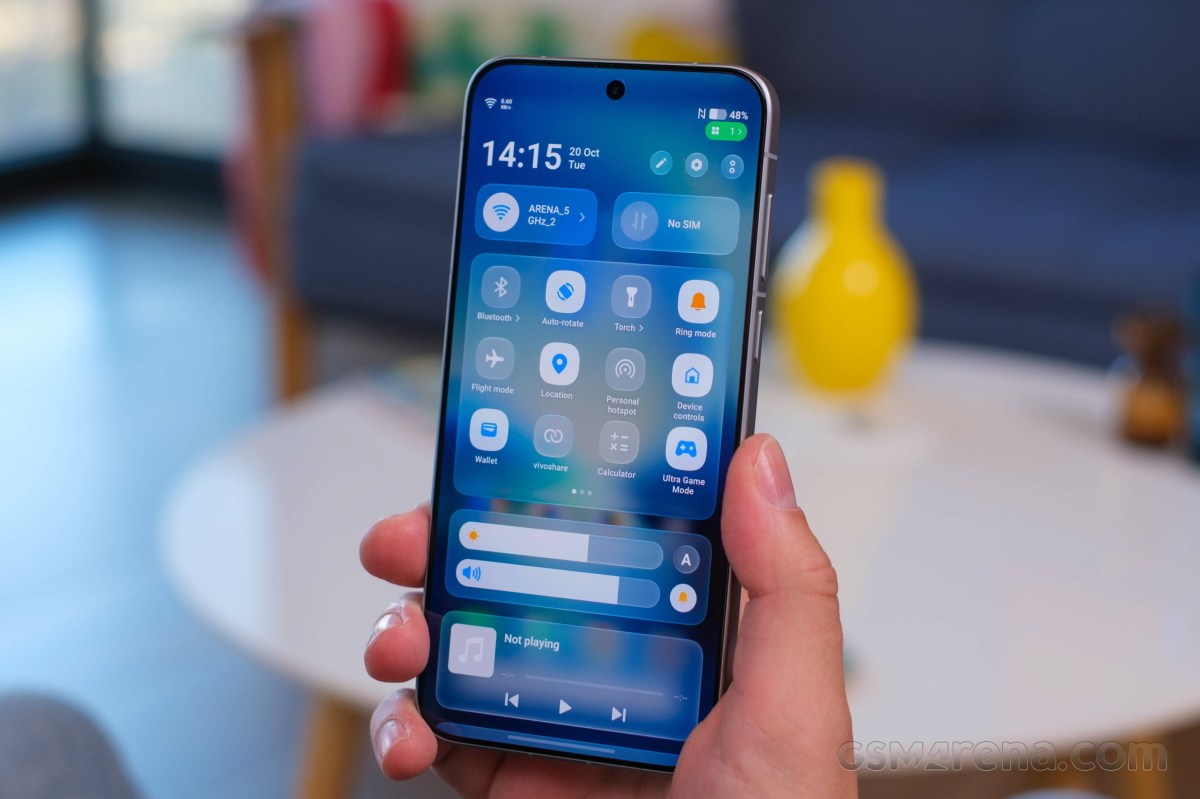
Right off the bat, the OriginOS 7 looks new and polished, yet familiar. We are mostly referring to the Liquid Glass-like appearance that iOS 26 popularized. The company calls it Fluid Motion, which also refers to the way UI elements behave. Expect liquid-like dynamic behavior when interacting with UI and system elements.
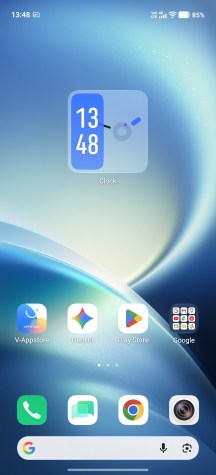
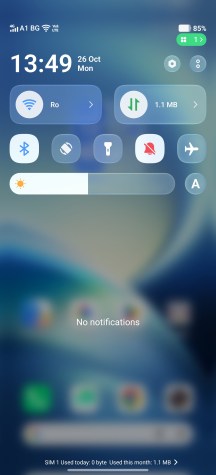
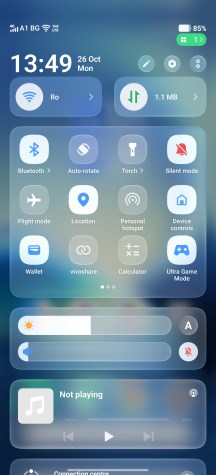
Home screen • Notificaion shade and Quick settings
However, in certain cases, the transparent liquid-like UI can get in the way. Take a look at the context menu in Recent apps. The text can sometimes be hard to read, depending on the app in the background.
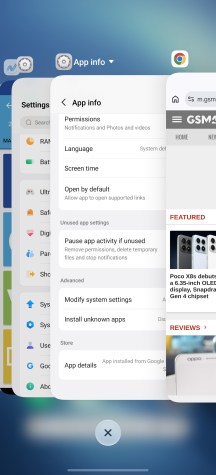
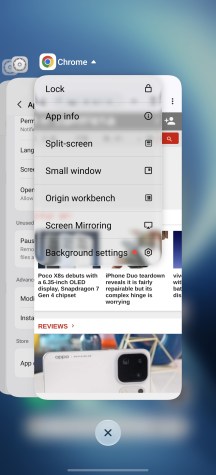
Recent apps
One of the first things vivo highlights is the cross-platform compatibility, and more specifically with Apple products. Not only does OriginOS 7 offer easy file transfer and a sense of continuity with iPhones, iPads, MacBooks, etc., but it will also play nicely with AirPods and Apple Watches. iCloud access is available in certain regions, too.
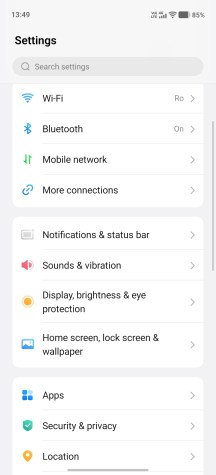
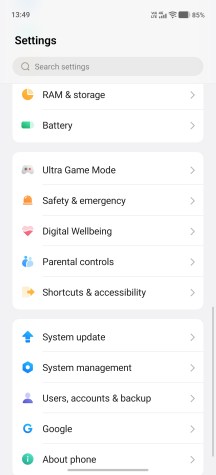
Settings menu
But there's a catch. For instance, the Apple Watch must be set up for the first time with an iPhone. Otherwise, features such as spatial audio will work with an OriginOS 7-powered smartphone, while connection status and battery level will show up on the Origin Island.
Furthermore, you can use the phone as a webcam, and it will work with MacBooks, too.
Vivo worked on multitasking and productivity as well, and quite honestly, this is probably the best take on multitasking on an Android phone. The so-called Workbench allows you to open multiple apps in a card-style layout, which is super easy to manage and jump between apps. Additionally, Picture-in-Picture+ and Super Dragging allow you to seamlessly switch between apps and transfer content across apps.
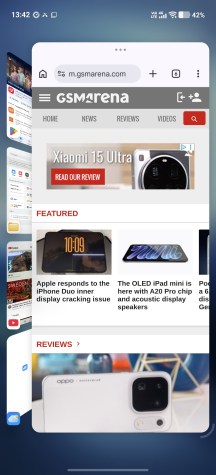
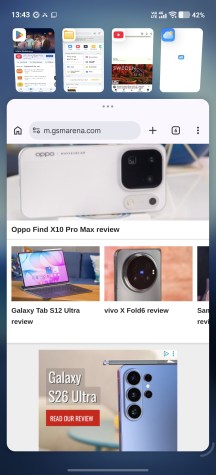
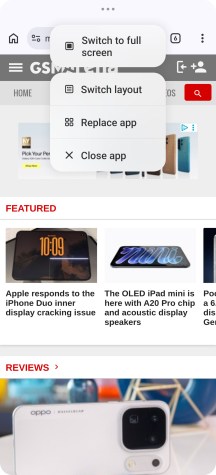
It also allows you to change the layout of the opened apps on the fly.
The system also comes with a variety of new themes, and some of them, like the Wiggle theme, respond to the phone's motion.
When it comes to AI, vivo has given the personal assistant Jovi more room by making it available on your PC as well. It's capable of executing tasks across connected devices with scheduling capabilities.
OriginOS 7 also introduces Snap Note, which is an AI-powered tool that turns handwritten notes, slides, infographics and whiteboards into documents and notes, making them easier to understand.
The AI Recorder is also new, which basically transcribes meetings or lectures. It can later summarize them and allows you to discuss the contents with the AI. Although new to OriginOS, this is a pretty standard feature nowadays and is one of the first AI-powered tools around.
The AI Search gets more powerful, too, as it now understands context better and works across the File Manager and Origin Notes apps. You don't have to remember the name of the file you are looking for, you can just describe it, and the AI Search will handle the rest.
Last but not least, the Smart Call Assistant is now powered by AI and can handle some calls on your behalf. It will talk to the person on the other end and transcribe what they are saying into text in real time. It sounds a lot like the Pixel call assistant introduced several generations ago. The Call Overview feature will then summarize the conversation.
Benchmark performance
The vivo X500 Pro Max sports a brand-new MediaTek Dimensity 9600 Pro chipset, and despite its name, there's no non-Pro version, at least for now. This is MediaTek's first 2nm silicon, and it's also the first to utilize ARM's next-generation CPU and GPU designs. It's also supposed to be much more efficient and powerful when it comes to AI-related tasks.
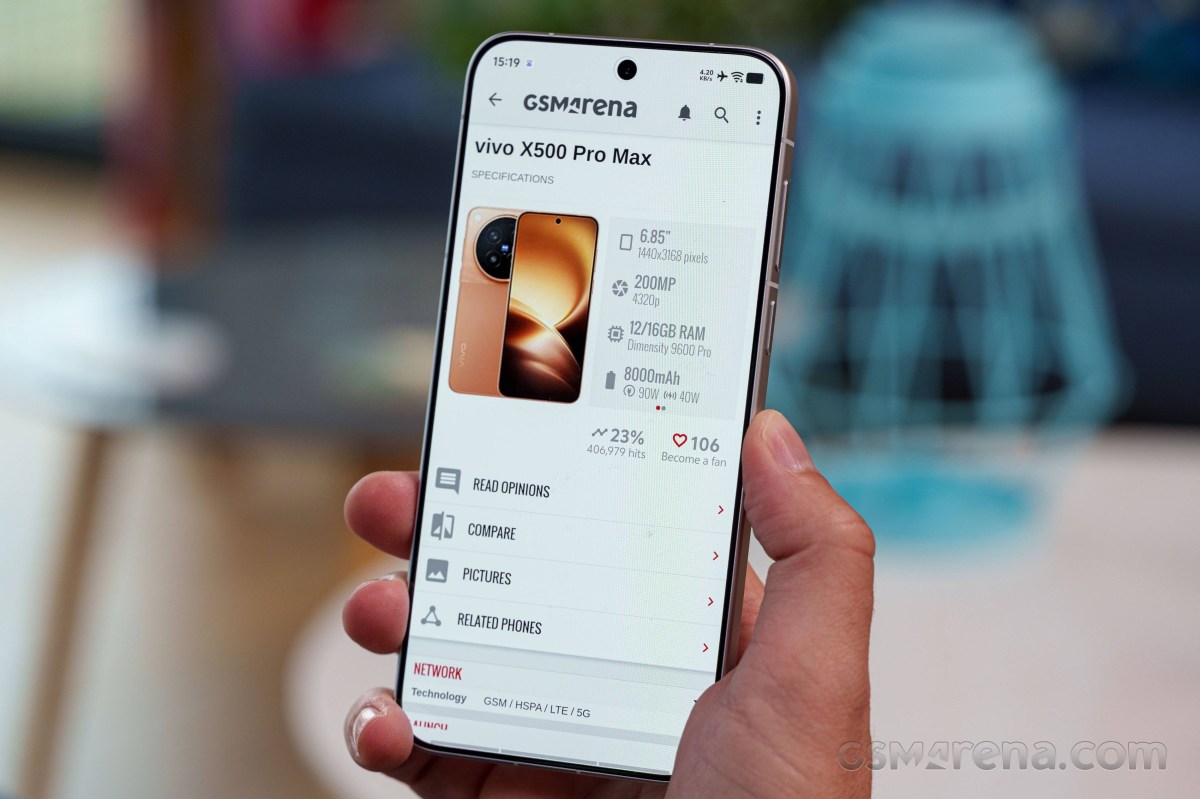
The CPU cluster consists of two 2x C2-Ultra cores ticking at 4.55 GHz, 3x C2-Pro cores running at 4.35 GHz and 3x C2-Pro cores clocked at 3.1 GHz.
The Mali-G2 Ultra NX GPU is marketed to support 185+ fps gaming and should offer a 27% boost in ray-tracing performance.
The chipset is also capable of supporting the latest LPDDR6 memory and UFS 5.0 storage, but the X500 Pro Max settles for LPDDR5X and UFS 4.1.
This time around, the EU gets all the storage variants with the rest of the world - 256GB, 512GB and 1TB. However, the memory is capped at 12GB, unlike the Chinese models with 16GB.
Back to the Dimensity 9600 Pro, its NPU is used not just for AI number crunching, but allegedly, it can also help the ISP in processing images and videos from the camera. The video decoding engine now supports native H.266 video as well.
GeekBench 6
- Single-core
- Multi-core
 Galaxy S26 Ultra
 vivo X300 Ultra
 Xiaomi 17 Ultra
 vivo X300 Pro
 Oppo Find X10 Pro Max
 vivo X500 Pro Max
 Pixel 11 Pro XL
GeekBench 7
- Single-core
- Multi-core
Galaxy S26 Ultra
vivo X300 Ultra
vivo X500 Pro Max
Oppo Find X10 Pro Max
Pixel 11 Pro XL
AnTuTu
- v11
- v12
Oppo Find X10 Pro Max
vivo X300 Ultra
vivo X500 Pro Max
Galaxy S26 Ultra
Xiaomi 17 Ultra
vivo X300 Pro
Pixel 11 Pro XL
3DMark
- Wild Life Extreme (Highest)
- Wild Life Extreme (Lowest)
- Solar Bay (Ray Tracing)
Galaxy S26 Ultra
vivo X500 Pro Max
Oppo Find X10 Pro Max
vivo X300 Pro
vivo X300 Ultra
Xiaomi 17 Ultra
Pixel 11 Pro XL
As you can see, the vivo X500 Pro Max fully utilizes its Dimensity 9600 Pro SoC, which shows a marked improvement over the previous Dimensity 9500 generation and holds its ground pretty well against Qualcomm’s powerhouse Snapdragon 8 Elite Gen 5 SoC, especially in the graphically intensive 3DMark Wild Life tests. And we have no doubt that the SoC can handle pretty much everything you throw at it from the Play Store.
Sustained performance
The X500 Pro Max shows decent sustained performance, at least compared to most flagships. In both of our stress tests, CPU and GPU, the device throttled heavily, which is what you'd normally expect from a phone running a powerful flagship SoC.
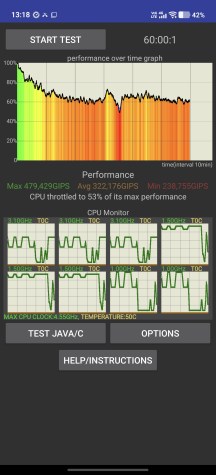
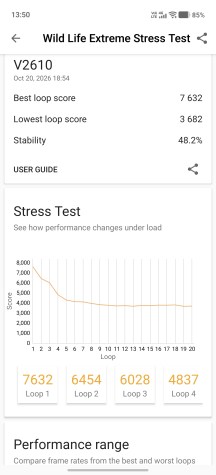
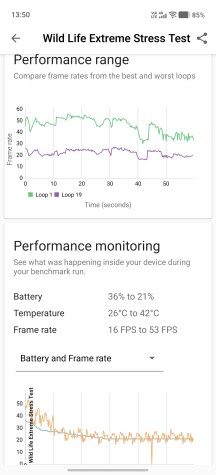
CPU and GPU stress tests
The good news here is that the system maintains relatively manageable clock speeds and avoids excessive fluctuations, which suggests smooth performance during heavy workloads.


Tip us
2.1m 180k
RSS
EV
Merch
Log in I forgot my password Sign up