Xiaomi Pad 8 Pro review
Display
The Xiaomi Pad 8 Pro features the same 11.2-inch IPS LCD screen as the Xiaomi Pad 7 Pro. It has 2,136 x 3,200 pixels or 344ppi density (that's pretty sharp for a tablet). The panel supports 12-bit color depth, HDR10, HDR10+, and Dolby Vision streaming.
There are no cutouts on this panel, it has reasonably thin bezels and comes with rounded corners as all modern screens do nowadays.
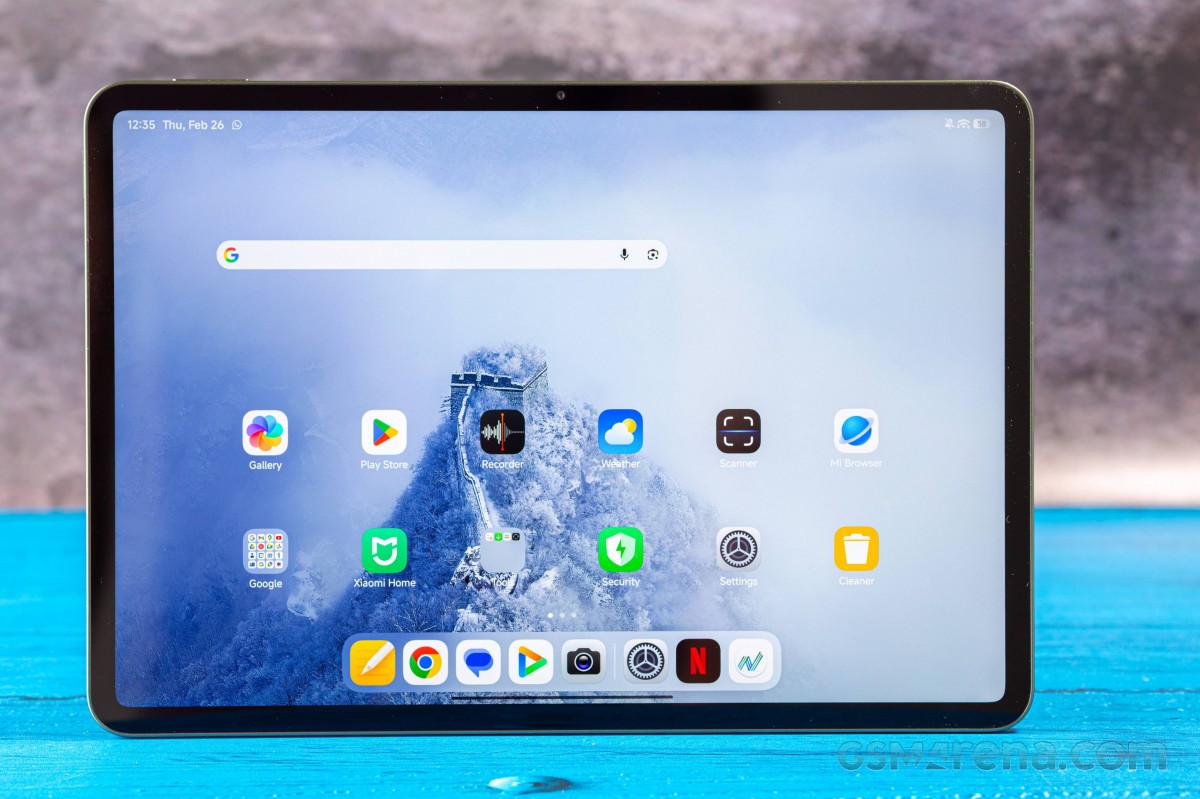
Xiaomi advertises 800nits of peak brightness, but there is no mention of any other numbers.
We've completed our display test, and we found the screen to be an excellent performer. We measured 622 nits of maximum manual and 800 nits of maximum automatic brightness. The peak brightness is a match to the automatic one and in line with the officially stated one. Those are some solid numbers for such a large screen, and we never had issues with legibility.
Combined with an overall good black level, the screen achieved a contrast ratio of 1186:1.
The minimum brightness at a white screen was just 2.3 nits.
Max display brightness test
White test pattern (nits)
- Manual (75% fill)
- Auto (75% fill)
 Xiaomi Pad 6S Pro 12.4
 OnePlus Pad 3
 Xiaomi Pad 8 Pro
 OnePlus Pad 2
 Xiaomi Pad 7 Pro
 Honor MagicPad 2 12.3
 Redmi Pad 2 Pro
This tablet is also available in a limited Xiaomi Pad 8 Pro Matte Glass Version - here you will get a matte glass layer atop the screen. It dramatically reduces reflections and improves visibility and clarity in challenging conditions. It also enhances the overall eye comfort and reduces eye fatigue after prolonged use.
We haven't tested this particular edition, but we've seen it on the Pad 7 Pro, and we think if you are going to spend many hours reading, working or browsing on this tablet, you should opt for it. We can confirm that it does help with eye fatigue.
Refresh rate
The Xiaomi Pad 8 Pro display supports up to 144Hz refresh rate. There are four modes to choose from - Default (Auto) and Custom with options for 60Hz, 90Hz and 144Hz.
Just like on other Xiaomi devices, the 60Hz and 90Hz modes set a ceiling for the refresh rate. Default and 144Hz modes, on the other hand, allow the panel to go all the way to its maximum speed, but still scale down when not needed. The difference comes from the behavior across various system and media apps, where Default uses 90Hz or 60Hz, while 144Hz offers 120Hz or 144Hz.
Another common trait between Auto and 144Hz is the 120Hz refresh rate used across the entire Android UI. The only occasion we saw the system use 144Hz was when benchmarking.
Finally, no matter what the chosen refresh rate mode is, the screen would go to 50Hz every time it is showing a static image.
HDR and streaming
The Pad 8 Pro display supports HDR10, HDR10+, and Dolby Vision standards. It is successfully recognized as HDR-capable across all popular apps and serves the maximum quality they allow. Android Ultra HDR is also supported.
Battery life
The Xiaomi Pad 8 Pro is powered by a 9,200mAh battery, a minor upgrade over the 8,850mAh cell inside the 7 Pro model.
The Xiaomi Pad 8 Pro scored an outstanding Active Use Rating of 13:39 hours. While its call time has remained the same as on the previous model, the web, streaming, and gaming times have improved dramatically.
Since tablets rarely have cellular connectivity, we use Whatsapp for the call test in our tablet reviews. If you prefer to remove the call component from the calculation of the tablet's Active Use Score, you can easily do that by moving its corresponding slider to zero.
Charging speed
The Xiaomi Pad 8 Pro supports up to 67W using a Xiaomi HyperCharge power adapter (not included in the EU bundle) or up to 50W using any compatible USB-PD adapter.
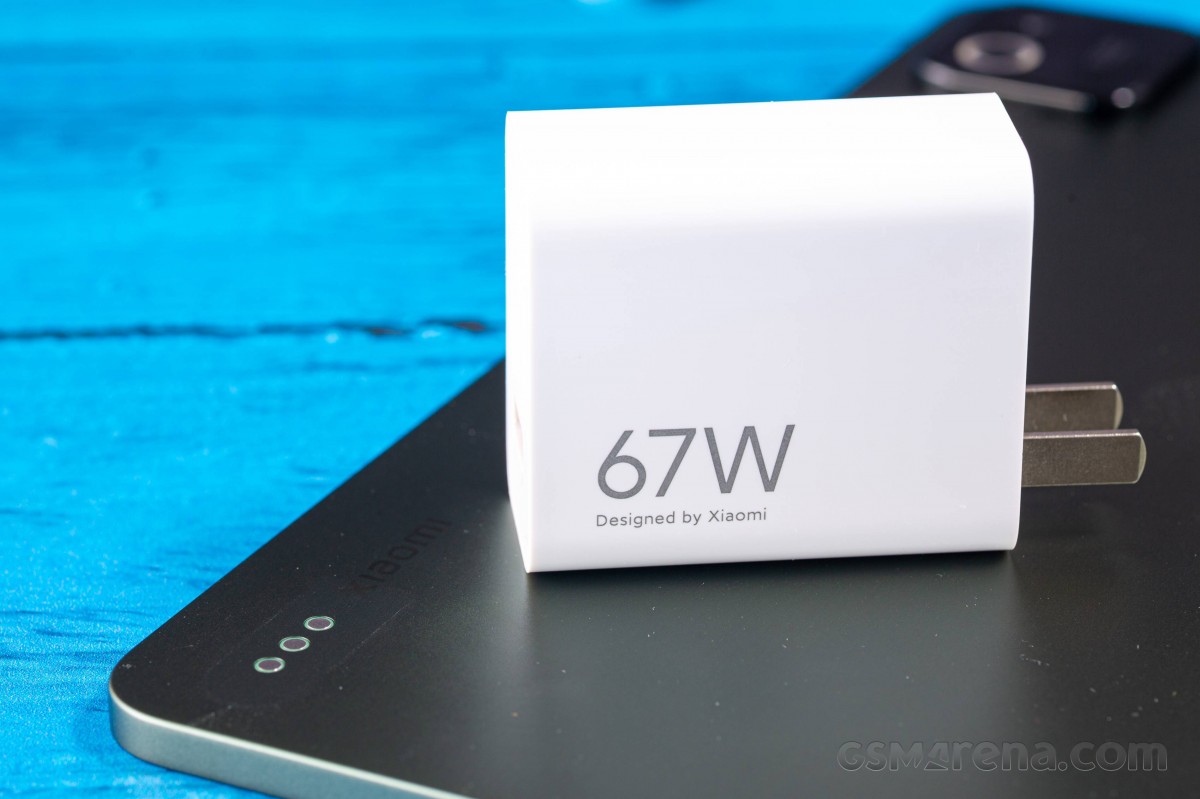
We've completed our charging speed test using an original Xiaomi 67W power adapter. It recharged 27% of the Pad 8 Pro's depleted battery in 15 mins, 52% in 30 mins, and 100% in 77 mins. Those are incredibly solid numbers for such a large battery and can be described as plenty fast.
Charging speed
- in 15 min
- in 30 min
- Time to full charge (from 0%)
Xiaomi Pad 6S Pro 12.4
OnePlus Pad 2
 Xiaomi Pad Mini
Xiaomi Pad 7 Pro
Xiaomi Pad 8 Pro
OnePlus Pad 3
Honor MagicPad 2 12.3
 OnePlus Pad Go 2
Redmi Pad 2 Pro
Smart Charging and 80% Charge limit are the two battery protection options.
Speakers - loudness and quality
The Xiaomi Pad 8 Pro features four large speakers placed 2x2 on its shorter sides. They support Dolby Atmos, and the enhancement is ON by Default.
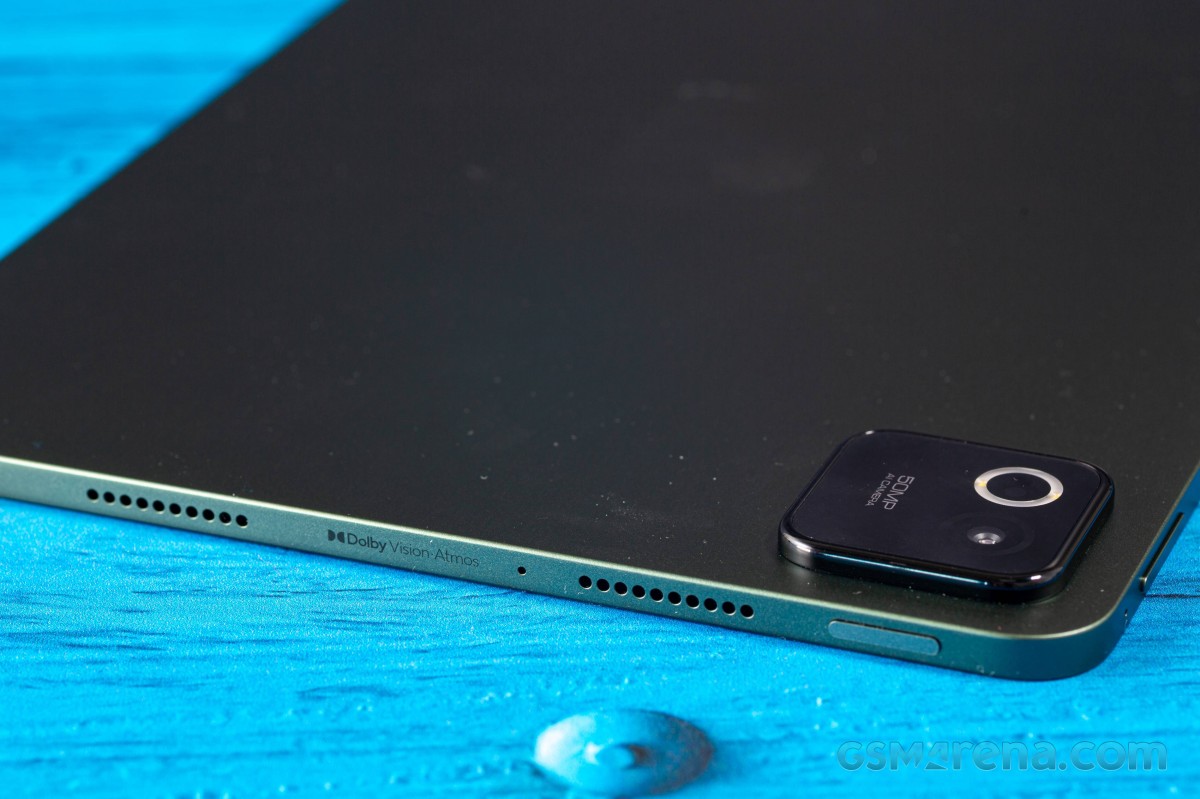
The tablet also offers 200% sound boost, but unlike on Xiaomi or Realme phones, it does not worsen the sound quality. This is the step we used for our loudness test.
The speakers scored an Excellent mark on our loudness test. The audio quality is very good with deep bass, excellent vocals and solid high frequency range.
Use the Playback controls to listen to the phone sample recordings (best use headphones). We measure the average loudness of the speakers in LUFS. A lower absolute value means a louder sound. A look at the frequency response chart will tell you how far off the ideal "0db" flat line is the reproduction of the bass, treble, and mid frequencies. You can add more phones to compare how they differ. The scores and ratings are not comparable with our older loudspeaker test. Learn more about how we test here.


Tip us
2.1m 180k
RSS
EV
Merch
Log in I forgot my password Sign up