LG V40 ThinQ hands-on review
LG's usual stuff on top of Android 8.1
The V40 ThinQ boots Android 8.1 Oreo with LG's in-house launcher on top. Sadly, gone are the days of the V20 which was at the time the first phone to launch on Nougat. It is what it is. Anyway, the V40's user interface is basically identical to that of the G7 - colorful icons, white menus, the proprietary Smart Bulletin - it's all here.


User interface: Lockscreen • Homescreen • .. and another one • Quick toggles • Task switcher
Synthetic benchmarks
The V40 ThinQ is powered by the Snapdragon 845 - aside from custom SoCs from Samsung and Huawei, that's the norm for Android flagships this year. The test unit we have has 6GB of RAM and 64GB of storage. There were hardly any surprises with the benchmark scores, but you can see the numbers we got out of the V40 below.
GeekBench 4.1 (multi-core)
Higher is better
-
Apple iPhone XS
11472 -
vivo NEX S
9160 -
Samsung Galaxy Note9
9026 -
OnePlus 6
9011 -
Xiaomi Pocophone F1
9003 -
HTC U12+
9001 -
Samsung Galaxy S9+
8883 -
LG G7 ThinQ
8865 -
LG V40 ThinQ
8769 -
Sony Xperia XZ3
8607 -
Xiaomi Mi 8
8494 -
Samsung Galaxy S9+ (Snapdragon)
8349 -
Oppo Find X
8018 -
Huawei P20 Pro
6679 -
Google Pixel 2 XL
6428 -
LG V30
6365 -
Google Pixel 2 XL (Android 9)
6055
GeekBench 4.1 (single-core)
Higher is better
-
Apple iPhone XS
4823 -
Samsung Galaxy S9+
3771 -
Samsung Galaxy Note9
3642 -
Sony Xperia XZ3
2486 -
vivo NEX S
2466 -
HTC U12+
2456 -
OnePlus 6
2450 -
Xiaomi Pocophone F1
2438 -
Xiaomi Mi 8
2431 -
LG V40 ThinQ
2425 -
LG G7 ThinQ
2395 -
Oppo Find X
2322 -
Samsung Galaxy S9+ (Snapdragon)
2199 -
Google Pixel 2 XL
1915 -
Huawei P20 Pro
1907 -
LG V30
1901 -
Google Pixel 2 XL (Android 9)
1807
GFX 3.1 Car scene (onscreen)
Higher is better
-
Apple iPhone XS
47 -
vivo NEX S
34 -
OnePlus 6
33 -
Xiaomi Mi 8
33 -
Xiaomi Pocophone F1
31 -
Oppo Find X
28 -
Huawei P20 Pro
21 -
HTC U12+
20 -
Samsung Galaxy S9+ (Snapdragon)
20 -
Sony Xperia XZ3
19 -
LG G7 ThinQ
18 -
LG V40 ThinQ
18 -
Samsung Galaxy Note9
15 -
Samsung Galaxy S9+
14 -
LG V30
13 -
Google Pixel 2 XL
13 -
Google Pixel 2 XL (Android 9)
13
AnTuTu 7
Higher is better
-
Apple iPhone XS
346379 -
Oppo Find X
291218 -
vivo NEX S
287081 -
Sony Xperia XZ3
284555 -
LG V40 ThinQ
270634 -
Xiaomi Pocophone F1
265314 -
OnePlus 6
264200 -
Samsung Galaxy S9+ (Snapdragon)
264044 -
HTC U12+
263696 -
LG G7 ThinQ
259393 -
Samsung Galaxy Note9
248823 -
Samsung Galaxy S9+
246660 -
Xiaomi Mi 8
217298 -
Huawei P20 Pro
209884 -
Google Pixel 2 XL (Android 9)
206711 -
Google Pixel 2 XL
203119 -
LG V30
182374
GFX 3.1 Car scene (1080p offscreen)
Higher is better
-
Apple iPhone XS
60 -
Oppo Find X
35 -
LG G7 ThinQ
35 -
LG V40 ThinQ
35 -
OnePlus 6
35 -
HTC U12+
35 -
vivo NEX S
35 -
Samsung Galaxy S9+ (Snapdragon)
35 -
Sony Xperia XZ3
35 -
Xiaomi Pocophone F1
35 -
Xiaomi Mi 8
33 -
Samsung Galaxy S9+
28 -
Samsung Galaxy Note9
28 -
Google Pixel 2 XL
25 -
LG V30
24 -
Google Pixel 2 XL (Android 9)
24 -
Huawei P20 Pro
23
Initial impressions
Ever since dual cameras came around, some of us here have been asking 'what about three?'. And not really Huawei's three, more like three separate focal lengths type of three.
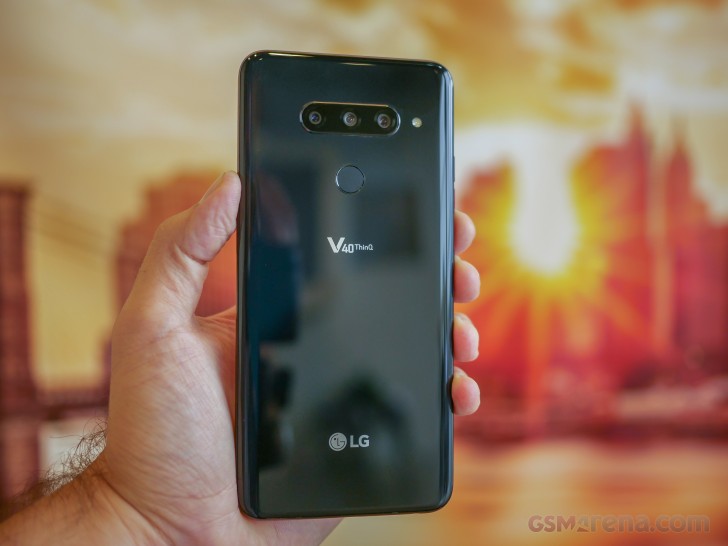
There were the telephoto secondary cams and there was also LG persevering with their ultra wides. So it comes as no surprise that it's precisely LG bringing us the coveted triple setup adding a telephoto cam (in smartphone terms, at least) to complement its usual regular+ultra wide duo.
Now there are practicalities to deal with, like battery life, display brightness and colors, and all sorts of other testing, plus some more thorough pixel peeping than what we could do for this hands-on - the usual stuff that goes in an in-depth review. We'll be working on that in the coming days, no doubt about that.
But to wrap this up - it's three separate standalone cameras covering a focal length 'range' of 16mm to 50mm - with all those lenses on its back, LG needs to have messed up all the other stuff for the V40 ThinQ not to be a winner. After all, there can't be too many cameras on a smartphone, and no other has more yet.


Tip us
2.1m 180k
RSS
EV
Merch
Log in I forgot my password Sign up