Ever changing
Xiaomi Mi 5s review: Ever changing
Performance
The Xiaomi Mi 5s runs on the latest Snapdragon 821 chipset with 3GB of RAM. There is a more powerful Mi 5s model with 4GB RAM and double the storage, too.
The Snapdragon 821 SoC improves on its predecessor with better power efficiency and higher performance. You can't have both at the same time though - the manufacturers can either opt for the slightly higher processor and GPU frequency for about 10% performance bump (as is the case with the Mi 5s Plus phablet), or keep the original clocks in order to gain better battery life.
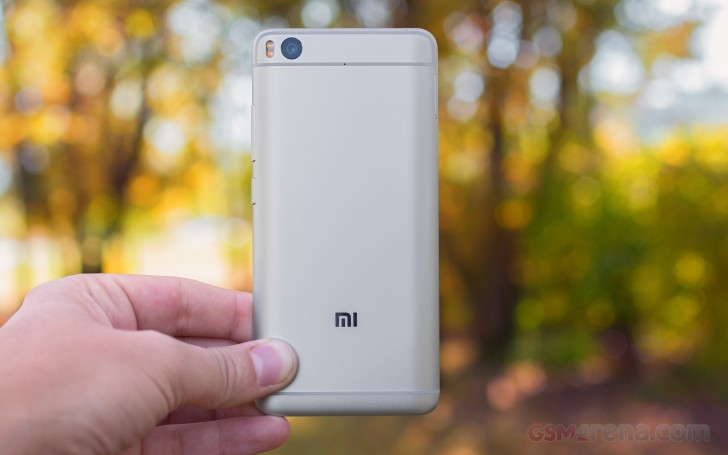
Xiaomi chose the latter for the Mi 5s and thus it offers the same quad-core Kryo processor with two cores ticking at 2.15GHz and two running at 1.6GHz as its 64GB Mi 5 sibling. The Adreno 530 GPU is also clocked at the same 624MHz frequency as the one inside the Snapdragon 820.
There is no doubt the Snapdragon 820, and now 821, are among the most popular choices for the flagship crop, so even without running benchmarks, you can rest assured the Mi 5s is a beast.
But we're not the kind of reviewers that work with assumptions, so we sure did run our fair share of benchmarks. Join us as we dig into those scores and framerates.
A single Kryo core shows a rather uninspiring result within the GeekBench 4 benchmark, but it's on par with the competition, except for the A10 processor in the iPhone 7. It also doubles the performance of the Cortex-A53 inside the Huawei nova.
You can also notice the 10% promised gap between the 2.1GHz Kryo inside the Xiaomi Mi 5s and the 2.4GHz Kryo CPU inside the Xiaomi Mi 5s Plus.
GeekBench 4 (single-core)
Higher is better
-
Apple iPhone 7
3488 -
Samsung Galaxy S7
1854 -
Xiaomi Mi 5s Plus
1815 -
Huawei Honor 8
1720 -
OnePlus 3
1719 -
Xiaomi Mi 5s
1682 -
Sony Xperia XZ
1578 -
Huawei nova
842
The four Kryo cores combined do great, as usual, but they can't compete with the combined power of the eight cores inside the Honor 8 (4xA53 + 4xA72), or the dual-core A10 Fusion CPU inside the iPhone 7.
The 10% bump on the Xiaomi Mi 5s Plus is once again clearly visible in the multi-core results, which means Qualcomm fully delivered on its 10% performance jump.
GeekBench 4 (multi-core)
Higher is better
-
Apple iPhone 7
5654 -
Huawei Honor 8
5447 -
Samsung Galaxy S7
5245 -
Xiaomi Mi 5s Plus
4333 -
OnePlus 3
4045 -
Xiaomi Mi 5s
3987 -
Sony Xperia XZ
3868 -
Huawei nova
3105
Moving on to Basemark OS II 2.0 to look at some numbers representing overall performance. Here the Mi 5s is in a group with its Mi 5 brother and the OnePlus 3, running on the same chips. It did a notch better compared to all other devices we've tested but the iPhone 7, which might be due to a faster storage or more efficient MIUI 8.
Basemark OS 2.0
Higher is better
-
Apple iPhone 7
3416 -
Xiaomi Mi 5s
2378 -
OnePlus 3
2365 -
Xiaomi Mi 5
2180 -
Sony Xperia XZ
2151 -
Samsung Galaxy S7
2128 -
Huawei Honor 8
2099 -
Huawei P9
2068 -
LG G5
2065 -
Sony Xperia X
1714 -
Huawei nova
1218 -
Samsung Galaxy A5 (2016)
833
Antutu is also showing the Mi 5s in a good light - it outs the same scores as all S820 devices we've tested so far, though the OnePlus 3 has some supremacy here.
AnTuTu 6
Higher is better
-
Apple iPhone 7
174532 -
OnePlus 3
141764 -
LG G5
134541 -
Samsung Galaxy S7
132084 -
Xiaomi Mi 5
131758 -
Xiaomi Mi 5s
131666 -
Sony Xperia XZ
124266 -
Huawei P9
98069 -
Huawei Honor 8
94892 -
Sony Xperia X
77537 -
Huawei nova
65021 -
Samsung Galaxy A5 (2016)
35689
On the graphics front, the Mi 5s does an excellent job with Basemark X scores, beating all smartphones we've put through it so far. The Adreno 530 is indeed a mighty performer.
Basemark X
Higher is better
-
Xiaomi Mi 5s
36240 -
Xiaomi Mi 5
33110 -
OnePlus 3
32715 -
Samsung Galaxy S7
32345 -
Sony Xperia XZ
29548 -
LG G5
29456 -
Huawei P9
16942 -
Huawei Honor 8
16592 -
Sony Xperia X
15087 -
Huawei nova
10511 -
Samsung Galaxy A5 (2016)
4947
The BaseMark ES 3.1 test is also available on the iPhones, where the iPhone 7 is ruling the chart by miles. The Mi 5s does about the same as the other Adreno 530-powered smartphones, but behind the Galaxy S7's Mali-T880MP12 GPU.
Basemark ES 3.1 / Metal
Higher is better
-
Apple iPhone 7
1547 -
Samsung Galaxy S7
732 -
OnePlus 3
625 -
Xiaomi Mi 5s
588 -
LG G5
587 -
Xiaomi Mi 5
580 -
Sony Xperia XZ
577 -
Huawei Honor 8
345 -
Huawei P9
341 -
Sony Xperia X
251 -
Huawei nova
138
The GFX tests reveal that the Mi 5s raw performance is on par with the other Snapdragon 820/821 devices, and can be bested only by Apple's A10 GPU.
GFX 3.1 Manhattan (1080p offscreen)
Higher is better
-
Apple iPhone 7
43 -
Sony Xperia XZ
31 -
OnePlus 3
31 -
LG G5
30 -
Xiaomi Mi 5
30 -
Samsung Galaxy S7
28 -
Xiaomi Mi 5s
26 -
Huawei P9
10 -
Huawei Honor 8
10 -
Sony Xperia X
9.2 -
Huawei nova
6.3
GFX 3.1 Car scene (offscreen)
Higher is better
-
Sony Xperia XZ
20 -
OnePlus 3
18 -
Xiaomi Mi 5
17 -
Xiaomi Mi 5s
16 -
LG G5
16 -
Samsung Galaxy S7
15 -
Huawei P9
6.5 -
Huawei Honor 8
6.3 -
Sony Xperia X
5.3 -
Huawei nova
3.5
The Mi 5s has an advantage over some of its competitors such as the Galaxy S7 and the LG G5, because of its lower screen resolution. The Adreno 530 is a monster when displaying 1080p resolution, though still not monster enough to beat the iPhone 7 Plus (also 1080p).
GFX 3.1 Manhattan (onscreen)
Higher is better
-
Apple iPhone 7
60 -
Apple iPhone 7 Plus
42 -
Sony Xperia XZ
32 -
OnePlus 3
30 -
Xiaomi Mi 5
29 -
Xiaomi Mi 5s
26 -
LG G5
15 -
Samsung Galaxy S7
15 -
Huawei Honor 8
11 -
Huawei P9
11 -
Sony Xperia X
10 -
Huawei nova
6.5
GFX 3.1 Car scene (onscreen)
Higher is better
-
Sony Xperia XZ
19 -
OnePlus 3
18 -
Xiaomi Mi 5
17 -
Xiaomi Mi 5s
16 -
LG G5
8.8 -
Samsung Galaxy S7
7.9 -
Huawei P9
7.1 -
Huawei Honor 8
6.9 -
Sony Xperia X
5.9 -
Huawei nova
3.7
Xiaomi Mi 5s delivers flagship-grade performance, there is no denying that. The phone runs cool at all times.
The thing is Xiaomi may have overstressed the importance of having the Snapdragon 821 chip, as the chipset used for the Mi 5s has literally the same performance as its 820 predecessor.


Tip us
2.1m 180k
RSS
EV
Merch
Log in I forgot my password Sign up