Xiaomi Redmi Pad 2 Pro review
Android 15 with HyperOS 2
The Redmi Pad 2 Pro boots Android 15 and HypeOS 2 on top of it. HyperOS 2 for tablets offers updated visuals, smoother operations thanks to an upgraded HyerCore, Google AI, and most importantly - Workstation mode for PC-like experience.

HyperOS is not that much different from MIUI on the older tablets, it just looks more modern and has a bit more functionality.
You can enable an app drawer if you prefer, but by default, there is no app drawer, and everything is on the homescreens - apps and widgets alike.


HyperOS 2
The Notification and Control center are summoned from the left top and right top parts, as before.
And, of course, some convenient multi-tasking options are at your disposal - such as split screen and pop-up windows (up to 4 different apps can be visible at once). The task manager is also optimized for the big screen.
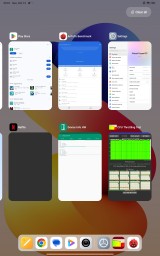
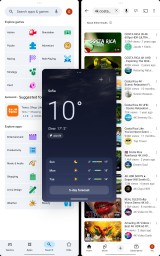
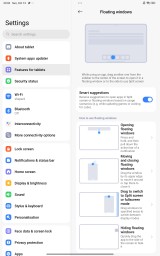
Multi-tasking
HyperOS offers deeper integration with connected devices on your home network and devices signed into your personal Xiaomi account. This isn't new for MIUI users, of course, but HyperOS plays even nicer with other Mi Share-capable devices. Xiaomi has put these features under the Interconnectivity umbrella.
With Xiaomi Interconnectivity, you can have the screen of your Xiaomi phone (if you have one) accessible interactively from your tablet screen. You will also receive the notifications that your phone is receiving. The clipboard contents are shared between the two devices. You can exchange files easily and the phone will automatically share its mobile data connection and its camera with the tablet when needed. And with Hyper OS 2.0, on the tablet, you can open apps that you have opened on the phone and continue directly where you've left off.
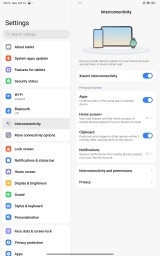
Interconnectivity
There is a dedicated Features for Tablets menu in settings. Here you can learn some neat multi-tasking gestures for the floating windows and split screen view. There are options for an optimized two-page layout for some apps.
The Stylus and keyboard menu lets you adjust some settings if you've bought one of these optional accessories. There are quite a few options for the keyboard, including handy shortcuts and cursor styles if you have the Redmi Pad 2 Pro Keyboard.
The Redmi Smart Pen is quite useful for notes and drawings on the go, as well as custom screenshots, and for a handy remote control when needed (i.e. presentations).
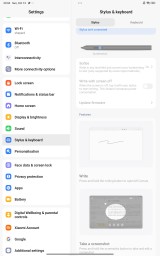
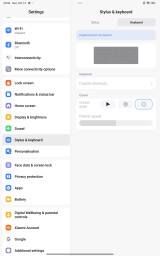
Stylus and Keyboard
There is no Workstation mode, as on the more powerful Xiaomi tablets.
Finally, let's explore the available AI options.
Google Gemini is available right from the get-go. You can task Gemini with a lot of stuff, you can even make entire conversations. It can give you ideas on what to cook based on a photo of your fridge contents, or you can ask for book or painting ideas. Circle to Search is available, too.
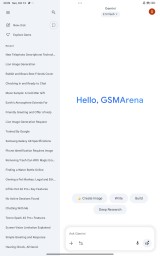
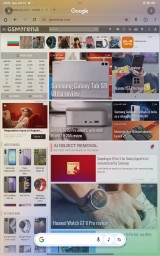
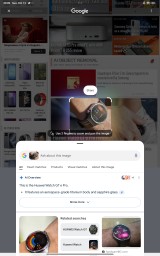
Gemini • Circle to Search
Gemini can also generate images for you, which is neat. There's also a whole lot of AI-based image editing features in the gallery. There's an object/people remover, you can add bokeh, do content-aware expansion, or change how the sky looks in your shots.





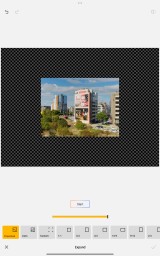

Image Edit
Performance and benchmarks, stress test
The Redmi Pad 2 Pro is the first device we meet powered by the new Snapdragon 7s Gen 4 (4 nm) chip from Qualcomm. The new SoC is a direct successor to last year's SD 7s Gen 3 and offers a virtually unchanged Kryo architecture with the same 1+3+4 core architecture, but with a minor boost in clock speeds.

The processor has 1x Prime Cortex-A720 core now clocked at 2.7 + 3x Cortex-A720 (2.4GHz) units and 4x Cortex-A520 (1.8GHz).
The new Adreno 810 brings improved performance, and it has Snapdragon Elite Gaming features like Adaptive Performance Engine 3.0 and Snapdragon Game Super Resolution.
The updated Hexagon NPU offers better AI performance with support for Llama 1B and Qwen 1B and real-time translation. On the connectivity side, the new 7s Gen 4 chip supports Wi-Fi 6E and Bluetooth 5.4. It also brings support for the aptX Lossless and aptX Adaptive audio codecs.
The Redmi Pad 2 Pro has two memory version with LPDDR4X RAM + UFS 2.2 storage - 6GB + 128GB and 8GB + 256GB (ours).
And now, let's see some benchmarks.
GeekBench 6
- Multi-core
- Single-core
 MatePad Pro 12.2 (2025)
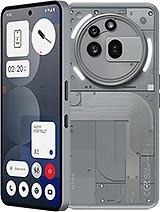 Nothing phone (3a) Pro
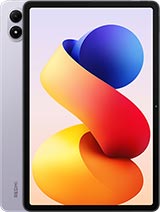 Redmi Pad 2 Pro
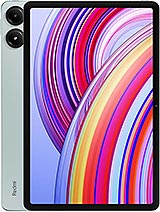 Redmi Pad Pro
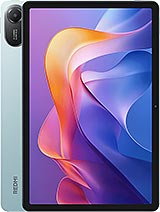 Redmi Pad 2
 OnePlus Pad Go
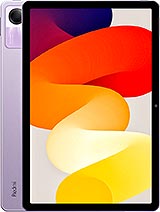 Redmi Pad SE
AnTuTu 10
MatePad Pro 12.2 (2025)
Nothing phone (3a) Pro
Redmi Pad 2 Pro
Redmi Pad Pro
Redmi Pad 2
OnePlus Pad Go
3DMark - Wild Life Extreme (2160p)
MatePad Pro 12.2 (2025)
Redmi Pad 2 Pro
Nothing phone (3a) Pro
Redmi Pad Pro
OnePlus Pad Go
Redmi Pad 2
 Honor Pad X9
The performance jump from the Snapdragon 7s Gen 2 to 7s Gen 4 in the Redmi Pad Pro is noticeable in both CPU and GPU tests - about a 30% increase.
At the same time, comparing it to the 7s Gen 3 chip in the Nothing Phone 3a Pro showed no performance benefits in the synthetic benchmarks, even though Qualcomm promises a 7% improvement.
A certain positive is that the Snapdragon 7s Gen 4 inside the Redmi Pad 2 Pro does not throttle - the CPU kept over 95% of its raw performance and the GPU - over 99% - under our stress testing. Those are some outstanding results.


CPU test • GPU test
The Redmi Pad 2 Pro has a solid mid-range chip, ideal for both gaming and heavy-duty office tasks on the go. While far from flagship-grade top-scoring silicon, the SD 7s Gen 4 is a powerful piece of hardware that will keep most users happy. And that is plenty enough for a €300 tablet.


Tip us
2.1m 180k
RSS
EV
Merch
Log in I forgot my password Sign up