Motorola Razr+ 2025 review
No camera changes for the Razr+ 2025 compared to the 2024 model
Razrs are doing a lot of camera improvements this year, and the Razr+ 2025 comes with the same imaging hardware as the Razr+ 2024. That said, last year's model did shake things up pretty dramatically, so it was understandable that Motorola wouldn't be too inclined to do further changes. And if the Razr+ 2024 could also double as the Razr 50 Ultra, perhaps those bits are good enough for this next generation.
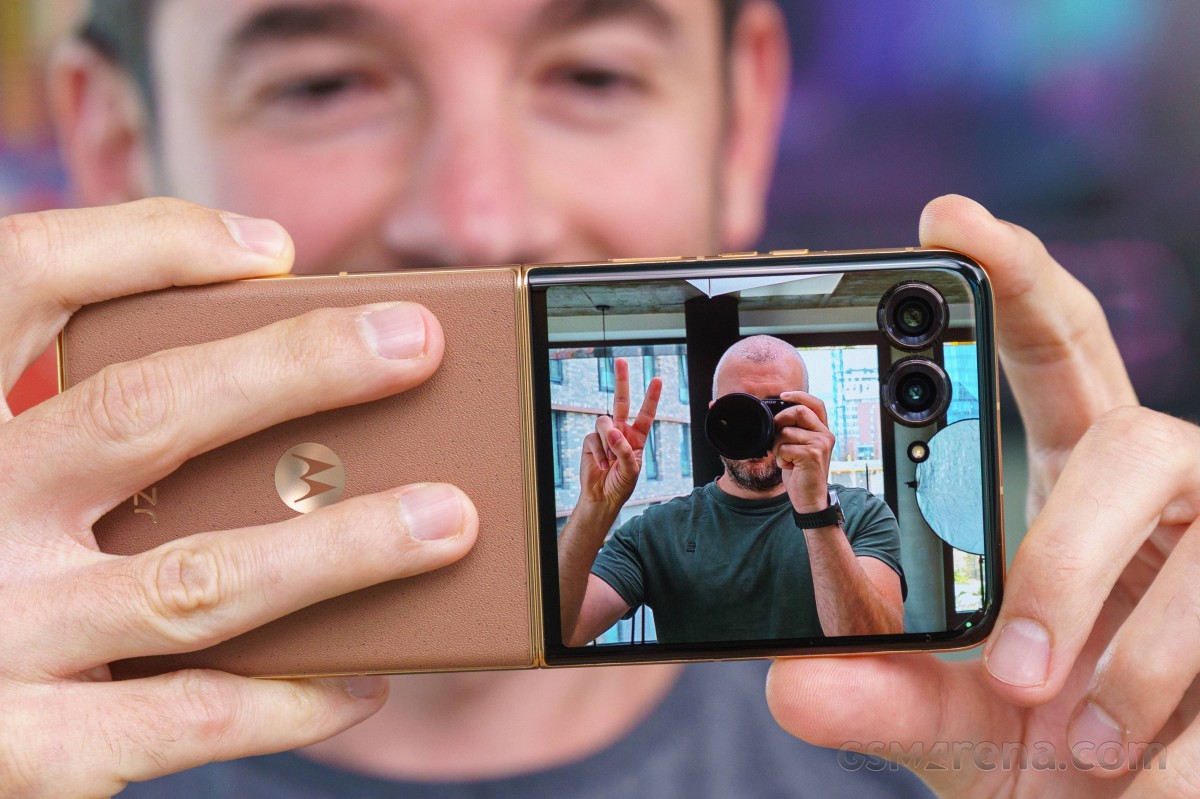
So, the main camera is the same as on the Razr 2025 and it uses a 50MP 1/1.95" sensor paired with a stabilized 25mm f/1.7 lens - nothing too fancy, but not too bad either.
And while the Razr 2025 needs to rely on that camera for zooming in, the Plus has an extra telephoto camera - well, it's more like a 'standard' focal length at 47mm (or 50mm, depending on who you ask).
There's no ultrawide camera on the Razr+ 2025, though - you'll need to either get the plain model, or pay the premium for an Ultra.
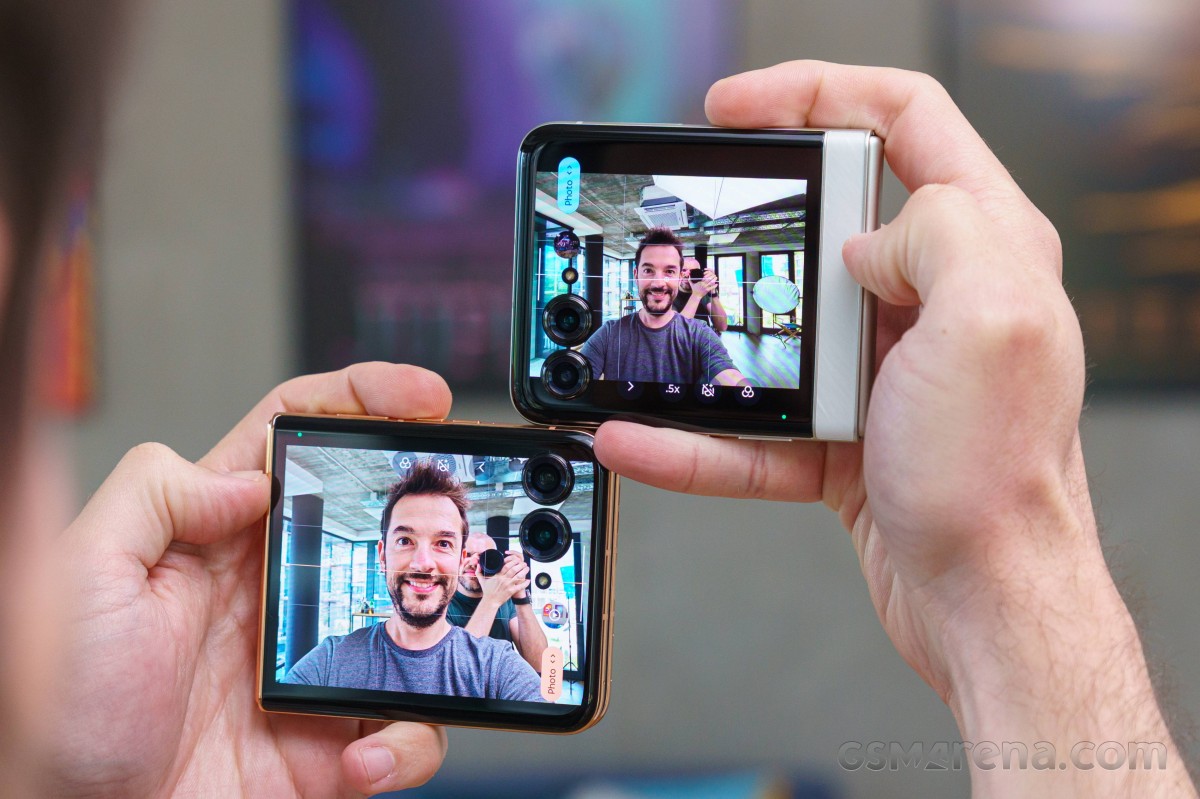
The 32MP internal selfie camera is the same as on all other recent Razrs other than this year's Ultra.
- Wide (main): 50MP Samsung ISOCELL GN8 (1/1.95", 0.8µm - 1.6µm), f/1.7, 25mm, multi-directional PDAF, OIS; 4K@60
- Telephoto 2x: 50MP Samsung ISOCELL JN1 (JN5) (1/2.76", 0.64µm-1.28µm), f/2.0, 47mm, dual-pixel PDAF; 4K@60fps
- Internal camera: 32MP OmniVision OV32B (1/3.14", 0.7µm-1.4µm), f/2.5, 25mm, fixed focus; 4K@60fps
The cover screen interface is quite functional when it comes to taking pictures or recording video, allowing you to switch modes and change some basic settings. One long-standing omission persists, though - there's no straightforward way to get to 2x zoom. There's no button in sight and pinching doesn't work either, so if you want to set the phone on a table in 'tripod' mode to record or take a picture of yourself, you can only do it on the 1x camera.
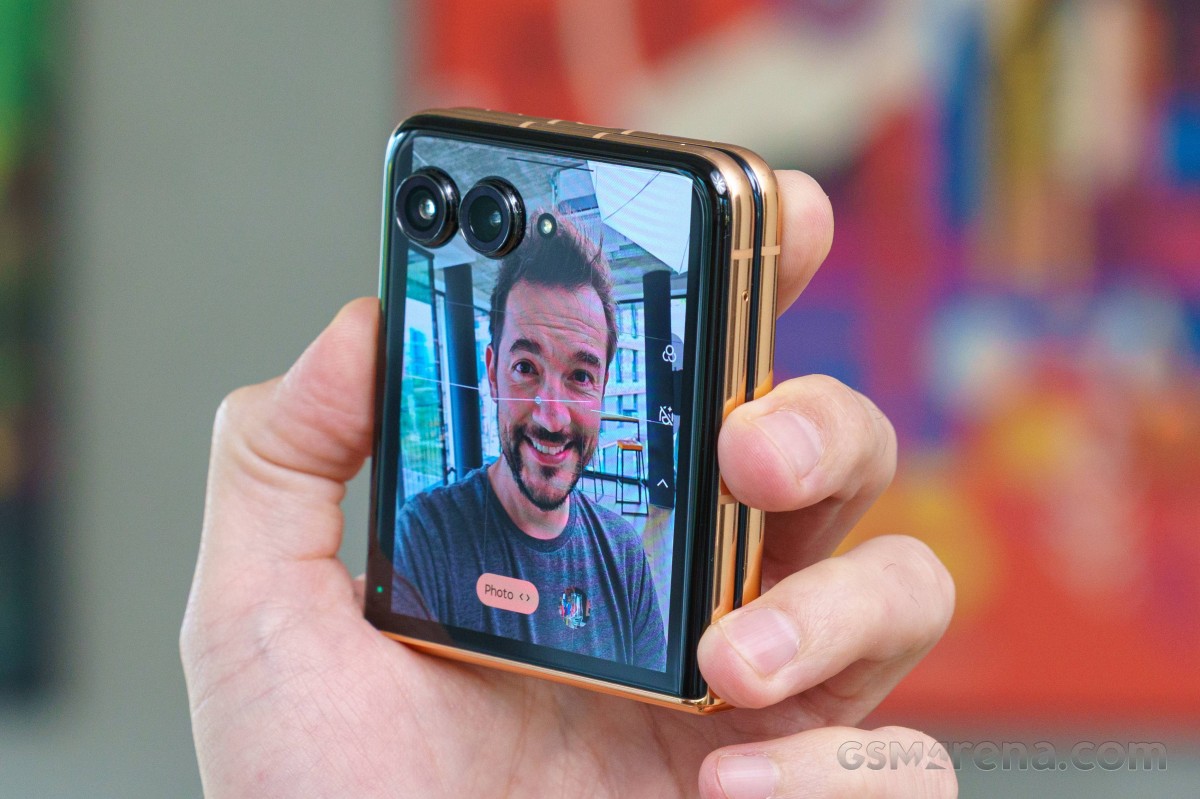
You can go through some hoops and launch the app on the main screen with the cover screen preview enabled and switch to the zoom camera and then if you're careful not to close the phone beyond a certain point, you might be able to achieve the 'tripod' mode, but it's a fiddly and unreliable method.
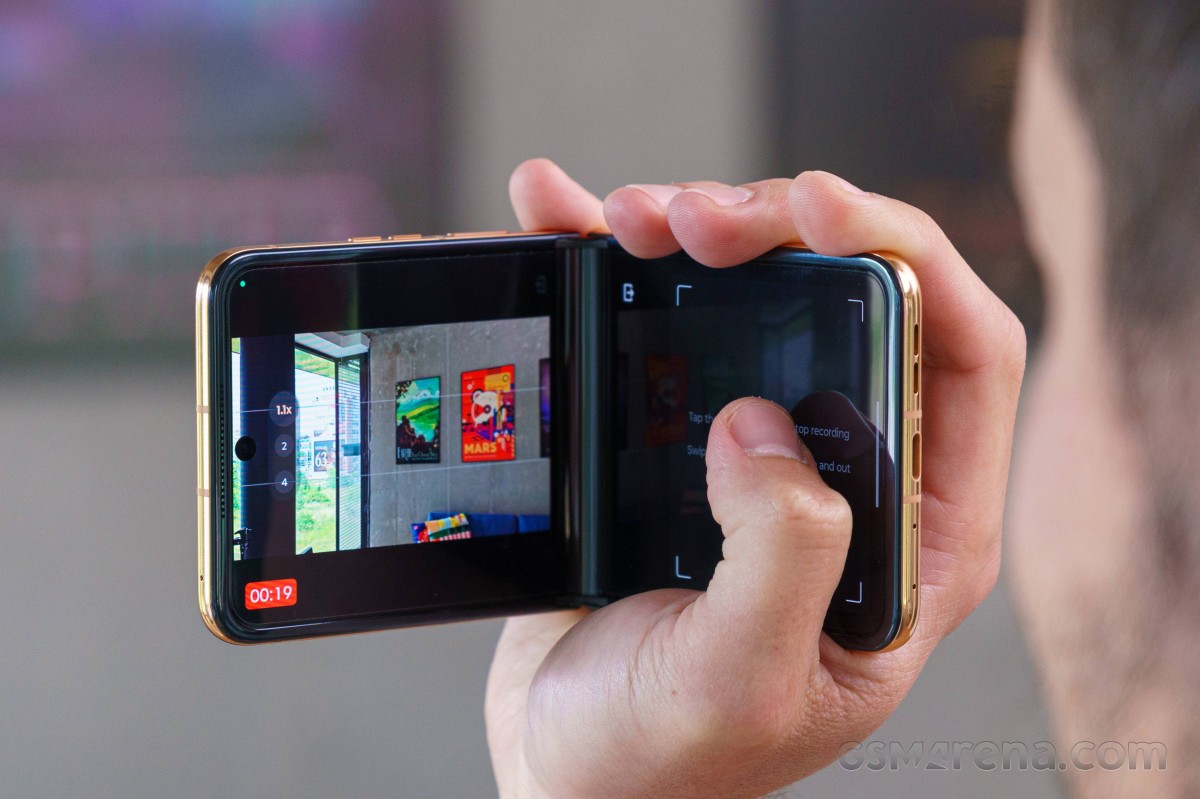
Other interfaces specific to the form factor are also on the menu, including a split-screen mode for waist level or overhead shooting. Also available is a 'camcorder' mode that might be good for triggering nostalgia, but isn't strictly useful or convenient.
Daylight photo quality
Main camera
Daylight photos from the main camera are pretty great. Exposures are on point and dynamic range is excellent. The auto white balance is reasonably accurate and color saturation is well judged, so you'll be getting very pleasing colors overall. Detail is very good too, with only slight hints of jaggies and moderately artificial random textures.












Daylight samples, main camera (1x)
People shots in Photo mode are very good too, offering life-like skin tones. Portrait mode, on the other hand skips the HDR processing, messes up the saturation, and doesn't bring any additional background blur. We found no options to alter that behavior either, and it's looking like a software bug - it will hopefully get fixed along the way.




Daylight samples, main camera (1x), Photo mode




Daylight samples, main camera (1x), Portrait mode, 24mm




Daylight samples, main camera (35mm), Portrait mode
The full-res 50MP samples do not offer any additional amount of resolved detail.








Daylight samples, main camera (1x), 50MP
2x telephoto camera
The 2x camera captures solid images in broad daylight, with quality dropping indoors at higher ISO levels, but still remaining quite good overall. Detail is generally great, dynamic range is excellent, colors are nicely vibrant and, more often than not, accurate.












Daylight samples, telephoto camera (2x)
The 2x camera is the better option for people shots as it gets you an improved perspective and facial features, while quality remains very good. Again, Portrait mode results are off the mark.




Daylight samples, telephoto camera (2x), Photo mode




Daylight samples, telephoto camera (2x), Portrait mode, 50mm
Here's how some of the above scenes look when shot at 50MP.







Daylight samples, telephoto camera (2x), 50MP
The 4x zoom results aren't exactly super sharp, though they do have slightly better pixel-level detail than their 50MP 2x counterparts - not praiseworthy, but usable overall.








Daylight samples, telephoto camera (4x)
We wouldn't say we're fans of using the 4x zoom level for people shots - the detail is just not there. The 85mm portrait mode is also hard to recommend.




Daylight samples, telephoto camera (4x), Photo mode




Daylight samples, telephoto camera (4x), Portrait mode, 85mm
Selfies
The Razr's internal camera may be the second-best option for taking selfies, but its results are quite good nonetheless. It captures pleasing colors and a wide dynamic range, and it's also got reasonably good detail packed in there.




Selfie samples
Of course, the cover camera will get you nicer results - detail is better, colors have an extra level of pop, and white balance is more accurate too. You also get the benefit of the shallower depth of field for some background separation, and you can do close-ups too, thanks to the AF capability.






Selfie samples, rear camera, 1x
Low-light photo quality
Main camera
The Razr's main camera maintains its composure well into the night and doesn't disappoint. Its low-light photos have well-judged exposure levels and wide dynamic range, the auto white balance is reliable, and color saturation is great. Detail is very good too, the little bit of grain in the shadows not really being an issue.










Low-light samples, main camera (1x)
2x Telephoto camera
The telephoto camera is also delivering solid results at night. On a pixel level, detail exhibits a mix of strong sharpening and noise, but is somehow not bad overall. Dynamic range is very good, colors are on point.








Low-light samples, telephoto camera (2x)
The 4x zoom level results at night don't really shine at 1:1 magnification, with detail looking quite soft. At more modest magnifications you might still get away with these though.






Low-light samples, telephoto camera (4x)
Video recording
The Razr+ 2025 records video at up to 4K60 with all of its cameras, including the internal one. The phone defaults to the h.264 codec, but the more efficient h.265 is available in settings. A more readily available viewfinder toggle can switch on the HDR10+ mode (up to 4K30 and only on the cover cameras). There's always-on video stabilization that you can't turn off, if you have other means of supporting the phone.
Video sample playlist
You can check out the playlist below, which includes multiple video samples.
Daylight videos from the Razr's rear cameras have a bit of a white balance disconnect between the main and the telephoto, with the telephoto being more accurate and the main camera having more of a cold tint. Detail is pretty good on both, perhaps more so on the telephoto (compared to other telephotos) than the main one (in its own context of comparing against other main cameras). Both have great dynamic range and contrast.
Low-light videos taken on the main camera can be quite noisy, but still have very good detail. Colors and dynamic range are excellent for the conditions. The telephoto isn't as good in terms of detail (relatively soft overall, but particularly so in the shadows), but dynamic range and colors remains very good. 4x zoom videos are best avoided, regardless of lighting conditions.
Stabilization has its imperfections. Walking shake makes it to the main camera footage pretty visibly and even shooting from a fixed position leaves some tremors (minor ones, yes). The telephoto is somehow more stable when you just point it in one direction than the main camera is. Pans are quite smooth on both cameras, so there's that.


Tip us
2.1m 180k
RSS
EV
Merch
Log in I forgot my password Sign up