January 2018 edition
GSMArena smartphone buyer's guide:January 2018 edition
Phones for €200-€300
We ended the previous section with a few good options from Samsung, but we also bent the financial aspect a little bit. To be frank, the Korean giant's noteworthy offers seem to start around the €210 mark. Also, the company's current lineup seems to have most form factors nicely covered.
At just over €200, the Samsung Galaxy A3 (2017) is a great compact device. Its 4.7-inch screen diagonal should make it a perfect fit for even the smallest pockets. Still, despite its fun size, it is no slouch and packs an in-house Exynos 7870 chipset. It is the same efficient, 14nm silicon, found in some of its bigger siblings.
|
Review |
Specs
|
Cons
|

Opting for the latest iteration of the Galaxy A3, also means you are getting the refreshed design and with that - IP68 certification. Since the model has fallen down in price nicely in the last few months, there is really no point in considering the slower, plastic and not as compact J3 (2017) instead.
If a somewhat bigger Super AMOLED panel, is what you are after, it just so happens that the same logic applies to the current Galaxy A5 (2017) iteration as well. Its price has also been coming down nicely, but at €280, or so, we will admit, it is less of an obvious choice compared to the Galaxy J5 (2017).
|
Review |
Specs
|
Cons
|

The decision whether to same the difference or not, however, should be a fairly easy one: If you care about the FullHD resolution and IP68 rating, get the A5 (2017), otherwise, be frugal.
Moving to bigger still screen diagonals, we already made our recommendation for the older J7 (2016) over the new J7 (2017) (the two are very similar internally). We don't really see ourselves paying €45 or so for a metal body (no IP rating) and FullHD resolution, in this particular case. So, that's the 5.5-inch covered.
|
Review |
Specs
|
Cons
|
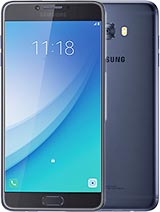
Frankly, in the phablet segment, the Galaxy A7 (2017) still doesn't seem reasonably priced. Samsung does have a couple of excellent 5.7-inch+ options, like the €300 Samsung Galaxy C7 Pro. It is rocking a great 1080p panel and an efficient Snapdragon 626 chipset. The only real issue with it is availability, in that you probably won't be able to find it outside Asia. In other markets, the 6-inch Galaxy A9 Pro (2016) might be a good large-screen Samsung alternative.
But enough about Samsung. Huawei and its Honor sub-brand also have plenty of options in the sub €300 range. In fact, their sheer number and often confusingly similar specs can make it pretty hard to choose the best value option. We think we narrowed it down a bit and we have the reasoning to back it up.
|
Review |
Specs
|
Cons
|

First on the list is the Huawei P10 Lite. Priced at around €240, it is one of the more popular devices in Huawei's current lineup, especially in Europe. But, you shouldn't necessarily get it over something like the Huawei nova 2 on that merit alone. For one, the nova 2 has a smaller display, and while the allure of a dual camera setup could be strong, its setup with an 8MP supplementary sensor is nothing like that of the regular P10. Hence, we would argue that the P10 Lite is better value. We would probably even go as far as the recommend the older Huawei nova, over the nova 2 for its arguably more important battery-efficient chipset.
Then again, if you are willing to live with older hardware and the potential support hurdles that comes with that, the Honor 8 might be a better option at the end of the day, with its flagship chipset and notable better dual camera setup. You see what we mean, when we say Huawei's roster is a confusing one. You will likely be happy with any of these devices, but we are sticking with the P10 Lite as our primary recommendation here.
|
Review |
Specs
|
Cons
|

And for the second one, it goes to the Honor 7x. Sure, looking at its 2MP secondary camera, this selection might seem a bit hypocritical in this respect. But other than that, you are getting a well-rounded device, complete with a trendy new ultra-wide FullHD+ display with a 5.93-inch diagonal. Frankly, it played no small part in swaying our opinion in its direction.
Still, it is not among the only good ways of spending €300 on a phone. Surprisingly that's just enough to stretch for some recent flagship offers. The HTC U Ultra, for instance, has had a somewhat rough reception since its release. That, however, is not necessarily a reflection of any major flaw of the device itself but rather of its initial market positioning and high price. In fact, with things like a large 5.7-inch, QHD panel, a secondary AMOLED ticker display, capable OIS-enabled camera and a capable Snapdragon 821 chipset, it is a great productivity tool. And now that it has gone considerably down in pricing, its value proposition is through the roof.
|
Review |
Specs
|
Cons |

We were kind of torn about the equally priced ZTE Axon 7 till the very end, but still decided to throw it in the list, now that ZTE has officially promised to deliver an Oreo update for it. Yes, we realize it is a year-old hardware, but its 5.5-inch AMOLED display and amazing stereo speaker setup still make up one of the best multimedia experiences on a smartphone. Now on the cheap, as well.
|
Review |
Specs
|
Cons
|

There might be a few issues with availability and support though. Speaking of which, it should come as no surprise that Xiaomi has some excellent offers in the sum €300 price bracket as well. To be fair, the Chinese manufacturer has been expanding its retail and support reach rapidly as of late, so the concerns might not be so great any more.
For the right price, while also keeping in mind any potential import charges your country might require, the Mi Max 2 is an excellent hand-stretcher. Joking aside, few devices, €300 or not, can currently deliver such enormous screen real estate. If you have a legitimate use for 6.44 inches and wide enough pockets, get the Mi Max 2.
|
Nominated for:Review |
Specs
|
Cons
|

The 2017 version has the benefit of an enormous 5,300 mAh battery and an efficient Snapdragon 625 chipset over its predecessor. However, if you value raw performance over lengthy battery endurance, the original Mi Max could be an even better fit. Especially in its Snapdragon 652, "Prime" variant.
To top things off, Motorola has some good options spanning all throughout the €200 to €300 price range. Now, just like with Huawei/Honor roster, we found ourselves in a bit of a pickle looking at Moto and Lenovo devices. To be perfectly frank, we don't have anything bad to say about the Lenovo P2. An AMOLED panel, a large battery, and Snapdragon 625 chipset, currently selling for under €290, what's not to like? The only reason it's not on the list, besides the fact it's a bit older now is Lenovo's decision to stop selling smartphones under its main brand altogether.
We know, it's not that serious of an argument against objectively good hardware, nor is it necessarily a permanent decision. We've seen a lot of back and forth on Lenovo's mobile strategy in the recent past. Still, until we know for sure one way or the other, we decided to limit our recommendation to phones that are properly supported, at least at the time of writing this guide. Like the Moto G5s Plus.
|
Review |
Specs
|
Cons |

Out of the entire "G5" family, the G5S Plus is the only one worth its price. €240, in this case. Unlike its Snapdragon 430-equipped siblings, it offers a decent specs sheet, even complete with a dual camera setup. That said, however, the only reason to include it in the list, now that the Xiaomi Mi A1 is out and selling for a lot less is potential availability issues with the later on certain markets. Otherwise, The Mi A1 is the better value option.
|
Review |
Specs
|
Cons
|

The same logic mostly applies to the €280 Moto Z Play. Not only that, but it is also quite a bit older and lacking a second main camera. So what gives? Well, the Z Play does have the benefit of an AMOLED panel. But, the real reason it deserves an actual consideration is the MotoMod platform compatibility. If you've taken a liking to any particularly interesting peripheral, like a sliding keyboard, a gaming pad, a projector, or a scientific measuring kit, this is the most affordable option to get on board the MotoMod train. You also get great battery life and a nice camera too so you can't go wrong with this one.


Tip us
2.1m 180k
RSS
EV
Merch
Log in I forgot my password Sign up